
For me, National First Responders Day is personal.
My son was supposed to spend the night at his sister’s apartment in Washington, D.C., when disaster struck. At around 1 a.m., she called me, frantic, saying that he still had not arrived. I drove into the city and started walking the blocks between her apartment and the last place she had talked to him.
In Chinatown, I came to an intersection that was blocked off, with lights, an ambulance, and people holding up their phones. There were police officers at the edge of it. I walked up to one of them and said, “Excuse me, sir. I am looking for my son.” He looked at me the way you would look at someone who interrupts an emergency to ask for directions. He asked my son’s name. His face changed when I answered, and he asked me to repeat myself. I did.
“Ma’am,” he said, “this is for him.” He held his hand out toward the intersection. “Your son was hit by a car. The paramedics are getting ready to take him to the hospital.”
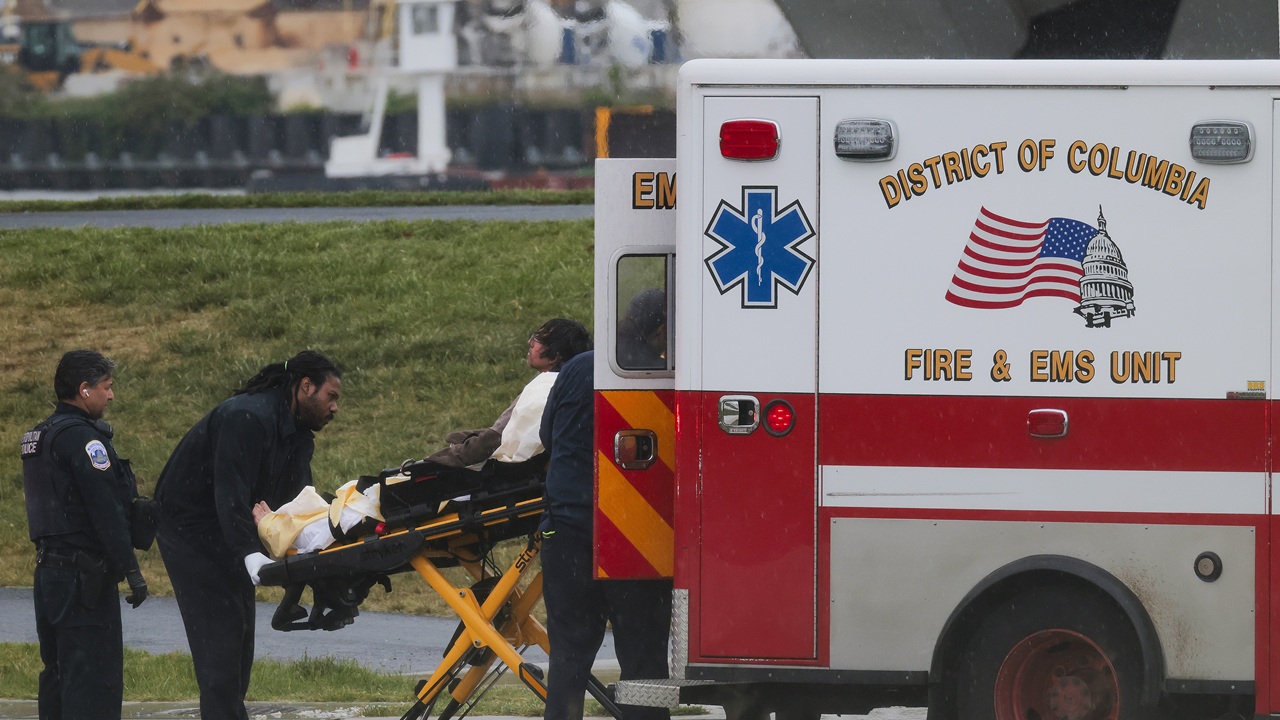
I remember what I saw in the next minute better than almost anything in my life. Officers were already interviewing bystanders on the sidewalk. People were moving fast to get a gurney into the ambulance. The officer offered to drive me to the hospital. By the time we got there, the ambulance had already arrived, and they were working to save my son’s life. They would not let me see him.
Later, while I sat in the waiting room, a paramedic came by to see how I was holding up. I asked how my son was while he worked on him at the scene. He said that when he had last seen him in the ambulance, my son was at least alive.
I spent 36 years in the federal government, including senior leadership roles at FEMA and CISA. I have watched responders work in hundreds of exercises and real disasters. It is different when the person on the gurney is your child.
This all happened in the nation’s capital, but the people who saved my son were serving the city. The officers worked for the Metropolitan Police Department. The paramedics worked for the District of Columbia’s fire department. The trauma team worked for a hospital. The federal government was nowhere in that intersection, and it did not need to be. Readiness begins locally.
That is what I am thinking about this Oct. 28, National First Responders Day. I am grateful, and I am also asking the question I asked for years at FEMA and now ask as a mother: Will they be there for the next family?
Behind every staffing request and every training budget is a family that does not yet know it will need help.
At FEMA, I was responsible for National Level Exercises. We built scenarios; ran them for real agencies; and found out whether the people, equipment, and arrangements we were counting on actually existed. The lesson was the same every time: A capability that works only on paper is not a real capability.
That lesson might be obvious when it comes to equipment, but too often we forget that it applies to the people a community depends on too. Many of the hardworking men and women who keep us safe are under enormous pressure.
The U.S. Fire Administration lists aging membership, declining volunteer numbers, and funding and time constraints as some of the challenges faced by volunteer fire departments.
In the 2025 Pulse of 9-1-1 survey, conducted by Carbyne with the National Emergency Number Association, burnout passed hiring as the top workforce problem in emergency communications centers. Recruiting a dispatcher is only the beginning. When an experienced dispatcher leaves, a community loses someone who has learned how to steady a frightened caller and get the right help moving. No federal grant can instantly replace that experience.
Dedicated people hide the shortfall. If a shift is covered because someone agreed to stay, the immediate problem may be solved, but a chief still has to ask whether that arrangement can go on. Repeatedly depending on someone to give a little more is not the same as having enough people.
That distinction matters every day, and it matters enormously when a disaster arrives. In an exercise, we can introduce a hurricane into the scenario. In real life, we cannot clear away the community’s other emergencies first. Someone will still have a heart attack, and there will still be a crash at one in the morning, and the crews for those calls have to exist on that particular day.
I know the Washington reflex when a problem like this is described. Announce a grant. I oversaw FEMA grant programs, so I will say plainly what they taught me: Federal money bought a great deal of equipment, but it did not automatically produce readiness. The measure should always be what a community can do afterward that it could not do before, not simply what Washington spent.
The discipline already exists on paper. FEMA’s exercise framework calls for documenting findings in an improvement plan and tracking corrective actions. Each plan is supposed to identify what must be fixed, who is responsible, and when the work will be done.
I have read hundreds of improvement plans, and too many listed the same corrective actions the department had listed three years earlier, just with new dates.
A fire truck needs trained operators and maintenance long after it is delivered. If the qualified operators retire and no one replaces them, the truck remains on the inventory but the capability is lost. The paperwork might be complete, but the community is unprepared for emergencies.
What is needed is not another federal rule. It is a dedicated county commissioner or a mayor who reads the improvement plan a year later and asks which problems were fixed, who asks before the next apparatus is approved who will be qualified to run it in year six, and who asks before approving a staffing request why the last four experienced people left. Local officials cannot leave those questions to a grant program.
I still think about the paramedic who came to check on me in the waiting room. He had to go back out and be ready for the next call. I would not presume to know what he or anyone else carries home after a shift. But the U.S. Fire Administration has found that limited access to mental health care, concerns about confidentiality, and fear of professional repercussions remain barriers to seeking help. A department that would never send a crew out with failed protective gear should be just as serious about providing confidential mental health care. Responders should be able to seek help without fearing for their careers. That is a responsibility of department leadership.
Local officials do not need to wait for an act of Congress or a bigger federal check to take these responsibilities seriously. They, and the citizens who elect them, need to treat readiness as something they are responsible for delivering rather than something they thank people for once a year. It also requires the parts of a community that Washington cannot build: the volunteer company, the employer who lets a firefighter leave when the pager goes off, the church that feeds a crew after a long night.
On Oct. 28, thank a first responder. If you control a budget, administer a grant, or cast a vote, remember that the need for them is personal long before it becomes political.
My son was walking across an intersection at one in the morning. He was not expecting to need anyone. Our family was not expecting to depend on the training, judgment, and coordination of people whose work we can never repay. But we did, and because of decisions someone made years earlier, close to home, they were there. And afterward, they came to find me in the waiting room to ask how I was.
Continue reading...
[ H/T The Daily Signal ]