



[Newsletter ad — view on SCOTUSblog]
It was a relatively quiet week at the court, as the justices – and the SCOTUSblog team – prepared for the November argument session to begin next week. On the interim docket, the court decided one immigration-related dispute and moved closer to being able to decide another.
At the Court This Week
On Thursday, an environmental group, a local landowner, and a group formed to preserve a church urged the Supreme Court to deny the Trump administration’s request to be allowed to resume construction of its border wall in the Big Bend region of southwestern Texas. For more on their filing, see the On Site section below.
On Tuesday, the Supreme Court denied a request from three cities and a group that provides legal services to immigrants to pause an agreement between Texas and the Department of Justice that prevents enforcement of a Biden-era rule allowing immigration judges to pause certain deportation proceedings. There were no noted dissents.
The court’s November argument session will begin next week. On Monday, the justices will hear argument in two cases: Maxwell v. Dinis, on a federal inmate’s ability to use a habeas statute, 28 U.S.C. § 2241, to contest the Federal Bureau of Prisons’ refusal to accelerate his transfer to a halfway house or home confinement; and Younge v. Fulton Judicial Circuit District Attorney’s Office, Georgia, on whether an affirmative defense may be asserted as a basis for summary judgment if not presented earlier in a pleading.
Morning Reads
Supreme Court isn't on the ballot. But in campaigns, it is hotly contested
Bart Jansen, USA Today
Congress may be “the battleground in the 2026 midterm elections,” but the Supreme Court is playing a role in many races, according to USA Today. Republican and Democratic candidates alike are highlighting “disputes about the high court’s membership, its size and its ethics” and calling on voters to keep these battles in mind when they head to the polls next week. In particular, candidates are raising the possibility of a Supreme Court vacancy during President Donald Trump’s final two years in office and emphasizing that the party that controls the Senate will be able to determine whether another Trump nominee is confirmed to the court.
‘Mountain of evidence’: ICE agents discriminated against Latinos, judge says
Brittny Mejia, Los Angeles Times (paywalled)
U.S. District Judge Maame Ewusi-Mensah Frimpong has “barred immigration agents in Southern California from stopping people based on racial stereotypes,” citing what she described as “a mountain of evidence” showing that agents are “targeting people who appear Latino,” according to the Los Angeles Times. “The injunction … requires agents to establish individualized reasonable suspicion before detaining someone for immigration enforcement.” The Times noted that the evidence cited by Frimpong in her new order “had not yet been turned over by the government when the Supreme Court last year stayed the judge’s earlier order barring stops based solely on race or ethnicity, language, location or employment, either alone or in combination.” Frimpong acknowledged the Supreme Court's decision in her new order, but emphasized that the court “had not explained its reasons for granting the stay.” “This Court cannot be faulted for failing to follow guidance that was never given,” the judge wrote. The Trump administration has indicated that it will appeal Frimpong’s order to the U.S. Court of Appeals for the 9th Circuit.
Utah charges Kalshi and its founders, escalating a fight over who can regulate prediction markets
Marc Levy, Associated Press
On Wednesday, Utah “filed criminal charges against prediction market operator Kalshi and two of its executives, months after a federal judge rejected Kalshi’s effort to prevent Utah from enforcing its strict anti-gambling laws against the activity,” according to the Associated Press. “The charges include 13 counts of violating the state’s prohibition on gambling and another charge involving profiting off illegal activity.” The AP noted that “[t]he felony charges could represent a new tactic in how states try to assert regulatory authority over the fast-expanding activity, a clash that appears headed to a showdown at the U.S. Supreme Court.”
Law school puts AI 'Supreme Court' to the test
Karen Sloan, Reuters
Last week, the University of North Carolina School of Law “tested whether AI could replicate the reasoning of US Supreme Court justices” by staging “a simulated Supreme Court argument based on an actual case the high court heard in 2025,” according to Reuters. Participants found that although the three AI justices used in the test drew the same conclusions as the real-life justices, “deciding the case the same way the actual court did,” the bots did not excel at mimicking their behaviors during oral argument. “The AI justices asked questions and hypotheticals of the law students who argued the case, but their interactions felt robotic and they didn’t interrupt or interject the way the real justices do.” “There’s still this huge gap in it actually feeling human,” said Nicole Downing, the law school’s assistant dean for AI, to Reuters.
Trump Wants to Kick ‘Rogue Activist Judges’ Off Cases. Can He?
Adam Liptak, The New York Times (paywalled)
In his newsletter for The New York Times, Adam Liptak explored the Trump administration’s battle against what it describes as “rogue activist judges,” a category that has come to include judges who expressed frustration with government lawyers or criticized the administration’s actions in media interviews. Liptak noted that the Supreme Court held, in a 1994 opinion from Justice Antonin Scalia, that “[e]xpressions of impatience, dissatisfaction, annoyance and even anger” are “within the bounds of what imperfect men and women, even after having been confirmed as federal judges, sometimes display” and do not necessarily establish “bias or partiality.”
On Site This Week
Court News
Groups ask Supreme Court to leave lower court order in place halting border wall construction in southwestern Texas
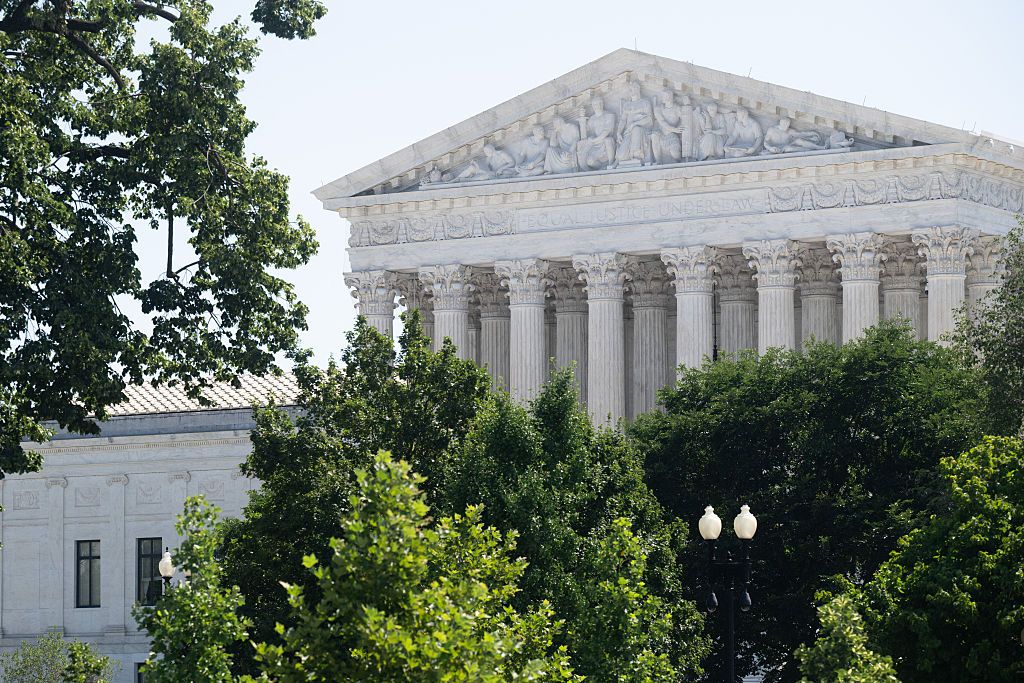
The plaintiffs challenging the Trump administration’s efforts to build a border wall in the Big Bend region of southwestern Texas urged the Supreme Court on Thursday to leave in place an order by a federal trial judge in El Paso temporarily halting the construction.
Case Preview
Court to hear argument in religious discrimination challenge brought by Catholic preschools in Colorado
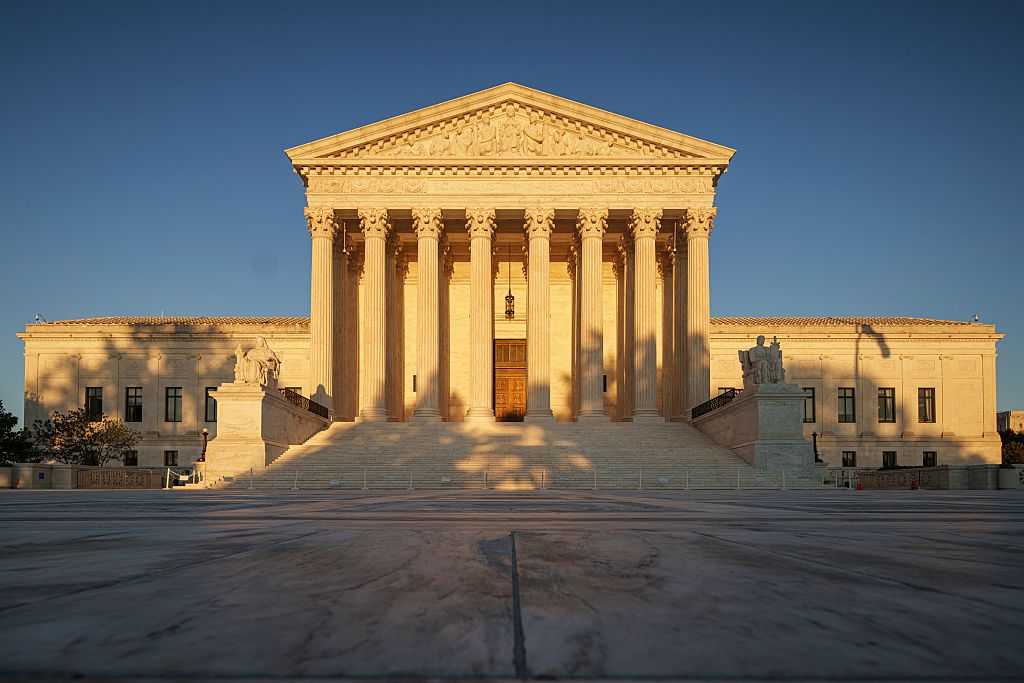
The court will hear oral argument on Tuesday in a challenge brought by Catholic preschools. The schools argue that their exclusion from Colorado’s universal preschool program is a form of religious discrimination in violation of the First Amendment, because the state will not provide them with an exemption from rules that would require them to admit everyone – including LGBTQ children and children with LGBTQ parents.
From the SCOTUSblog Team
The Supreme Court and what constitutes cruel and unusual punishment
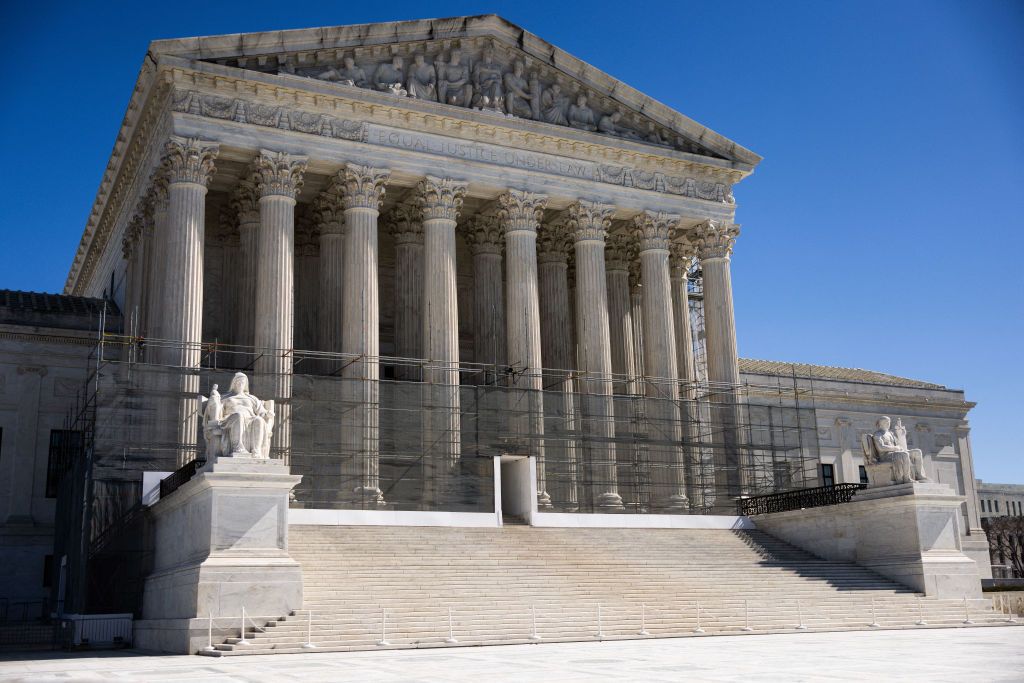
(SCOTUSblog Plus) Earlier this month, the concept of cruel and unusual punishment briefly captured the country’s attention after the state of Tennessee on Sept. 30 tried and failed to execute Christa Pike. The botched execution drew attention to a range of past rulings on the death penalty, while also highlighting a number of unresolved issues in this fraught area.
Contributor Corner
Two cheers for “insecure originalism”
In his Controlling Opinions column on Wednesday, Richard Re reflected on Justice Samuel Alito’s effort in his new book to discourage judicial “insecurity” – that is, “a judge’s self-conscious worry that he might be advancing his own policy preferences under the guise of impartial adjudication.” According to Re, “what Alito labels insecurity is better understood as a form of humility and self-awareness,” impulses that are laudable, not problematic.
From the SCOTUSblog Team
Another Trump term?
As it currently stands, the 2026-27 term is much less Trump-centric than its predecessor. But that could soon change, because by mid-January the justices are likely to consider a number of petitions for review from the Trump administration or Trump himself.
Contributor Corner
The Trump administration’s attempt to prevent noncitizen voting and the role of the Supreme Court
In his Justice, Democracy, and Law column on Tuesday, Edward Foley explored a growing battle over the division of authority between states and the federal government when it comes to “determining who can vote in congressional elections and regulating how the voting process occurs.” One such case involves the issue of alleged noncitizen voting in California, which may soon arrive at the Supreme Court.
Contributor Corner
When the Supreme Court blessed zoning
In her In Dissent column on Monday, Anastasia Boden explored 1926’s Village of Euclid v. Ambler Realty, in which the Supreme Court, after rehearing the case and “a dramatic reversal in several justices’ positions,” paved the way for modern zoning. Boden noted that “[t]hree justices dissented, though they never said why.”
Podcasts
Advisory Opinions
Bringing Charges Against the President’s Political Enemies
Sarah Isgur and David French zoom in on the cases prosecutors have brought against political enemies of the Trump administration. Then, they review the latest news from the battle over a Washington, D.C., golf course before tackling the administration’s sue-and-settle case in Texas.
Amarica's Constitution
The Innocent Ham Sandwich
The election is upon us, and worries about possible anti-democratic actions have many on alert. Akhil Amar and Andy Lipka peer ahead to see what to watch out for and review the relevant constitutional law and history.
A Closer Look
Justice John McKinley
Friday’s A Closer Look is typically a judicial biography. This week we cover Justice John McKinley, who served on the court from 1838 to 1852.
With the Eighth and Ninth Circuits Act of 1837, Congress added two more seats to the court. The first went to Justice John Catron, and the second went to Justice John McKinley, whose confirmation created a nine-justice court. While the seat itself was an honor, its duties were less so, as McKinley would discover.
McKinley was born in May 1780 in Culpeper County, Virginia. His family soon moved to Kentucky, where he taught himself law, passed the bar in 1800, and practiced in both Frankfort and Louisville. After moving to Alabama around 1818, McKinley grew wealthy from land speculation, partnered with Andrew Jackson in the Cypress Land Company, and helped found the city of Florence, Alabama. Jackson himself called McKinley “the most prominent man” in the state.
McKinley entered the Alabama Legislature in 1820, and, after backing Jackson for the presidency (he had previously supported Henry Clay), won a U.S. Senate seat in 1826. In the Senate, McKinley advocated for bankruptcy policies “favorable to small farmers.” However, his vote to override Jackson’s Maysville Road veto (the Maysville Road Bill essentially proposed federal stock purchases for internal improvements, like state roads) raised doubts about his loyalty, and he was not reelected in 1830. After one term in the U.S. House and another in the state legislature, he won a second Senate term in 1836, only to leave the seat within two months due to his Supreme Court appointment.
In 1837, the Eighth and Ninth Circuits Act expanded the court to nine justices, and Jackson’s advisers pushed McKinley for one of the new seats, but Jackson preferred his friend William Smith instead. When Smith declined, the pick then fell to the newly inaugurated President Martin Van Buren, who went with McKinley. Van Buren gave McKinley a recess appointment in April 1837, and the Senate confirmed him by voice vote that September.
After his nomination, McKinley wrote to then-House speaker James Polk that he had “accepted the appointment, although it is certainly the most onerous and laborious of any in the United States.” The new 9th Circuit included Alabama, Arkansas, Mississippi, and eastern Louisiana and required eight circuit terms a year. McKinley told Polk he would travel more than 5,000 miles annually, although McKinley later reported a figure closer to 10,000. The duties also likely ate into his finances (the justices were required to personally pay for their own circuit court duties) and took a toll on his health (he later had a paralyzing stroke on his way to Jackson, Mississippi).
Even before his first term started, McKinley asked Van Buren in person about changing the new 9th Circuit, but the president left the issue out of his next annual State of the Union, upsetting McKinley. Following McKinley’s first full term, the justices disbanded in March 1838 to “confront some 6,000 cases on their cumulative circuit dockets,” according to Steven Brown, who wrote McKinley’s first full-length biography. McKinley’s share from the 9th Circuit alone made up 4,700 of those.
Brown detailed one of the more interesting stories from McKinley’s extensive circuit duties in a 2011 Journal of Supreme Court History article. In April 1839 while holding circuit court in Jackson, a fight spilled into the courtroom and an officer of the court (who had been called “a stupid jackass” by McKinley for not bringing in the court marshal) pulled McKinley’s nose. Newspapers reported that the justice swore never to return to Jackson, and McKinley referenced the “gross personal indignity” in a letter to Van Buren.
In his 1839 State of the Union address, Van Buren told Congress that the circuit’s schedule and distances made it “impossible” for its judge to keep up. McKinley missed much of his circuit duties, along with the entire 1840 term, due to illness. Combined with his failure to hold court in Arkansas for almost five years, states in his circuit felt “neglected,” and the Mississippi Legislature called for McKinley’s impeachment. Congress eventually reorganized the circuits in August 1842, relieving McKinley of Mississippi and Arkansas; beginning in 1843 he rode the reconstituted 5th Circuit, which covered Alabama and Louisiana.
As for McKinley’s actual approach to cases, he was strongly for states’ rights, supporting them “over the authority of the federal government.” During his time on the court, McKinley wrote 19 majority opinions, four dissents, and two concurrences by one count, 22 opinions by another, and 23 by a third, the lowest per-term rate of his era. One of his opinions for the court was in 1845’s Pollard’s Lessee v. Hagan, where he held that new states enter the union on equal footing with the original 13, including ownership of the lands beneath navigable waters. Four years later in the 1849 Passenger Cases, McKinley argued in his concurrence that the federal government, not the states, controlled immigrants arriving from overseas until they became permanent residents of the states.
Increasingly ill after a stroke in 1842, McKinley died in Louisville in July 1852 at age 72, after 14 relatively difficult years on the court. He was replaced by Justice John Archibald Campbell, also from Alabama.
SCOTUS Quote
Continue reading...
[ H/T SCOTUSblog ]