
![‘I had this [bleeping] thing locked up’: Hollywood actress is crushed her son did not turn out gay despite dressing him in drag as a child](https://www.wnd.com/wp-content/uploads/2018/11/curtain-theater-movie-play-pixabay-600.jpg)





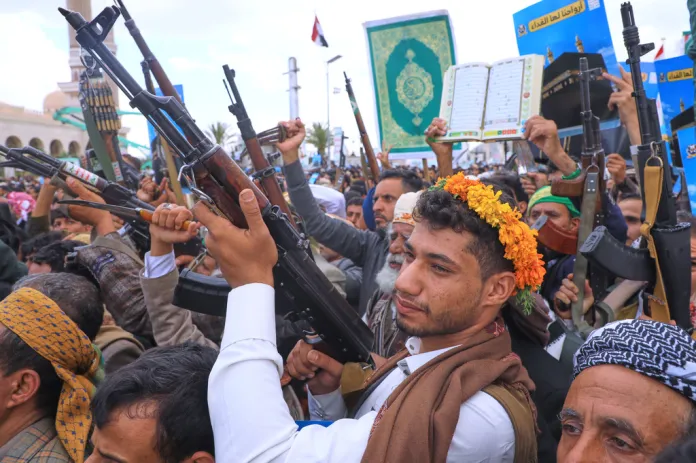
On Sept. 23, a brigadier general advising the Houthi-run Defense Ministry gave an interview to Agence France-Presse and described the war’s architecture better than most analysts have.
“The militias and Iran form one alliance and one body,” Abed Mohammed al Thawr said. There is “joint coordination and cooperation between us, Iran and Lebanon, represented by Hezbollah.” Then the line worth pinning to a wall: “We are part of the Axis of Resistance, and the battle is under a single command.” Each party, he added, feeds the others intelligence they can use.
Adversaries lie. They also sometimes describe their own organization accurately, because the description is itself a weapon. This one came with corroboration.
I wrote here two weeks ago about what the Houthis’ advance did to Saudi Arabia’s alliances and to Washington’s leverage over Beijing. This is the part underneath both: how the advance was actually run.
Less than two weeks earlier, the Houthis took Yemen’s entire Red Sea coast. Mokha fell on Sept. 10, Dhubab the next day, and boats carried fighters to Perim, the island that splits the Bab el-Mandeb at its narrowest point. Zuqar and the two Hanish islands followed.
How it happened matters more than that it happened. Regional officials and a senior Houthi official told the Associated Press that an Iranian aircraft landed in Yemen carrying Islamic Revolutionary Guard Corps advisers, joining Guard and Hezbollah advisers already there. During the offensive those advisers were “present at all levels” — planning tactical maneuvers, working with front-line commanders, analyzing communications and satellite intelligence the Houthis could not process on their own. Reuters, citing five Yemeni military sources and intercepted communications, reported the campaign was directed by the Guard. Tehran denies it, and an Iranian official insisted the decision to advance on Mokha was the Houthis’ own.
Now widen the lens. In July, drones hit Saudi oil facilities and the Houthis claimed the attack. Washington and Riyadh said the drones had come from Iraq, and on July 29 they struck Iran-backed militias there, killing at least 20 fighters, six Iranian advisers, and — the Associated Press later confirmed — at least one Houthi official. Two Saudi officials, citing intelligence, told the Associated Press that Houthi operatives had helped the Iraqi militias plan and execute the attack, and that Houthi emissaries had worked inside an operations room the Iraqis ran.
Read that again. A Yemeni died in an Iraqi command post during an operation against Saudi Arabia that a Yemeni group claimed. Ahmed Nagi of the International Crisis Group told the Associated Press that the Houthis’ prominence during the Gaza war had made them interesting to Iraqi armed groups, and that the Houthis had begun sharing military expertise in return.
On Sept. 10, drones came from Iraq again, this time against Saudi Arabia’s East-West pipeline — the line built to move crude to the Red Sea and bypass Hormuz. Baghdad confirmed the launch site. Riyadh declined to retaliate at the Iraqi prime minister’s request. President Donald Trump said Iran was “probably” behind it.
Count the geography. Yemeni fighters on a Red Sea island. Iranian officers in a Yemeni command tent. Yemeni operatives in an Iraqi operations room. Iraqi drones over Saudi oil infrastructure. Lebanese advisers threaded through all of it. An adviser to Iran’s supreme leader put the strategic logic plainly this month: the link between the Strait of Hormuz and the Bab el-Mandeb “will change the battlefield,” and Iran and the Houthis share “a common destiny.”
There is a serious objection, and it deserves saying out loud. The Houthis are nobody’s rented militia. They took Sanaa in 2014 without Tehran’s permission and have absorbed a decade of bombardment without its protection. Analysts who study them closely have long noted the absence of hard evidence that Iran controls their biggest decisions.
Fair. But “single command” and “wholly owned subsidiary” are different claims, and the weaker one is the dangerous one. A network does not need one decision-maker to function as one target. It needs shared advisers, shared intelligence, shared inventory, and a shared theory of where to apply pressure. By the Associated Press’s reporting and the Houthis’ own account, it has all four.
And notice who else used the phrase. A senior Yemeni military official told the Associated Press there was “no unified command” — about his own side. “This was a priceless opportunity for the Houthis,” he said.
One coalition is still arguing about whether it is a coalition. The other is advertising that it is.
Which brings us to Tuesday. On Sept. 30, the U.S. military completes its withdrawal from Iraq. That date was not incidental. Baghdad hung its deadline for disarming Iran-backed militias on it, reasoning that once the Americans left, the militias would lose their stated justification for keeping weapons outside state control.
The reasoning has not survived contact. Prime Minister Ali al Zaidi has pushed completion of that disarmament to June 2027. Kataib Hezbollah and Harakat al Nujaba say they will not disarm while any foreign forces remain, and one has already disposed of the premise: American influence, in their telling, outlasts American troops. A senior adviser to the prime minister has since said there was never a fixed disarmament deadline at all.
So on Tuesday the United States finishes leaving the theater that the network’s own participants describe as its connective tissue — the place where Yemenis sit with Iraqis, where the drones that closed a Saudi pipeline were launched, where the disarmament that was supposed to follow the withdrawal has just slipped nine months.
Washington is not blind to this. It is organized to see it in pieces. There is a Yemen file and an Iraq file and a Lebanon file and a Hormuz file, each with its own envoy, its own sanctions track, its own deadlines that slip independently of one another. Saudi Arabia learned what that costs this month. Attacked from Yemen and from Iraq in the same stretch of days, it struck one and, at Baghdad’s request, held its fire against the other. Two attacks, two folders.
None of this argues for a new war. The administration has said it does not intend to open a Yemen front, and there is a real case that keeping American forces concentrated on Hormuz beats dispersing them. It argues for something duller and more useful: designations that follow personnel between theaters instead of by nationality, interdiction that assumes weapons entering Iraq may be bound for Yemen, negotiating positions that price the proxies in rather than treating them as weather, and an honest accounting of what a withdrawal deadline buys when the condition attached to it has been quietly waived.
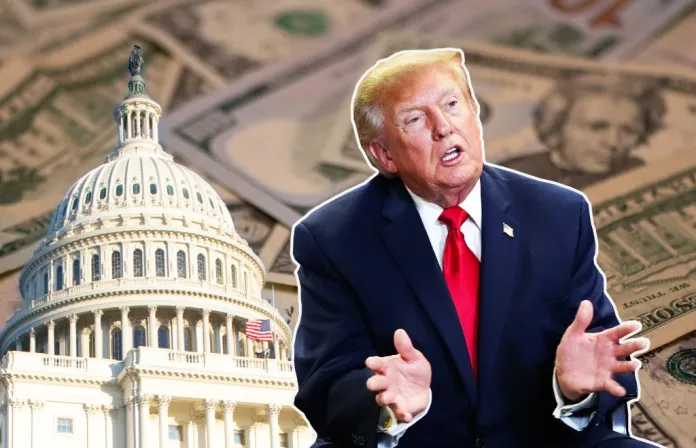
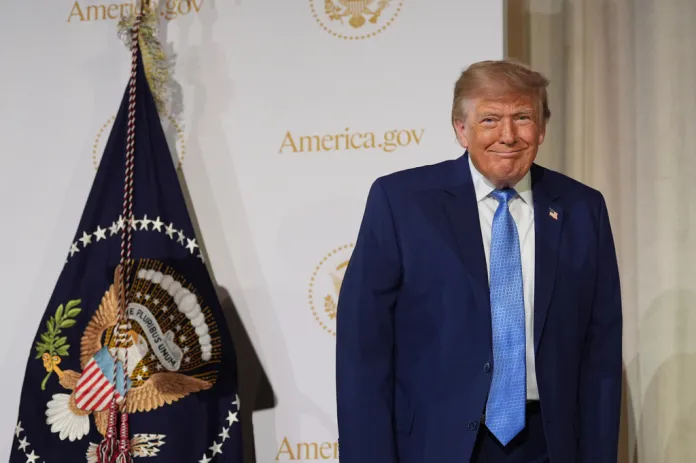
On Sept. 22, Trump told the United Nations he faced a choice between a deal with Iran after the midterm elections and annihilating the Islamic Republic, and accused Tehran of stalling until Nov. 3. Two days later Chinese President Xi Jinping came to Washington. Iran was on the agenda. The summit produced a trade truce extended to January 2027 and no announced breakthrough on Iran.
TRUMP CAN SET ALL THE DEADLINES HE WANTS. IRAQ CAN’T DISARM IRAN’S MILITIAS
In the same stretch of days, the Axis of Resistance gave an interview explaining that it operates under a single command, and warned that if America intervenes at the Bab el-Mandeb it will treat American interests as targets and close the strait to American ships.
One side spent the week negotiating. The other spent it describing the architecture of its war.
Emzari Gelashvili is a San Francisco-based geopolitical analyst and columnist who monitors Russian-language media. From 1996 to 2008, he served as a senior official across Georgia’s Ministry of State Security, Ministry of Defense, and Ministry of Internal Affairs, with a counterintelligence career focused on Russian and Iranian intelligence operations, and he was a member of the Georgian Parliament from 2008 to 2012. His work appears in Newsweek, the Hill, the Washington Examiner, RealClearDefense, and RealClearWorld, and at emzargelashvili.substack.com.
Continue reading...
[ H/T Washington Examiner ]