


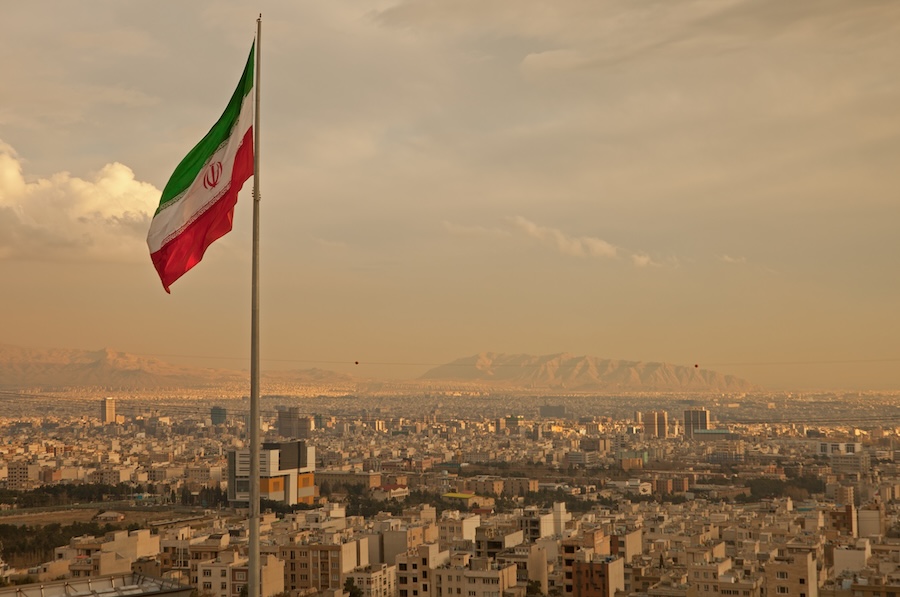


The Islamic Revolutionary Guard Corps recently released a 25-page open letter to the public. In addition to making a case against President Donald Trump, the Guard seeks to justify the Iranian nuclear energy posture. The tone was remarkably moderate. Iranian officials argued that their nuclear program is peaceful, normal, and economically necessary. They claim that even though Iran has massive oil and gas reserves, it needs nuclear energy to power its domestic grid. By using nuclear power at home, they say they can save their oil to sell abroad.
On the surface, this sounds like smart economics. Neighbors such as the United Arab Emirates have built nuclear plants, and Saudi Arabia wants to do the same. But when you look beneath the symptoms, the logic falls apart. The math simply does not work.
As a physician, I look for the underlying pathology of a system. Iran’s civilian nuclear narrative is a textbook economic mirage. It fails three basic tests of financial reality.
Let us first consider the fuel cycle. Most nations with civilian nuclear energy buy ready-made fuel rods from global suppliers. They do not enrich their own uranium. This keeps costs low and avoids international friction. Iran rejects this model. Instead, Tehran has spent billions of dollars building fortified underground enrichment facilities such as Natanz and Fordow. Creating a domestic enrichment capability from scratch is astronomically expensive. It costs far more than simply buying civilian fuel rods on the open market.
Second, consider the impact of international sanctions. Iran claims it needs nuclear energy to maximize its oil revenues. Yet, its insistence on enriching uranium has triggered crushing global penalties, such as the U.S. Treasury Department’s recent Operation Economic Outcast. These enforcement actions have crippled Iran’s banks and choked off its oil exports. In trying to “save” oil for export, the regime has lost hundreds of billions of dollars in actual sales. Burning down your own house to save money on heating is not an energy strategy. It is a systemic failure.
Lastly, look at Iran’s geography. The country sits on a sun-drenched plateau with some of the highest solar potential in the world. While Iran’s renewable energy agency has made late attempts to scale up capacity with massive solar projects, the nation remains overwhelmingly dependent on fossil fuels. Nuclear plants take over a decade to build and require massive amounts of water for cooling. Iran is deeply water-stressed. Solar and wind grids can be deployed rapidly, safely, and at a fraction of the cost. More importantly, building solar panels carries zero geopolitical risk and invites no international sanctions. If Tehran only wanted clean domestic power, the sky above them offers a far cheaper solution.
Our skepticism toward Iran should not just be a reflexive fear of what they might build. It should be rooted in the cold conclusion that their economic arguments are completely disingenuous.
When the UAE launched its nuclear program, it signed a landmark 123 Agreement with the United States. Under this UAE-U.S. Nuclear Partnership, often called the “Gold Standard” of nonproliferation, the UAE explicitly gave up the right to enrich uranium domestically. It proved its peaceful economic intent by accepting a transparent supply chain. Iran stubbornly refuses to do the same.
CONGRESS IS HIDING TRUMP’S $45 BILLION IRAN WAR BILL UNTIL AFTER YOU VOTE
The conclusion is clear. As detailed in analysis of the Iran Nuclear Program in the Washington Examiner, the regime’s nuclear trajectory is an exercise in geopolitical hedging. The regime has willingly wrecked its economy for one specific prize: mastering the full fuel cycle. This provides them with a latent nuclear weapons capability. It gives them the technical capacity to build a weapon at a moment of their choosing.
Neither Washington nor the public should be fooled by the Revolutionary Guard’s latest charm offensive. When an energy policy defies every rule of market economics, it is no longer an energy policy. It is a military strategy wrapped in a civilian shroud.
Dr. Eric Wargotz is a geopolitical policy analyst, professor, and practicing physician. Views are his own.
Continue reading...
[ H/T Washington Examiner ]