

Picture the situation: A crime family runs an island as its personal police state. The head of the family, the ancient don, exercises power from behind the scenes as the padrino or Godfather, dispensing favors in exchange for loyalty.
The don’s grandson, an underboss known as The Crab, interfaces with the outside world and insulates the don from his enemies.
The crime family’s grip is faltering. The head of an allied crime family had just been snatched and awaits trial in a New York jail. Now a federal grand jury has indicted the Godfather for murder. It’s The Crab’s job to protect him. He needs to make some deals.
The island is Cuba. The Godfather is Raul Castro. His underboss grandson, Raul Guillermo Rodridugez Castro, is The Crab. The Crab heads the General Department of Personal Security, the section of the Cuban KGB to protect his grandfather and the rest of the Communist Party leaders.
Enter a MAGA Republican running for Congress in Rhode Island. He’s a successful businessman with a sizable Florida construction business. He sees how deals are now made in Venezuela, whose ruling crime family boss, Nicolas Maduro, had been snatched on Trump’s command.
Big business deals, subject to U.S. approval, still go through the decapitated regime because that’s how the U.S. government set it up. The candidate says he wants to make his tiny state No. 1 in the nation in doing business with Cuba once the old order is gone.
The Crab is the point man. So the candidate navigates his Cuban American networks in Florida to get a meeting with The Crab. The candidate is public about what he’s doing in Havana. He and The Crab meet not once, but twice. The candidate returns home and registers with the Justice Department as a foreign agent for The Crab, his security directorate, and the Ministry of Interior.
The Ministry, known as MININT, is the enforcement arm of the Cuban Communist Party that runs the police, secret police, prisons, foreign spies, and more.
The registered agent who says he isn’t an agent
Candidate Vic Mellor doesn’t beat around the bush. He agrees that the story sounds weird.
He says he went to Havana twice last spring to meet with The Crab and other Cuban officials, delivering humanitarian aid through local churches, while exploring business opportunities for Rhode Islanders.
Mellor registered with the Department of Justice on June 16 under the Foreign Agents Registration Act, or FARA. He says that despite registering as a foreign agent, he isn’t one at all.
In a Rhode Island TV interview posted a month after registering, Mellor insisted he was “absolutely not” acting as a Cuban agent, and that he is working for Rhode Island “on my own time and my own dime.” Asked explicitly if there was anything apart from pure business development in Cuba, Mellor said: “There’s nothing beyond that, no.”
In his Oct. 12 interview with this writer, Mellor said he had done nothing at all for The Crab or the regime.
“I have had zero contact with anybody from the Cuban government since I left,” Mellor said.
‘My lawyer said it wouldn’t hurt’
Mellor is a long-time close associate of retired Army Lt. Gen. Michael T. Flynn, former director of the Defense Intelligence Agency and President Donald Trump’s first national security adviser in 2017.
So why did he file under FARA?
“I registered to cover my ass because of the years I worked with General Flynn,” Mellor said in a lengthy phone interview.
Did he file on advice of legal counsel?
“My lawyer said it wouldn’t hurt to do it,” Mellor said.
His attorney, Jesse R. Binnall, co-signed the FARA filing.
Few Trump allies have gone through the wringer like Flynn.
During the chaotic 2016 presidential transition, Flynn spoke with foreign officials as one in his position normally would. He became the subject of leaks. Three weeks after Trump’s first inauguration, Flynn stepped down as national security adviser, saying in his resignation letter that “because of the fast pace of events, I inadvertently briefed the Vice President Elect and others with incomplete information regarding my phone calls with the Russian Ambassador.”
Flynn became an early target of FBI Director Robert Mueller’s discredited investigation of Trump’s alleged collusion with Russia during the 2016 campaign. He later pleaded guilty to making false statements to the FBI during that probe.
In private business, he was charged with and admitted to making false statements and omissions in his FARA filings regarding work his company did with Turkey. It was a politically motivated lawfare case, as the Justice Department had a history of leniency with FARA registrants until the Biden administration. Trump pardoned Flynn in 2020, but millions of dollars in legal bills left the retired general financially ruined.
Mellor says he wasn’t going to let that happen to him. And so, after his meetings in Havana, he filed under FARA.
But what he reported in his filings, and what he says when asked about it, confuses the issue.
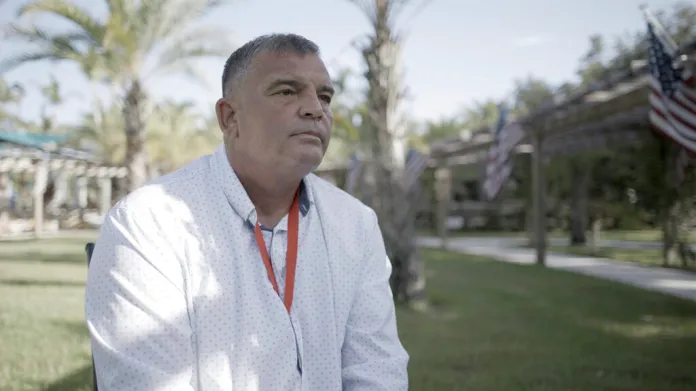
Owner Victor Mellor, Sr., pauses during an interview at The Hollow in Venice, Fla., on Aug. 1, 2022. (Richard Rowley/Frontline via AP)
" data-image-caption="
Owner Victor Mellor, Sr., pauses during an interview at The Hollow in Venice, Fla., on Aug. 1, 2022. (Richard Rowley/Frontline via AP)
" data-large-file="https://www.washingtonexaminer.com/wp-content/uploads/2026/08/AP22272701190195.jpg?w=696" src="https://www.washingtonexaminer.com/wp-content/uploads/2026/08/AP22272701190195.jpg?w=696" alt="Victor Mellor Sr." class="wp-image-4686648" srcset="https://www.washingtonexaminer.com/wp-content/uploads/2026/08/AP22272701190195.jpg 1024w, https://www.washingtonexaminer.com/wp-content/uploads/2026/08/AP22272701190195.jpg?resize=300,169 300w, https://www.washingtonexaminer.com/wp-content/uploads/2026/08/AP22272701190195.jpg?resize=768,432 768w, https://www.washingtonexaminer.com/wp-content/uploads/2026/08/AP22272701190195.jpg?resize=150,84 150w, https://www.washingtonexaminer.com/wp-content/uploads/2026/08/AP22272701190195.jpg?resize=696,392 696w" sizes="(max-width: 1024px) 100vw, 1024px">
Owner Victor Mellor, Sr., pauses during an interview at The Hollow in Venice, Fla., on Aug. 1, 2022. (Richard Rowley/Frontline via AP)
Why get involved with the Cuban regime at all?
Mellor has a reputation as a red-blooded American and strong anti-communist. His campaign shows him as a rock-ribbed, constitutionalist, Second Amendment, pro-family Marine veteran who wants to make America great and healthy again. He built a large recreational park in Florida for families and as a gathering site for solid conservatives.
Why would he get involved with Cuba’s Communist regime, its MININT, MININT’s political elite guard unit, and that unit’s chief, the Castro grandson Raulito known as The Crab?
Because, Mellor said in an interview this week, Raulito is the Trump administration’s designated figure in the Havana hierarchy. The Crab is under neither indictment nor sanction. It is legal to discuss business with him. If Cuba were to go the way of Venezuela with the old regime in place under an American viceroy, The Crab would be the man to know.
On May 27, Mellor’s campaign issued a news release announcing that the candidate was “invited” to Cuba where he would look “for trading partners and jobs for Rhode Islanders.”
“He is traveling to Cuba to meet with business and humanitarian leaders of the country,” Mellor’s news release said. “His goal is to establish partnerships that will open economic opportunities for Rhode Island.”
Two days later, the GOP candidate appeared in Havana, delivering medical supplies, visiting churches, and having an extended dinner with The Crab.
On returning from Cuba, Mellor issued a news release about the trip. A campaign statement announced that he had met with The Crab. Someone in the Cuban group wanted them to pose for pictures. Mellor and The Crab leaned into one another for a picture, smiling, and doing a Trump-style thumbs-up.
Within days of his second trip in early June, Mellor filed with the Justice Department under FARA that, as of May 29, he was an agent of a foreign principal, the “Ministry of the Interior and General Directorate of Personal Security.” Naming the title of the official with whom the registrant engages, Mellor or his attorney wrote, “Raúl Guillermo Rodríguez Castro.”
“At some point they are going to open up for business,” Mellor said in a Rhode Island television interview that he posted July 15 on YouTube. “I can’t express the opportunity here, by having the first foot in.”
“There’s going to be hundreds of billions of dollars going into Cuba, and somebody is going to rebuild it,” the candidate said. “Why can’t it be Rhode Islanders that do it?”
That’s logical thinking for a political aspirant looking for his state to benefit from a Cuba free of the Communist old guard, and logical for a businessman who had built his fortune in Florida. There’s no crime in that.
Why did he register as an agent of DGSP, MININT, and at least two other Cuban entities listed at the foreign ministry address?
“Because there were people at the dinner with Raul from the Interior Ministry, and I didn’t know who they were,” Mellor explains, adding that he does not speak Spanish and did not have his own interpreter. Out of caution, he said, he listed their offices on the FARA forms.
How it would look from Cuban intelligence
While Mellor’s perspective might be logical for an American businessman and political candidate, Cuba’s tenacious MININT intelligence system has a logic of its own.
It was the MININT and its constituent departments that form the Cuban police state. The Cuban Communist Party has survived since 1959 in large part by influencing American public opinion, politicians, and policies.
Many, but not all, Cuban agents of influence in the United States are liberals and left-wingers in journalism, think tanks, universities, and Congress. They are worthless for accessing the Trump administration.
Havana needed something new: someone with present or past connections to Florida Republican politics and to Trump’s inner circle.
Could Cuban intelligence seek to exploit Mellor, as perhaps its first Trump contact outside the U.S. government, to influence the president not to grab Godfather Raul Castro to face trial for murder?
Mellor took no offense at the question.
“Yeah, but I don’t know,” he said. “Maybe because I had worked with General Flynn, they thought I had access and have the president on speed dial, which I don’t.” He added that he would not let himself be used against whatever Trump’s Cuba policy might be.
Raul Castro waves a Cuban national flag during a May Day parade at Revolution Square in Havana, May 1, 2025. (AP Photo/Ramon Espinosa, File)
" data-large-file="https://www.washingtonexaminer.com/wp-content/uploads/2026/05/AP26140634845674_c5ee2f.jpg?w=696" src="https://www.washingtonexaminer.com/wp-content/uploads/2026/05/AP26140634845674_c5ee2f.jpg?w=696" alt="Raul Castro waves a Cuban national flag during a May Day parade." class="wp-image-4578384" srcset="https://www.washingtonexaminer.com/wp-content/uploads/2026/05/AP26140634845674_c5ee2f.jpg 1024w, https://www.washingtonexaminer.com/...05/AP26140634845674_c5ee2f.jpg?resize=300,200 300w, https://www.washingtonexaminer.com/...05/AP26140634845674_c5ee2f.jpg?resize=768,512 768w, https://www.washingtonexaminer.com/...05/AP26140634845674_c5ee2f.jpg?resize=150,100 150w, https://www.washingtonexaminer.com/...05/AP26140634845674_c5ee2f.jpg?resize=696,464 696w" sizes="(max-width: 1024px) 100vw, 1024px">
Raul Castro waves a Cuban national flag during a May Day parade at Revolution Square in Havana, May 1, 2025. (AP Photo/Ramon Espinosa, File)
Mellor meets The Crab
Mellor said he sought out the meeting on his own initiative. He said he worked on his relations with Cuban American figures in South Florida. He described the exile network as “I know a guy who knows a guy who can potentially get you in with Raul Castro the grandson.” He did not offer the identities of his contacts.
“I’m thinking there’s an opportunity for the state of Rhode Island, so I leveraged what I got,” Mellor explained. He received indicators from Cuba that he would get his meeting, “though I wasn’t sure I’d even meet Raul.” He brought humanitarian supplies to be distributed through hospitals and the church.
“Lo and behold, I went to dinner with Raul Castro,” Mellor said. He was referring to Raulito, The Crab, whom he always referenced as Raul. “He did most of the talking,” Mellor said, mostly about plans to reform governance.
Mellor and The Crab got along over two evenings of dinners and some smokes of Havana cigars.
“I think he just liked me because of how open and brash I was.”
“You’ve got to build trust,” he said. “My statements to them were nothing can happen until after you work out a deal with Marco Rubio and the president,” he added. “Then you’re going to want to bring the businesses in.”
Mellor said, as he had in previous interviews, that he was not acting as a back channel and that he had no contact with anyone in the Trump administration regarding Cuba. The State Department said in June that Mellor “is not authorized to speak on behalf of the U.S. government and is not involved in anything the administration is doing.”
Why would an America First guy register as an agent of the Cuban Communists? His simple answer is confusing: “Because it’s the only paperwork that there is to fill out.” As he had in other interviews, he said that Americans must fill out such paperwork when meeting foreign officials abroad.
That doesn’t add up. No law requires American citizens to fill out or file any paperwork after meeting with foreign officials, and FARA has commercial exemptions for business relationships. But Mellor is adamant: “There is no other option to fill out anything but FARA, which says that you’re an agent.”
What the FARA filing says
Section 9 of the FARA form instructs foreign agents to “Describe fully the activities the registrant engages in or proposes to engage in on behalf of the above foreign principal.”
Mellor said nothing in his FARA registration about developing business. Instead, he gave this description: “Deliberating on ideas for improving Cuban-American relations, suggesting content ideas and discussing how Cubans communicate amongst each other compared to Americans communicating amongst each other. Providing social media strategy/content suggestions: how to post content ideas. Proposed ideas for good websites and made a small unreleased video showing misunderstandings from culture.”
He attached two proposals in the filing about how to run those social media and content ideas, all dependent on explicit regime approval. (The proposals, suggesting a new frame of reference in discussion, say never to use the word “regime.” See below for details.)
On his FARA form, Mellor checked the box saying that “The agreement or understanding between the registrant and the foreign principal is the result of neither a formal written contract nor an exchange of correspondence between the parties.”
Beneath it, Mellor or his attorney Binnall, wrote, “There is no agreement or understanding.” Mellor and Binnall affixed their signatures.
The Crab’s directorate within the Cuban KGB
Built by the Soviet KGB and East German Stasi, MININT has units for general state security, counterintelligence, foreign intelligence, police and political police, prisons, and other functions; and personal security of regime leaders, the DGSP, which The Crab has run since 2016.
The DGSP took most of the 32 Cuban casualties during Trump’s capture of Maduro in Caracas.
Internationally, MININT punches far above its weight. It “treats espionage, propaganda, and general ideological or political influence operations as part of one integrated project, utilizing the same network and infrastructure to recruit assets or spy on its behalf and to advance its interests in more general terms,” according to a State Department report that Rubio released in July.
“Cuban intelligence works to both collect information and conduct influence activity, and may develop people who do not have secret access but those political tendencies or public opinion can still support Cuban interests,” the report says.
Trying to influence Trump’s decisions on Cuba forms the outermost perimeter of DGSP’s function, and The Crab’s underboss obligation, to protect the Communist Party elites.
Collecting information for an intelligence service is spying. Running influence operations is not spying. It is a different type of intelligence activity: managing foreign perceptions, attitudes, actions, and policies. In the U.S., it is not a crime if reported under FARA.
Through the relationship he was building with The Crab, Mellor did not register as an agent of MININT’s Directorate of Intelligence, Cuba’s foreign intelligence service known as DI but more familiar under its old acronym, DGI. He registered with the Directorate of Personal Security, DGSP, listing The Crab by his proper name as the official “with whom the registrant engages,” and with the MININT as the parent entity. From the Cuban standpoint, all MININT directorates are part of one integrated project.
‘No quid pro quo’
As far as Cuban tradecraft is concerned, there is never “no understanding” when it decides it wants a deal with someone who wants a deal. There is always a quid pro quo, either immediate or established over time. An exception is the unwitting dupe, on which the regime has relied heavily.
Cuban intelligence does not run agents of influence through written contracts. Its currency is generally ideology, grievance, or blackmail — which is not the case with Mellor — or taking advantage of the well-meaning, or dangling business opportunities. From the regime perspective, a foreign businessman doing the agent job will be rewarded with future business. In this case, the job from MININT’s perspective appears to make sure that Trump doesn’t grab The Crab’s grandpa, Raul Castro, to enforce the indictment for murder.
Did he have any quid pro quo with the Cubans?
“No quid pro quo,” Mellor says. “I wouldn’t do it anyway.”
Did they dangle any business opportunities to him? Yes, he said, they did it indirectly.
“They said, like, ‘Hey, we have a lot of construction going on here. We need businesses like yours here. We need people who know what you do,’” Mellor said.
But there was no proposal, no understanding, on his part. “I didn’t bite on any of that and the discussions didn’t go any further than that,” he said.
Discussions apart from business
As far as the FARA controversy, Mellor said in the July 15 television interview, which he later posted on X, that his critics “don’t understand the paperwork. There’s only one form you can fill out, and it’s the registered agent form, okay. It’s what you put in there is what’s important. There’s only one form to fill out. Everybody who deals with another country fills out that exact same form.”
Mellor gave the same explanation in the Oct. 12 interview with this writer.
That explanation is not what the law says. The FARA statute requires registration by someone acting as an “agent of a foreign principal” who engages in influencing American public opinion or government policy, public relations or informational activities, lobbying government officials, and related activities.
If he was only discussing business with The Crab, no registration would be necessary. FARA explicitly exempts purely commercial, nonpolitical business dealings and commerce, even on behalf of a foreign government.
However, on his June 16 FARA form, he checked “yes” to the question of whether his “activities on behalf of” the MININT and DGSP “include political activities” in the U.S. as defined under the law.
In the filing, Mellor described those activities: “Potential preparation of informational materials and dissemination, currently providing sample ideas for social media content and strategies plus how to bridge communication gaps between Cubans and Americans. Discussing expectations and relationship building. These activities are for the intention of promoting communication and cultural differences to further perspective and conquer communication challenges.”
The candidate provided the FARA office with his proposal to the Cuban government to combat the narrative of “hardline” Cuban American members of Congress, with a regime approval and veto method for the messaging.
In the interview, he said, “We just threw something into AI” to develop what a plan would look like.
The two documents attached to the filing, titled “Partner with Cuba Engagement Brief” and “How We Respond,” look like a propaganda proposal to influence American audiences, including Congress, for the Cuban regime. (See details below).
The candidate said in an earlier interview with the Washington Examiner’s Hudson Crozier that he will stop being a registered agent for the Cuban regime if he’s elected to Congress.
‘Just blows me away’
The only continued contacts are between his campaign staff in Rhode Island and churches inside Cuba, Mellor said, “to arrange shipments of humanitarian supplies.”
He said that on Oct. 14, he was shipping to Cuban churches “enough food to feed 6,000 Cuban kids for two months.”
He remains more than a little miffed that his motives are being questioned. He told this writer, “The idea that people think I would betray my country just blows me away.”
Timeline
Jan. 3, 2026: Through a daring military operation secretly underway for months, President Donald Trump enforces a U.S. indictment of Venezuelan President Nicolas Maduro and sends him to New York for arraignment. Maduro’s personal security guards were Cuban, under the command of The Crab. Most of the 32 Cuban casualties were DGPS men.
April 23: Attorney General Todd Blanche announces that a Miami grand jury indicted Raul Castro and four others for the 1996 murders of three American citizens and a legal American resident when he dispatched two MiG fighters to shoot down their civilian planes on a humanitarian mission.
May 14: CIA Director John Ratcliffe led a delegation to Havana to meet senior MININT officials, including The Crab. Ratcliffe delivered a message from Trump that the U.S. would engage with Cuba if the regime made fundamental changes. Such changes, though, would end the regime.
May 20: The indictment of Raul Castro is unsealed, confirming that the end was near.
May 27: Vic Mellor’s campaign announced his upcoming visit to Cuba.
May 29: Mellor travels to Havana and meets twice for dinner with The Crab. Agence France-Presse covers the trip.
June 4: Mellor tells Miami’s Telemundo TV about his Cuba trip.
June 6: Mellor returns to Havana, speaking with USA Today at Boston’s Logan Airport.
June 16: Mellor files with FARA as an agent of MININT and DGSP, with The Crab as the official “with whom the registrant engages.”
A ‘Cuban Conversation’ to help the regime change its narrative
Mellor attached to his filing a three-page “Partner with Cuba Engagement Brief” and a nine-page document, “How We Respond When the Conversation Turns Hard,” with a “Cuba Para Todos” (Cuba for All) and “Cuban Conversation” branding.
The proposal pitched a years-long social media response strategy toward “hardline” Cuban American congressmen like Reps. Carlos A. Gimenez and Mario Diaz-Balart (R-FL). It illustrated a proposed account called @CubanConversation, providing draft replies to the congressmen’s real posts.
The proposal references “factions of Cuban-Americans – concentrated in South Florida, with deep institutional reach into the U.S. Congress, the media, and the donor class – who have spent decades shaping the dominant American narrative about Cuba,” one of blackouts, sanctions, shortages, collapse, and “regime cruelty.” It proposes not to attack the narrative or argue with the facts, and to switch the frame of reference to a positive “metaphor” about Cuba coming back.
“This campaign cannot succeed without active partnership with leadership on the island,” the document says, listing six “categories of partnership” necessary before launch. A messaging and “approval protocol” within the Cuban regime, a “single point of contact on the Cuban side who can review content within 48 hours,” who has “clear sign-off authority” with “yes/no power on what category of content,” an “escalation path if there is disagreement or sensitivity concern,” and “mutual understanding that approved content cannot be retroactively withdrawn except for genuine crisis reasons.”
The proposal requires clarity from Cuban regime censors — “a clear list of subjects we will not depict without specific approval,” a “language register that is honored” including “revolutionary tradition” plus “language that is avoided,” and a “protocol if we are asked questions we cannot answer without your guidance.”
The proposal calls for the verifiability and accuracy of every story told, with “no staged or fabricated material. It stipulates a “crisis protocol” for “what happens if a story breaks unexpectedly that affects our messaging” and “coordination if leadership has concerns about something already published.”
“The hardline voices dominate” the “American conversation about Cuba,” the “How We Respond” paper observes. “The Cuban government has, for many practical reasons, almost no voice in the social-media conversation that is shaping how Americans see Cuba. We are going to change that,” Mellor’s proposal says, “not by attacking the hardline voices, but by modeling something entirely different in every single reply we make.”
The document advises, “Refuse their vocabulary,” with “their” a reference to Cuban Americans. “Do not use ‘regime,’ ‘dictator,’ ‘failed state.’ Choose our own words: ‘leadership,’ ‘the next generation,’ ‘the Cuban people.’”
J. Michael Waller is Senior Analyst for Strategy at the Center for Security Policy, and author of Big Intel: How the CIA and FBI Went from Cold War Heroes to Deep State Villains (2024). Follow him on X @JMichaelWaller.
Continue reading...
[ H/T Washington Examiner ]