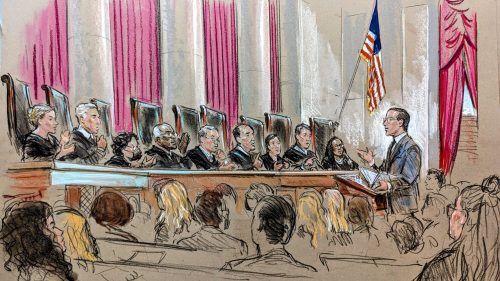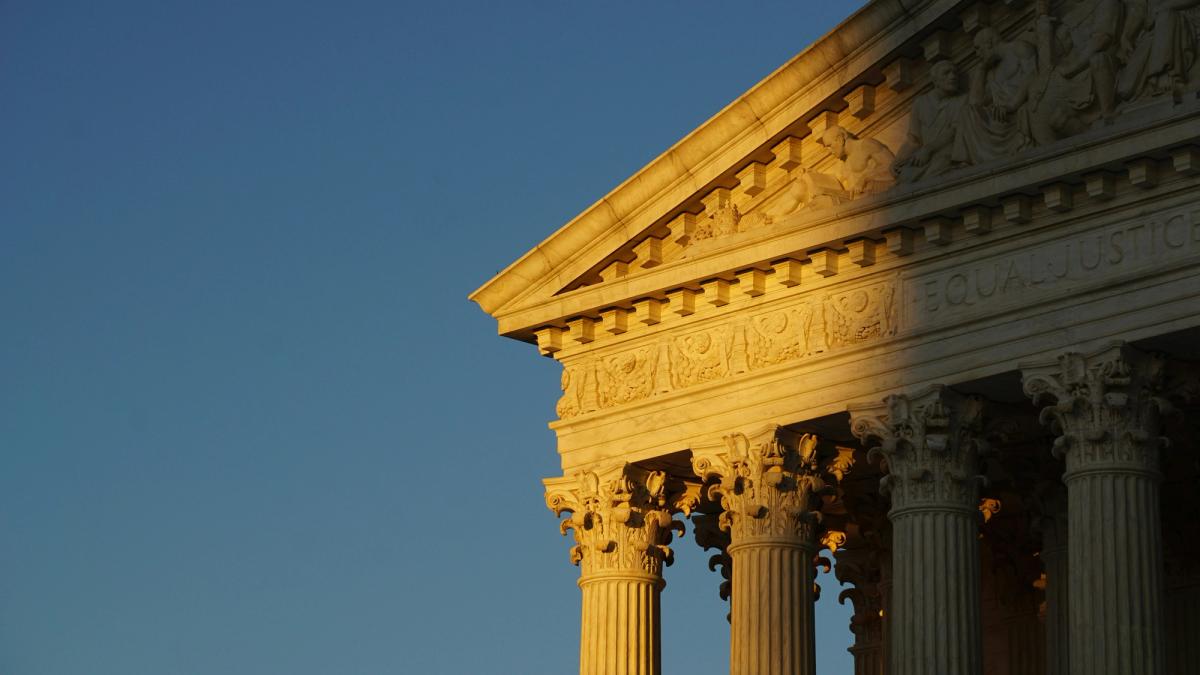





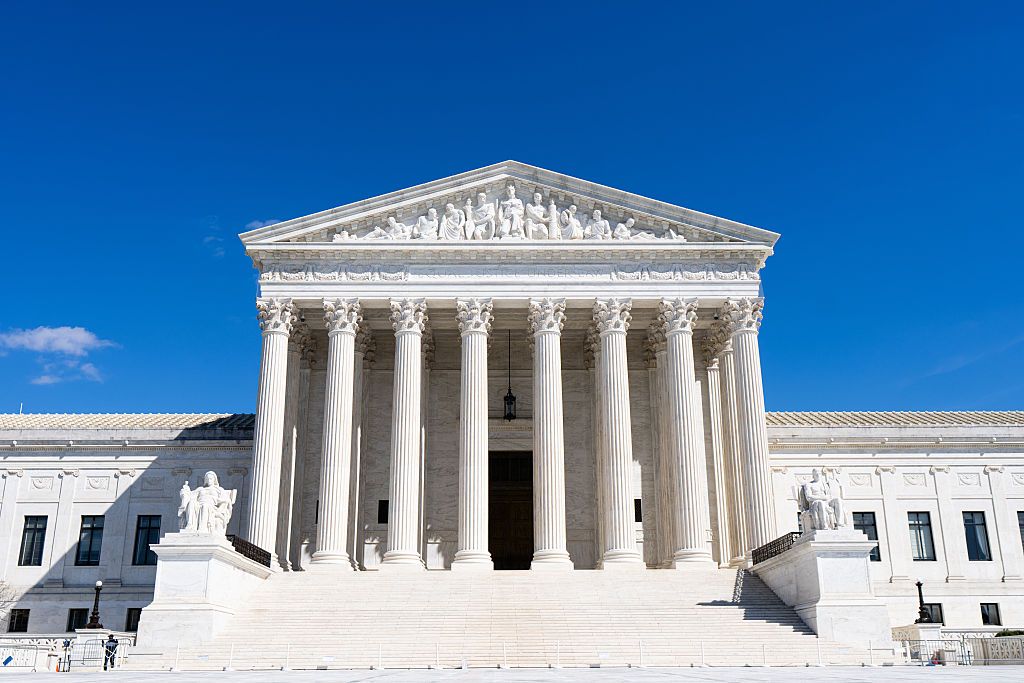
The Supreme Court on Tuesday declined to restore a Biden-era regulation that allows immigration judges to suspend some deportation proceedings. In a brief, unsigned order, the court turned down a request from three cities and a group that provides legal services to immigrants to pause an agreement between Texas and the U.S. Department of Justice that threw out the rule.
There were no noted dissents.
The regulation at the center of the dispute, which provides what is known as “administrative closure,” was adopted by the Executive Office for Immigration Review, part of the Department of Justice, in 2024. Under it, immigration judges may suspend some deportation proceedings – for example, to allow a crime victim or witness to seek relief, such as asylum, from the U.S. Citizenship and Immigration Services, which is a separate agency.
In June of this year, Texas went to federal court in Wichita Falls, where its case was assigned to Chief U.S. District Judge Reed O’Connor – the only federal judge in that area. Calling the administrative-closure rule “one part of the Biden-Harris Administration’s campaign to undermine our immigration laws,” it alleged that the EOIR does not have the authority to adopt the administrative-closure rule. Instead, it wrote, federal law requires an immigration judge, at the end of a proceeding, to “decide whether an alien is removable from the United States.”
Just a few hours after the case was filed, the DOJ and Texas asked O’Connor to enter a final judgment for the state. The DOJ also asked him both to throw out the rule altogether and to issue an order making clear that the EOIR could not adopt a similar rule in the future. O’Connor granted those requests on the same day.
On Aug. 7, three cities with large immigrant populations – Baltimore, Maryland; New Haven, Connecticut; and Columbus, Ohio – and Centro Legal de la Raza, which provides legal services to immigrants, filed an emergency motion to join the case so that they could defend the administrative-closure rule on appeal, when neither Texas nor the federal government intended to do so. O’Connor denied their request on the ground that they lacked a legal right to sue, known as standing. In particular, he rejected the cities’ contention that the elimination of the rule would cost them money because their taxpayers are likely to be deported.
The challengers then went to the U.S. Court of Appeals for the 5th Circuit, which rejected their request to block the consent judgment between Texas and the Department of Justice and thereby reinstate the administrative-closure rule while their appeal continued.
On Oct. 9, the challengers came to the Supreme Court, calling the consent agreement the product of “egregious collusion” and asking the justices to step in. Their attorney, Joshua Salzman of Democracy Forward, argued that permitting the consent agreement to stand could have widespread implications. “If a judgment procured through such open collusion is allowed to remain in effect,” he wrote, “any agency can avoid the strictures of the” federal law governing administrative agencies “by advertising its unwillingness to defend a disfavored regulation and by immediately acquiescing to nationwide relief.”
Urging the Supreme Court to leave the agreement in place, U.S. Solicitor General D. John Sauer contended that the challengers’ request to pause O’Connor’s ruling “attempts to improperly leverage a clear-cut dispute over” the challengers’ efforts to join the case “into a far-reaching attack on the merits of” the court’s approval of the agreement. For its part, Texas told the justices that putting O’Connor’s ruling on hold “would revive a rule the district court declared unlawful, renew the fiscal and sovereign injuries Texas alleged, and unsettle a final judgment accepted by the actual parties.”
Four days after the case was fully briefed, the court denied the challengers’ request without comment.
Continue reading...
[ H/T SCOTUSblog ]