

![‘I had this [bleeping] thing locked up’: Hollywood actress is crushed her son did not turn out gay despite dressing him in drag as a child](https://www.wnd.com/wp-content/uploads/2018/11/curtain-theater-movie-play-pixabay-600.jpg)






AI Is Repricing Capital Before It Reprices The Economy
Authored by Cory Frank via RealClearMarkets,
Earlier this month, the Federal Reserve raised the target range for the federal funds rate by 25 basis points, to 3.75 to 4 percent. Inflation remains elevated even as economic activity continues to expand, productivity is strong and capital investment remains robust.
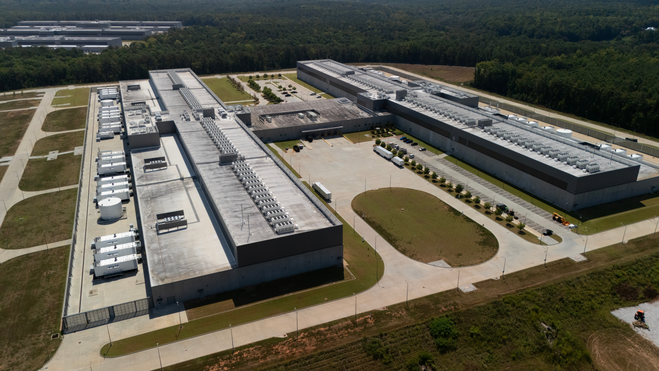
At Jackson Hole a few weeks earlier, Fed Chairman Kevin Warsh highlighted another unusual feature of the economy. Business capital spending is rising rapidly, and he estimated that more than half of its growth this year can likely be attributed to the artificial intelligence buildout.
AI did not cause the Fed's latest rate increase. Inflation, energy prices, and broader economic demand all matter. But the confluence raises a question that receives far less attention than whether AI will eliminate jobs or justify technology valuations:
What is the AI investment boom doing to the price of capital before the productivity gains arrive?
The answer matters even to businesses that never build a data center, buy a GPU or train an AI model.
Artificial intelligence is usually discussed in terms of what it will eventually do. It can automate work, analyze enormous amounts of data, accelerate research, write software and improve decision-making. If those capabilities diffuse throughout the economy, companies should eventually be able to produce more with the same or fewer resources. That could restrain production costs and reduce inflationary pressure.
But before AI can make much of the economy more productive, someone has to build the infrastructure that makes it possible.
McKinsey estimates that data centers could require roughly $6.7 trillion in worldwide capital investment through 2030, including about $5.2 trillion for AI workloads. That means enormous spending on computing hardware, power, cooling, land and the infrastructure connecting it all.
The Federal Reserve is already seeing the effect. Business fixed investment rose at an 11 percent annual rate in the first quarter of 2026, and the Fed concluded that most of that strength appeared connected to infrastructure supporting AI services. At the same time, investment outside AI-related categories, particularly offices and manufacturing structures, remained relatively weak.
That sequencing matters.
The investment comes first. The productivity comes later.
Capital does not have to become scarce for its price to change. Investors only need better alternatives.
For much of the period following the financial crisis, capital was plentiful and interest rates were low. Investors searched for yield. Businesses borrowed cheaply. Real estate benefited from low required returns. Companies could leave excess cash sitting in operating accounts because the opportunity cost was minimal.
The environment today is different.
Data centers need capital. So do power plants, transmission systems, semiconductor facilities and the businesses supporting them. Governments continue to borrow heavily. Traditional infrastructure needs financing. Companies throughout the economy still need money to expand. This can contribute to a broader repricing of capital.
AI is creating potentially productive places to deploy enormous amounts of money. If those opportunities offer compelling returns, every other potential investment has to compete with them.
The economy does not have to run out of money. The opportunity cost of money only has to rise.
Consider an apartment building. Its tenants, rents and operating costs might not change materially. But if an investor can earn more attractive risk-adjusted returns financing data centers, power infrastructure, semiconductor capacity or other investments, that building now competes against a different opportunity set.
An apartment building does not need an AI strategy for AI to affect its valuation.
Higher required returns do more than move bond yields and asset prices. They change which projects actually get funded.
A corporate investment that cleared the hurdle rate when capital cost 5 percent may not clear it at 8 percent. A plant expansion gets delayed. An acquisition no longer pencils. Paying down debt becomes more attractive. Management becomes more selective about capital expenditures, inventory and working capital.
Higher capital costs do not live only in financial markets. They move inside the company.
Cash changes character as well.
When interest rates were close to zero, excess operating cash earned almost nothing. The financial penalty for managing liquidity inefficiently was relatively small. When safe assets offer meaningful returns and borrowing remains expensive, every dollar sitting on a balance sheet carries a measurable opportunity cost.
A company can invest that dollar in its business, reduce debt, return it to shareholders, preserve it for liquidity or earn a market return until it is needed. Treasury management therefore becomes part of capital allocation, not merely an administrative function.
It is also important to distinguish among different prices of money.
The Federal Reserve sets an overnight policy rate. Financial markets determine longer-term yields. Businesses and investors establish hurdle rates based on those benchmarks, risk and the returns available elsewhere. Those rates do not have to move together.
The Fed can eventually reduce short-term rates as inflation moderates while investors continue to require relatively high returns to commit capital for five, ten or thirty years. Conversely, a weakening economy could pull both policy rates and required returns lower.
That is why the central question is not simply whether AI causes the Fed to raise or lower interest rates. It is whether AI raises the marginal cost of capital across the economy before its full productivity benefits arrive.
None of this tells us where AI ultimately takes interest rates.
Rapid labor displacement could increase unemployment, weaken demand and eventually push rates lower. The infrastructure boom could overshoot, leaving excess data-center, semiconductor and power capacity and ending in an investment bust. Or AI could work extraordinarily well, expanding productive capacity, making some forms of U.S. manufacturing more competitive and driving down the cost of goods and services.
Several of those things could happen at the same time.
Those are questions about the mature AI economy.
We should examine them, but they are inherently more difficult to forecast than the capital cycle unfolding in front of us.
Today, the investment demand is observable.
Trillions of dollars are being committed to physical and digital infrastructure. Labor, energy, equipment and capital are being deployed now. Much of the eventual productivity payoff remains ahead of us. That difference matters because the economics of the buildout may look very different from the economics of the mature AI economy.
The first broad economic impact of AI may not be that it makes everything cheaper. It may be that it raises the value of capital.
We are not yet living in the mature AI economy. We are financing its construction.
AI may eventually lower the price of goods. It is already changing the price of capital.
Tyler Durden Tue, 09/29/2026 - 10:25
Continue reading...
[ H/T ZeroHedge ]
Authored by Cory Frank via RealClearMarkets,
Earlier this month, the Federal Reserve raised the target range for the federal funds rate by 25 basis points, to 3.75 to 4 percent. Inflation remains elevated even as economic activity continues to expand, productivity is strong and capital investment remains robust.
At Jackson Hole a few weeks earlier, Fed Chairman Kevin Warsh highlighted another unusual feature of the economy. Business capital spending is rising rapidly, and he estimated that more than half of its growth this year can likely be attributed to the artificial intelligence buildout.
AI did not cause the Fed's latest rate increase. Inflation, energy prices, and broader economic demand all matter. But the confluence raises a question that receives far less attention than whether AI will eliminate jobs or justify technology valuations:
What is the AI investment boom doing to the price of capital before the productivity gains arrive?
The answer matters even to businesses that never build a data center, buy a GPU or train an AI model.
The Investment Comes First
Artificial intelligence is usually discussed in terms of what it will eventually do. It can automate work, analyze enormous amounts of data, accelerate research, write software and improve decision-making. If those capabilities diffuse throughout the economy, companies should eventually be able to produce more with the same or fewer resources. That could restrain production costs and reduce inflationary pressure.
But before AI can make much of the economy more productive, someone has to build the infrastructure that makes it possible.
McKinsey estimates that data centers could require roughly $6.7 trillion in worldwide capital investment through 2030, including about $5.2 trillion for AI workloads. That means enormous spending on computing hardware, power, cooling, land and the infrastructure connecting it all.
The Federal Reserve is already seeing the effect. Business fixed investment rose at an 11 percent annual rate in the first quarter of 2026, and the Fed concluded that most of that strength appeared connected to infrastructure supporting AI services. At the same time, investment outside AI-related categories, particularly offices and manufacturing structures, remained relatively weak.
That sequencing matters.
The investment comes first. The productivity comes later.
A Repricing of Capital
Capital does not have to become scarce for its price to change. Investors only need better alternatives.
For much of the period following the financial crisis, capital was plentiful and interest rates were low. Investors searched for yield. Businesses borrowed cheaply. Real estate benefited from low required returns. Companies could leave excess cash sitting in operating accounts because the opportunity cost was minimal.
The environment today is different.
Data centers need capital. So do power plants, transmission systems, semiconductor facilities and the businesses supporting them. Governments continue to borrow heavily. Traditional infrastructure needs financing. Companies throughout the economy still need money to expand. This can contribute to a broader repricing of capital.
AI is creating potentially productive places to deploy enormous amounts of money. If those opportunities offer compelling returns, every other potential investment has to compete with them.
The economy does not have to run out of money. The opportunity cost of money only has to rise.
Consider an apartment building. Its tenants, rents and operating costs might not change materially. But if an investor can earn more attractive risk-adjusted returns financing data centers, power infrastructure, semiconductor capacity or other investments, that building now competes against a different opportunity set.
An apartment building does not need an AI strategy for AI to affect its valuation.
The Hurdle Rate Moves Inside the Company
Higher required returns do more than move bond yields and asset prices. They change which projects actually get funded.
A corporate investment that cleared the hurdle rate when capital cost 5 percent may not clear it at 8 percent. A plant expansion gets delayed. An acquisition no longer pencils. Paying down debt becomes more attractive. Management becomes more selective about capital expenditures, inventory and working capital.
Higher capital costs do not live only in financial markets. They move inside the company.
Cash changes character as well.
When interest rates were close to zero, excess operating cash earned almost nothing. The financial penalty for managing liquidity inefficiently was relatively small. When safe assets offer meaningful returns and borrowing remains expensive, every dollar sitting on a balance sheet carries a measurable opportunity cost.
A company can invest that dollar in its business, reduce debt, return it to shareholders, preserve it for liquidity or earn a market return until it is needed. Treasury management therefore becomes part of capital allocation, not merely an administrative function.
It is also important to distinguish among different prices of money.
The Federal Reserve sets an overnight policy rate. Financial markets determine longer-term yields. Businesses and investors establish hurdle rates based on those benchmarks, risk and the returns available elsewhere. Those rates do not have to move together.
The Fed can eventually reduce short-term rates as inflation moderates while investors continue to require relatively high returns to commit capital for five, ten or thirty years. Conversely, a weakening economy could pull both policy rates and required returns lower.
That is why the central question is not simply whether AI causes the Fed to raise or lower interest rates. It is whether AI raises the marginal cost of capital across the economy before its full productivity benefits arrive.
Don't Confuse the Buildout With the Equilibrium
None of this tells us where AI ultimately takes interest rates.
Rapid labor displacement could increase unemployment, weaken demand and eventually push rates lower. The infrastructure boom could overshoot, leaving excess data-center, semiconductor and power capacity and ending in an investment bust. Or AI could work extraordinarily well, expanding productive capacity, making some forms of U.S. manufacturing more competitive and driving down the cost of goods and services.
Several of those things could happen at the same time.
Those are questions about the mature AI economy.
We should examine them, but they are inherently more difficult to forecast than the capital cycle unfolding in front of us.
Today, the investment demand is observable.
Trillions of dollars are being committed to physical and digital infrastructure. Labor, energy, equipment and capital are being deployed now. Much of the eventual productivity payoff remains ahead of us. That difference matters because the economics of the buildout may look very different from the economics of the mature AI economy.
The first broad economic impact of AI may not be that it makes everything cheaper. It may be that it raises the value of capital.
We are not yet living in the mature AI economy. We are financing its construction.
AI may eventually lower the price of goods. It is already changing the price of capital.
Tyler Durden Tue, 09/29/2026 - 10:25
Continue reading...
[ H/T ZeroHedge ]