



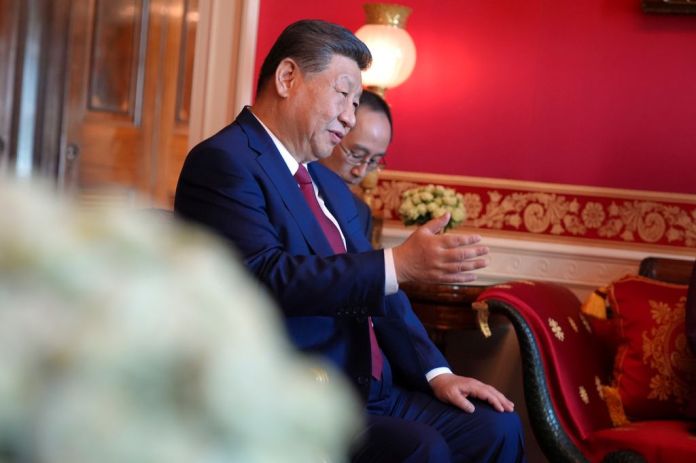
Last week during his arrival at the White House, Chinese President Xi Jinping invited 100,000 American students to study in China over the next five years. This isn’t Xi’s first invitation to American students. In November 2023 on a visit to San Francisco, he invited 50,000 students. While this invitation sounds like an opportunity for American students to visit and understand our nation’s greatest geopolitical competitor, American students, universities, and school districts should consider the risks before accepting.
American students face real risks to their safety. Earlier this month, the State Department issued a warning for Americans to “exercise increased caution” while visiting due to “the arbitrary enforcement of local laws, the use of exit bans without a fair and transparent process under the law, and the risk of unjust arrest or detention.” The warning continued, “Expansive national security, counterespionage, and data security laws grant Chinese officials broad discretion to detain or interrogate foreign nationals.”
This isn’t merely a hypothetical warning, though. Min Zin, an American citizen and Burma scholar, has been detained by the Chinese since June 3 on undefined charges. In August, Secretary of State Marco Rubio designated him as wrongfully detained. Just like these potential 100,000 students, Min was invited by the Chinese government. On his way to attend an academic conference in the city of Kunming, Min was detained inside the airport. One American official described his arrest, saying, “One minute his colleagues and family were engaging with him on the phone … and the next minute communication was lost.”
Even if not detained or intimidated, students’ privacy will likely not be respected. The same State Department advisory warns, “There is no expectation of privacy on mobile or other networks in China. China’s internet and mobile service providers must provide Chinese intelligence and security services with on-demand access to data, networks, and related infrastructure.”
Anything the Chinese government deems “sensitive” could trigger action. According to the State Department, “Authorities may investigate or punish students and institutions for views that go against Chinese government policies.” The department continues that the Chinese government could harass or detain American citizens for even “accessing publicly available material if authorities deem it as sensitive or a national security risk.” This puts the security of visiting American students at the whims of Chinese security services.
Beyond safety risks, the Chinese Communist Party has malign aims for American students. Defending Education’s report “Little Red Classrooms: Young Envoys Scholarship Program” details China’s aims “to influence how youth in the United States view China.” This program was launched alongside Xi’s 2023 invitation to 50,000 students and is a primary vehicle for bringing American students to China. It has since hosted programming for at least 86 universities and 27 K-12 schools.
As the Chinese government courts more American students, universities and schools would do well to familiarize themselves with the YES program. It is run by the China Education Association for International Exchange, an organization guided by “Marxism-Leninism” and Xi Jinping Thought on Socialism. CEAIE has deep ties to the CCP and committed to “always adhere to the leadership of the Party.” CEAIE’s leadership even includes CCP officials, including its secretary-general.
STOP CHASING CHINA’S MIDDLE CLASS: IT’S BROKE, AND XI IS KEEPING IT THAT WAY
American officials have identified CEAIE as an instrument of China’s “United Front,” which aims to build support for CCP objectives with non-CCP individuals. Multiple university trips with YES included engagement with United Front organizations such as a University of Chicago group visiting with the Beijing People’s Association for Friendship with Foreign Countries. In 2025, Rep. John Moolenaar (R-MI) wrote letters to schools warning of the risks surrounding student trips to China and specifically called out organizations like CEAIE, saying they have been “publicly identified by U.S. intelligence agencies as CCP front groups tasked with advancing Beijing’s United Front work, which seeks to co-opt local leaders and neutralize opposition to CCP policies.”
American students visiting China must be aware of the risks involved before accepting Xi’s invitation. He and the Chinese government do not have their best interests in mind. Students face risks to their safety and freedom of movement. Further, they must understand the Chinese government aims to indoctrinate them in an effort to normalize their authoritarian regime. Put simply, American students, universities, and schools should critically examine what’s on the other side of China’s open door.
Reagan Dugan is the director of higher education initiatives at Defending Education.
Continue reading...
[ H/T Washington Examiner ]