

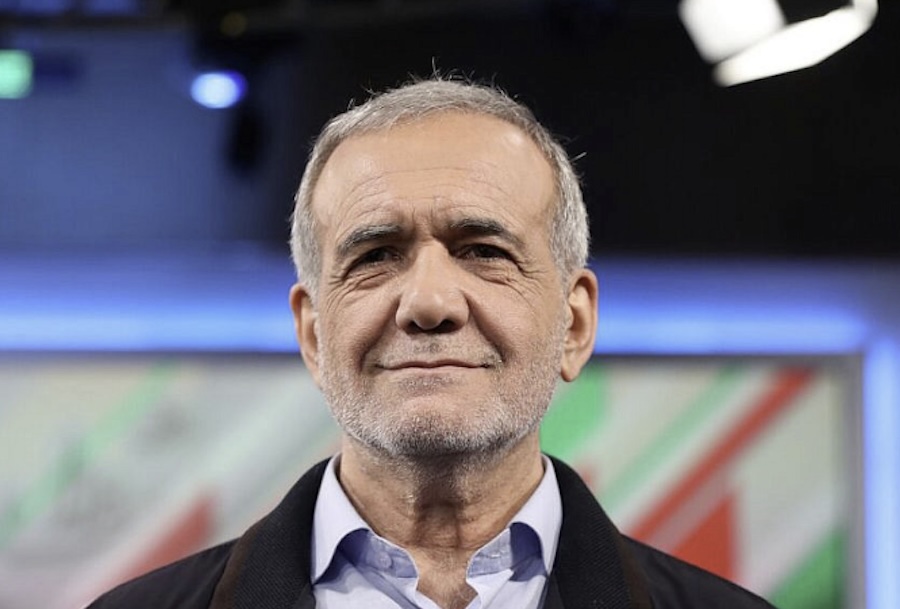


A sermon James Talarico delivered seven years ago is back in the spotlight—and the list of “prophetic voices” he offered to a Christian congregation is raising a very basic question.
Who, exactly, is supposed to guide the Church?
In the resurfaced recording, Talarico tells worshippers at St. Andrew’s Presbyterian Church in Austin that their prophetic voice might come from another faith tradition. He names Buddha, Muhammad, Moses, Lao Tzu, Thich Nhat Hanh and the Dalai Lama.
Then he moves from religion to history, offering another list that includes Black Elk, Martin Luther King Jr., Dorothy Day, Dolores Huerta, Toni Morrison, Mahatma Gandhi and Mr. Rogers.
Here are the remarks for yourself:
The recording is authentic, but it is not new.
Talarico originally posted the full sermon in September 2019, describing it as a message about “the moral crisis we face in our country and in our world.” The remarks circulating now come from that older sermon, not a campaign appearance delivered this week.
That distinction matters because voters deserve the real timeline.
But the age of the recording does not make its substance irrelevant. Talarico is now the Democratic nominee for the U.S. Senate in Texas, and his public identity as a Christian has become a central part of his political pitch.
When a politician repeatedly invokes faith as part of his case for power, voters are entitled to examine what he actually teaches when he stands in a pulpit.
The Gateway Pundit reported that the sermon was delivered at St. Andrew’s Presbyterian in Austin and first posted in September 2019. Its report identified the segment after Lone Star Liberty PAC resurfaced it on September 27, 2026, and reproduced the full list Talarico gave the congregation.
That list did not stop with Muhammad, Toni Morrison and Mr. Rogers. It also included Buddha, Moses, Lao Tzu, Thich Nhat Hanh, the Dalai Lama, Black Elk, Martin Luther King Jr., Dorothy Day, Dolores Huerta and Mahatma Gandhi.
The source report’s tone was openly hostile to Talarico, but the underlying recording supplies the important evidence. Viewers do not have to trust an editor’s adjective when they can hear the candidate’s own words and judge the theological meaning for themselves.
The most revealing part is not that Talarico thinks Christians can learn something from people outside Christianity.
Of course they can.
A Christian can appreciate a novelist’s moral insight, a neighbor’s courage or a teacher’s wisdom without confusing any of them with divine revelation. Common grace is not the same thing as spiritual authority.
The problem is the category Talarico chose.
This went far beyond recommending a reading list. He told a Christian congregation to seek “a different prophetic voice from a different faith tradition,” then placed founders and teachers of incompatible religions beside civil-rights leaders, writers and television personalities.
That collapses an enormous theological boundary.
Christianity makes exclusive claims about Jesus Christ. John 14:6 does not present Him as one inspiring guide among many. Acts 4:12 does not describe salvation as a road with interchangeable spiritual authorities.
Christian doctrine commands love of neighbor, including people who hold a different faith.
Love does not require pretending that contradictory claims about God, Christ and salvation can all carry the same prophetic weight.
One response to the resurfaced remarks went directly to that concern, citing Paul’s warning in Galatians about accepting a different gospel.
Talarico’s defenders may argue that he was using “prophetic” in a loose cultural sense—someone who speaks uncomfortable truths to power.
That interpretation is more charitable than claiming he formally endorsed every doctrine held by every person on his list.
It also does not solve the problem.
Words mean something, especially from a pulpit. In a Christian church, “prophetic voice” is not a neutral label for any admired public figure.
It carries biblical authority and spiritual weight.
That is why the recording has struck such a nerve.
It fits a broader pattern in Talarico’s religious rhetoric: Christian language is retained, but the hard boundaries of historic Christian belief are softened until almost every spiritual tradition can be presented as another angle on the same truth.
The result may sound inclusive. It is also something very different from orthodox Christianity.
Another viewer summarized the distrust in much sharper terms:
The rhetoric is harsh, but the political stakes are real.
The Texas House of Representatives identifies Talarico as a former public-school teacher first elected to the state House in 2018. His official biography says he earned degrees from the University of Texas at Austin and Harvard before teaching middle school on San Antonio’s West Side.
The state profile also lists his service on the Public Education, Juvenile Justice and Family Issues, and Calendars committees. It credits him with work on a major school-finance overhaul, student mental-health funding, pre-K class-size limits and an insulin-copay cap.
Those details show why his words carry weight beyond a church sanctuary. He has spent years turning his ideas into state law, committee work and a statewide political identity built around education, morality and public service.
The Federal Election Commission lists him as a Democratic candidate for the U.S. Senate in Texas for the 2026 election cycle. That federal filing turns an old church recording into current campaign evidence: Texans are evaluating the worldview of a man seeking one of the most powerful elected offices in the country.
He is campaigning statewide while still serving in the Texas Legislature, and his religious language is part of the public case he makes for leadership. The issue is whether voters find those beliefs coherent with the Christian authority he repeatedly invokes.
He is not an obscure seminarian discussing comparative religion in a classroom. He is asking millions of Texans to trust his judgment with national power.
Faith alone should not decide a voter’s ballot. Americans do not elect pastors-in-chief, and the Constitution rightly prohibits a religious test for public office.
Character, honesty and judgment, however, are fair game.
So is consistency.
If Talarico uses Christianity to authenticate his politics, voters have every right to ask whether his version of Christianity still treats Christ as the center—or merely as one voice in a much larger chorus.
The sermon may be from 2019.
The question it raises is very much on the ballot in 2026.
Continue reading...
[ H/T WLT Report ]


