



Last week’s midterm elections produced stunning Democratic victories across the country, but maybe they shouldn’t have been such a surprise.
The congressional map in both houses appeared to favor Republicans, but it was ultimately no match for the national conditions that fed the blue wave.
Republicans weren’t unambiguously leading in any of the competitive Senate races.
In retrospect, one of the clearest signs that the 2022 red wave wasn’t going to materialize was that Republicans weren’t clearly beating Democrats in the races that were going to decide Senate control. The top six races that were decided on Election Day split evenly between the two parties, and the seventh went to a runoff, which the Democrats ultimately won, netting them an additional seat in the chamber.
A similar dynamic unfolded this year, but much worse for Republicans. GOP Senate candidates led in none of the toss-up Senate races in the final RealClearPolitics averages, with Iowa tied. A good night for Senate Republicans on Nov. 3 would have required the polling averages to be wrong in more than a half-dozen states, which would be unusual even in an era of high-profile polling misses.
Sens. Ashley Hinson (R-IA), Roger Marshall (R-KS), Jon Husted (R-OH), and Susan Collins (R-ME) led in the occasional individual poll, usually by small margins. Republican Mike Rogers led in at least one poll early in the race after Democrats nominated Sen.-elect Abdul el Sayed (D-MI). But polls favoring the GOP in most of these races became less rather than more common as the election approached.
In the end, Democrats won nearly all the competitive Senate races. They won some, such as South Carolina, that weren’t widely deemed competitive, at least not until a late New York Times-Siena poll showed Sen.-elect Annie Andrews (D-SC) tied with Sen. Darline Graham (R-SC). They may yet win the outstanding races in Alaska and Mississippi for a clean sweep.
The fact that so many red states were poised to elect Democratic senators, often for the first time in decades, should have told us something about the House too. Yes, a three-seat House majority was always going to be tough for Republicans to defend. But emerging cracks in the red-state firewall were a warning sign that a higher number of House races were going to be competitive as well.
The reason there was any suspense about the Senate was that there had been a number of recent polling misses in red-state races, including in previous senatorial contests in Kansas, South Carolina, and Mississippi. The polling had been wrong in Maine six years ago when Collins consistently trailed but ended up winning by nearly 9 points. The polls had been off in the Michigan Democratic Senate primary just this year.
Those were the states where the Senate majority was going to be decided in 2026. And while Democrats led basically everywhere, they were rarely ahead by enough to compensate for much of a polling miss.
“If polls had been right on the nose and the generic had ended up at D+8.4, the Senate would have been kind of a bust for Dems, 50-50 or 51-49,” Republican pollster Patrick Ruffini posted. “Shifting every state right by 5, Rs win AK, IA, OH (by 0.1), MS, SC. KS is a tie.”
The polls also looked too good for the Democrats to be true as it was. Independents and even Republicans were voting for Democratic Senate candidates by margins that exceeded anything in recent electoral history. The pollsters themselves admitted they were having trouble getting Republicans to respond to their surveys, possibly leading to response bias. Both the New York Times and the Washington Post published stories that were essentially disclaimers about their own polls.
It was genuinely difficult to tell apart the signs of a blue wave and a big polling miss.
Finally, Democrats closed the campaign with a bad weekend. Rep. Haley Stevens (D-MI) flipped her endorsement from el Sayed to Rogers in the Michigan Senate race. Democrats vented their worries about Sen.-elect James Talarico (D-TX) to the New York Times. Reporting on the ties between the “fake Dan Sullivan” and Democrat Mary Petola’s campaign injected uncertainty into the Alaska Senate race.
But so much early voting had already happened that the impact of these events was limited. The Talarico worries were likely just Democrats preparing themselves emotionally in case Texas disappointed them once again. Instead, the whole statewide Republican ticket lost. Alaska remains uncalled.
Much of what looked too good to be true for Democrats actually happened. If anything, the polls underestimated Democrats this year. In past red-state polling misses, the bias peaked in the summer, and the races tightened again after Labor Day. This year, there wasn’t much tightening. Instead, many races started to break toward the Democrats in earnest.
Meanwhile, the national environment was terrible for Republicans. President Donald Trump’s job approval rating was below 40% in the RealClearPolitics average and stood at 37% on Election Day in the exit polls. More than 60% thought the country was on the wrong track. The generic congressional ballot looked worse for Republicans than in 2018, the last blue wave year.
2028 JOCKEYING ALREADY UNDERWAY
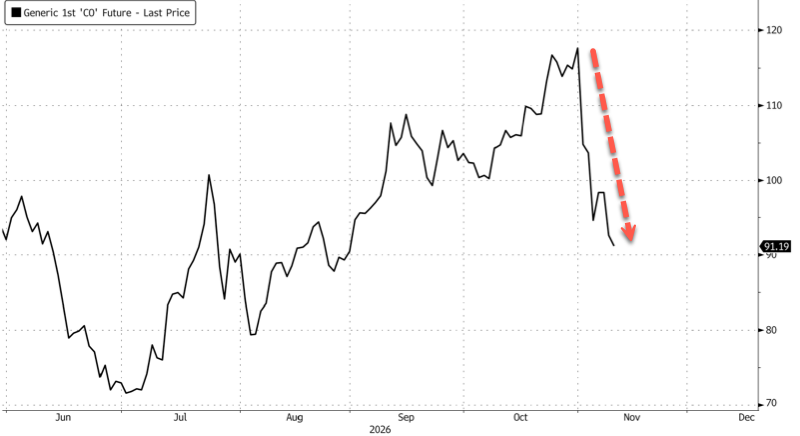
Public dissatisfaction with the economy, especially the cost of living, government corruption, and the Iran war, was sky-high. All of these issues favored the Democrats. Trump was underwater before he started the Iran war, which was itself unpopular from the beginning, before sustained hikes in gasoline and diesel prices.
Midterm elections almost always go badly for the party that holds the White House. There were many obvious reasons why this one was even worse than normal.
Continue reading...
[ H/T Washington Examiner ]