



Imagine a punishing Super Bowl. At halftime, your team leads 42–3. The opponent is battered, the trophy seems practically engraved, and the crowd is celebrating before the game is over.
Then the weather turns. The opposing coaches adjust their formations, exploit weaknesses, and discover they can survive without matching your firepower. Your head coach wants to finish the job, but the offensive coordinator fears turnovers. He urges caution, short runs, and running down the clock.
The other team keeps fighting. Your offense stalls. The defense, repeatedly sent back onto the field, grows exhausted. By the fourth quarter, disgusted fans are heading for the exits. At the two-minute warning, the score is 42–39.
The offensive coordinator approaches the microphones and blames the defense for giving up too many points.
His offense hasn’t scored since halftime.
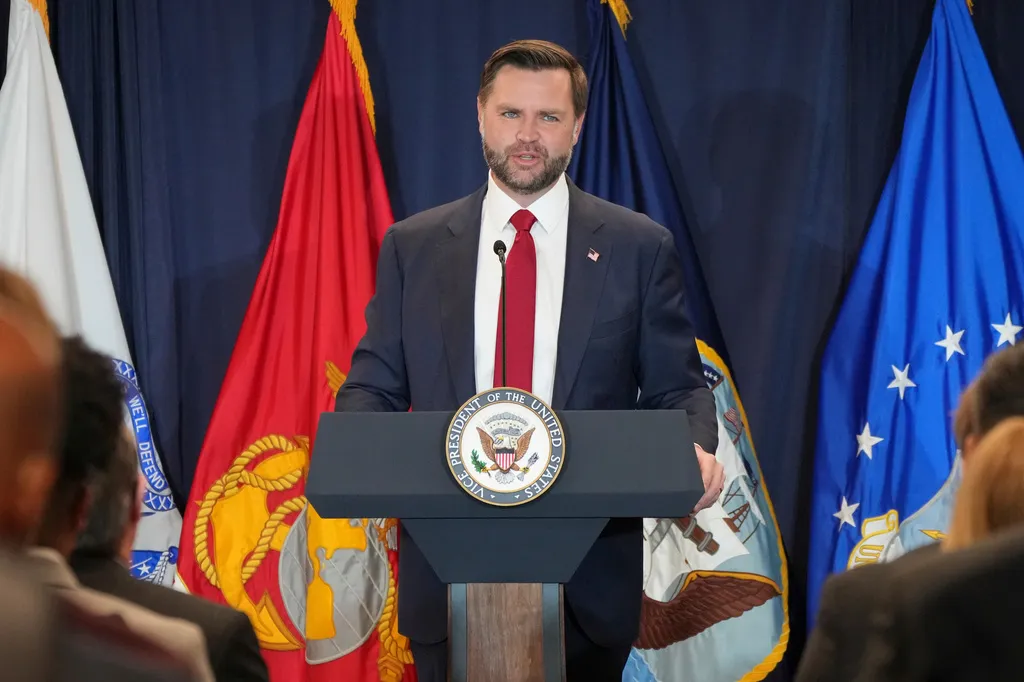
That scene came to mind when Vice President JD Vance explained Republicans’ Nov. 3 election defeat.
“The reason we lost is the war,” Vance declared. He also relayed a pollster’s finding that disaffected voters wanted to “change our relationship to Israel.”
These were separate claims. Vance did not say Israel, much less American Jews, caused the defeat. But invoking Israel while assessing Washington’s own decisions invites an uncomfortable question: What about the plays he helped call?
The actual military balance was never 42–39. According to congressional testimony by the commander of U.S. Central Command, the initial campaign damaged or destroyed more than 85% of Iran’s ballistic-missile, drone, and naval defense industrial base.
Iran’s rulers, however, survived. Unable to match American airpower, Tehran exploited disruption in the Strait of Hormuz and the economic and political costs of prolonged confrontation. Military superiority had not produced a durable strategic outcome.
Vance was no spectator. He helped negotiate the June agreement suspending hostilities while postponing the hardest nuclear questions.
Reporting on the administration’s internal debate shows that Vance, Steve Witkoff, and Jared Kushner favored accepting the agreement. Secretary of State Marco Rubio, CIA Director John Ratcliffe, and Defense Secretary Pete Hegseth questioned whether Iran would make meaningful nuclear concessions.
The interim terms allowed a 60-day negotiating period, with the disposition of enriched uranium and future enrichment left for a final settlement. That settlement never arrived. Renewed Iranian attacks on shipping helped unravel the agreement.
I warned in an earlier Washington Examiner op-ed that, in repeated bargaining, Tehran learns from American pauses and deadlines. If Iran concludes Washington wants an exit more urgently than it wants concessions, holding out becomes a strategy.
None of this proves more bombing would have toppled the regime or produced a better agreement. Military commanders raised serious concerns about depleted munitions and risking escalation. A ceasefire can save lives. And President Donald Trump, not his vice president, made the final decisions.
Those are reasons to examine Vance’s advice carefully, not to exempt him from responsibility for it.
Former White House press secretary Ari Fleischer offered a different diagnosis: “The problem was not the Iran War. It was the cease fire.”
Fleischer’s confidence in what continued fighting might have accomplished is debatable. His question about whether Washington stopped before securing its objectives is not.
And now Vance is trying again.
Nov. 6 reporting describes him speaking almost daily with Qatari and Pakistani intermediaries, seeking another ceasefire and renewed nuclear negotiations. A proposed direct meeting with Iran has not yet occurred.
Diplomacy is not surrender. But what has changed since June? Which nuclear restrictions would Tehran now accept? How would they be verified? What consequences would follow violations?
Vance should answer those questions before returning to the same playbook.
His election analysis, meanwhile, introduced Israel into the explanation. Criticism of an ally is legitimate. But history gives special weight to the danger of directing public resentment toward Jews — or Israel as a presumed stand-in for Jews — when a country is angry over its own reverses.
That does not establish Vance’s motives. It makes careful attribution of responsibility all the more important. The United States chose to fight, negotiated the pauses, and decided when to strike again. Those were American decisions.
The game is not over. Washington still needs verifiable nuclear restrictions and reliable passage through Hormuz. Military pressure and diplomacy alike must be measured against those objectives, not against the political desire to leave the field.
VANCE IS BLAMING ISRAEL FOR THE MIDTERM WIPEOUT HIS FRINGE ALLIES WANTED
There is one final wrinkle. Vance is being discussed as a possible presidential candidate in 2028. The offensive coordinator may soon seek the head coach’s job.
Before he asks to call every play, he should explain why his offense stopped scoring — and why, with the game still on the line, he’s calling the same play again.
Arie Blitz, M.D., M.B.A., is a retired physician and independent writer in Weslaco, Texas, who writes on foreign policy, medical ethics, and public policy.
Continue reading...
[ H/T Washington Examiner ]