






Thanksgiving is around the corner, and with it, the usual family drama. You know how it goes — someone mutters a snarky line about the president, and suddenly the food goes cold while two aunts shout about the fate of the country. Somebody tries steering the talk to football. Someone else doubles down. By dessert, you’re already regretting agreeing to host Christmas.
Americans have always argued over politics — the founders argued plenty — but something feels different now. Political disagreement has taken on a moral edge. We call anything the other side does outrageous, yet defend the same thing when our side tries it. Constitutional limits matter, until it’s someone on our team behind the desk.
Even today, politicians promise to save the country if you’ll just give them a little more power. Few bother to ask what happens when that same power falls into our opponents’ hands.
I propose a thought experiment.
Resurrect Thomas Paine and Edmund Burke for a week. Give them a crash course on smartphones, let them tour modern Washington, watch Congress in action, attend a rally, and scroll through the wastes of social media. Paine would undoubtedly be disappointed. Burke? He’d probably want a stiff drink or two.
Now, add George Mason, the Virginian who was the primary author of the Declaration of Rights, and ask all three what they see in modern political discourse.
It wouldn’t be a comfortable discussion.
The same old arguments, still not settled
Yuval Levin’s book, The Great Debate, traces the clash between Paine and Burke — a debate that helps define the origins of, and tensions between, liberalism and conservatism. Paine’s Common Sense pushed for independence when many were still hoping for a compromise with Britain. He had little patience for inherited privilege or institutions demanding obedience simply because they had existed for generations.
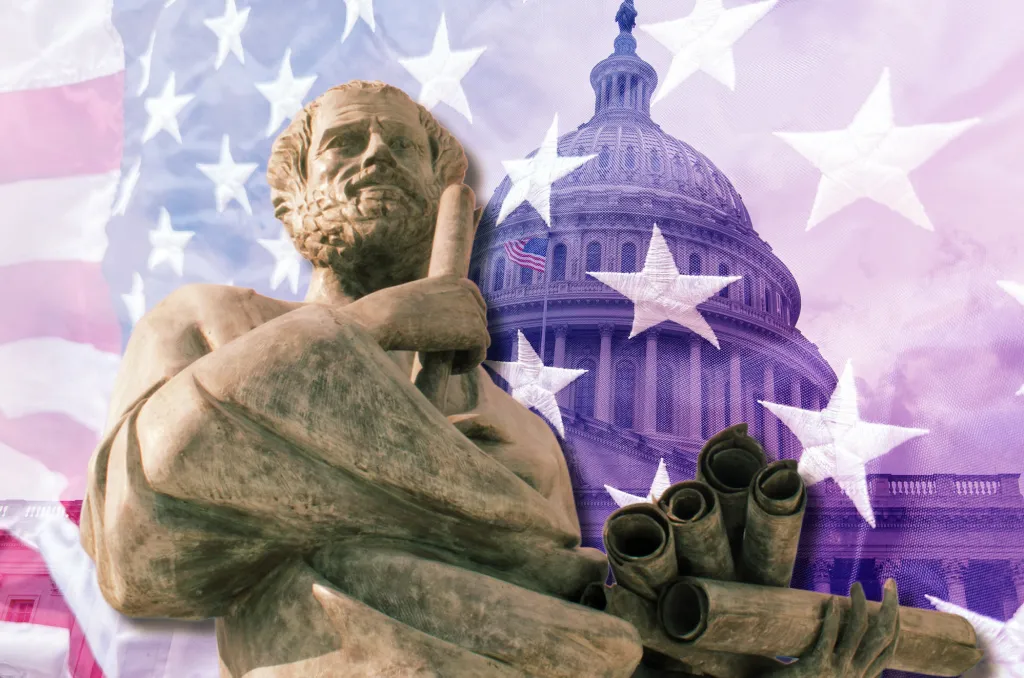
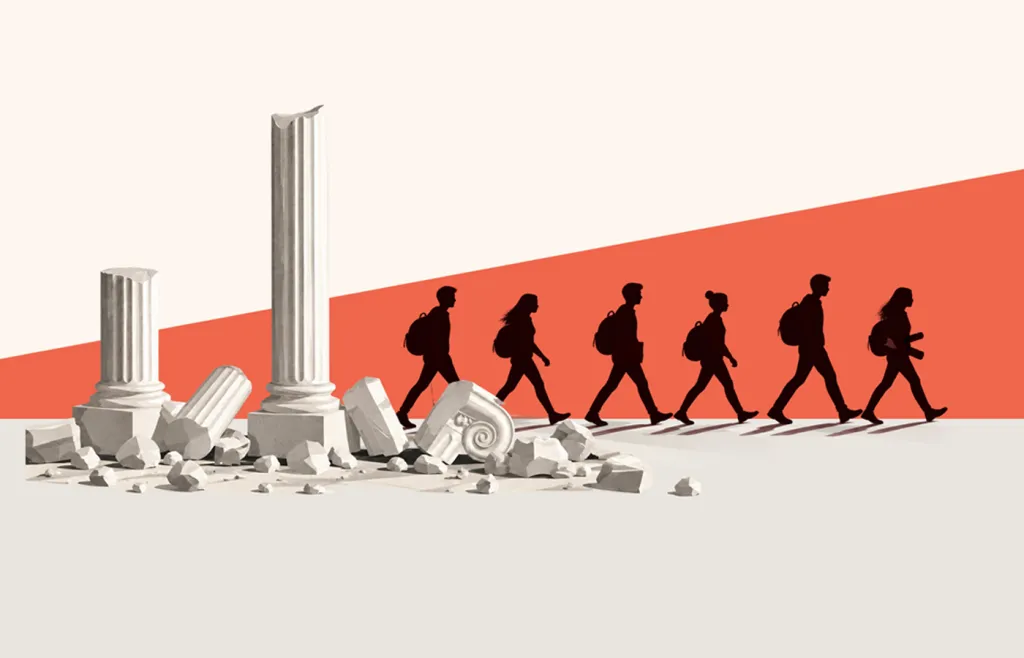
(Thomas Fluharty for the Washington Examiner)
" data-large-file="https://www.washingtonexaminer.com/wp-content/uploads/2026/10/Cover.110426.jpg?w=1024" height="658" width="1024" src="https://www.washingtonexaminer.com/wp-content/uploads/2026/10/Cover.110426.jpg?w=1024" alt="What Thomas Paine, Edmund Burke and George Mason can teach conservatives about introspection and debate." class="wp-image-4785546" srcset="https://www.washingtonexaminer.com/wp-content/uploads/2026/10/Cover.110426.jpg 1400w, https://www.washingtonexaminer.com/wp-content/uploads/2026/10/Cover.110426.jpg?resize=300,193 300w, https://www.washingtonexaminer.com/wp-content/uploads/2026/10/Cover.110426.jpg?resize=768,494 768w, https://www.washingtonexaminer.com/wp-content/uploads/2026/10/Cover.110426.jpg?resize=1024,658 1024w" sizes="(max-width: 1024px) 100vw, 1024px">
(Thomas Fluharty for the Washington Examiner)
Burke took a different approach. An Irish-born member of Parliament, he sympathized with the American colonists but was alarmed by the French Revolution. In his Reflections on the Revolution in France (1790), he warned that reformers could destroy valuable institutions without understanding what those institutions actually did.
Burke supported reform, but he wanted to know whether the replacement would work. Paine’s question: Is the current system just?
America needs both approaches. Unfortunately, our political parties have become selective about which one they take.
How the GOP learned to love presidential power
For decades, Republicans distrusted Washington. Ronald Reagan built his brand on this distrust. The GOP, once the party of limited government and federalism, blared warnings about too much executive power.
President Donald Trump flipped the script. It wasn’t all out of nowhere — plenty of Republican voters were fed up: factories closed, jobs gone, “experts” still talking up the wonders of free trade while real people watched their towns fade. Trump tapped into that frustration, forcing the GOP to rethink its positions on trade, immigration, foreign policy, and what government owed to its citizens.
Paine would have understood the anger at out-of-touch elites. Burke would warn that when institutions ignore the public, trust deteriorates.
But the price was steep — a party that long warned against unchecked federal power became eager to wield it. Tariffs, executive orders, national emergencies — suddenly, these tools were fine, as long as the “right” president used them.
The rationales aren’t always wrong: A country must defend itself, respond to unfair trade, enforce laws, and maintain order. The Constitution gives presidents substantial authority. But no president gets bonus authority just because Congress moves slowly or judges ask tough questions. What’s constitutional doesn’t change because the cause feels necessary in the moment.
FILE – Jon Torsch wears a T-shirt promoting democratic socialism during a gathering of the Southern Maine Democratic Socialists of America at City Hall in Portland, Maine, July 16, 2018. (AP Photo/Charles Krupa)
" data-large-file="https://www.washingtonexaminer.com/wp-content/uploads/2026/08/AP26208600740800_066700.jpg?w=1024" src="https://www.washingtonexaminer.com/wp-content/uploads/2026/08/AP26208600740800_066700.jpg?w=1024" alt="T-shirt promoting democratic socialism" class="wp-image-4694280" srcset="https://www.washingtonexaminer.com/wp-content/uploads/2026/08/AP26208600740800_066700.jpg 1024w, https://www.washingtonexaminer.com/...08/AP26208600740800_066700.jpg?resize=300,159 300w, https://www.washingtonexaminer.com/...08/AP26208600740800_066700.jpg?resize=768,407 768w" sizes="(max-width: 1024px) 100vw, 1024px">
Jon Torsch wears a T-shirt promoting democratic socialism during a gathering of the Southern Maine Democratic Socialists of America at City Hall in Portland, Maine, July 16, 2018. (AP Photo/Charles Krupa)
Would Republicans accept their own tactics if a Democratic president tried them? They used to ask questions like that. They need to again.
Burke never opposed all reform. He insisted that if you destroy an institution, you better have something solid to replace it. Otherwise, chaos fills the vacuum, and what follows could be worse. Knocking things down is easy. Running what’s left is another story.
Before you send in the wrecking crew, you need real answers.
The Democratic Party and the socialist temptation
Democrats wrestle with other temptations. For years, they balanced market economics with calls for regulation, social insurance, and greater government involvement in economic security. Bill Clinton supported welfare reform and free trade. Barack Obama expanded government involvement in health coverage without proposing to replace capitalism.
The Democratic Socialists of America want to go considerably further.
The DSA’s Workers Deserve More program calls for public ownership of major corporations and essential industries. Its constitutional proposals are equally dangerous and ambitious: abolish the Electoral College and Senate; replace the presidency and Supreme Court with institutions chosen by and subordinate to Congress; and establish a multiparty system with proportional representation.
These radical proposals envision a fundamentally different arrangement of economic and political authority. Conservatives should understand the grievances that give such ideas an audience.
A 1750 wedding portrait of George Mason by Dominic W. Boudet, based on a now-lost work by John Hesselius.
" data-large-file="https://www.washingtonexaminer.com/wp-content/uploads/2026/10/Feat.Burke3_.110426.jpg?w=1024" height="658" width="1024" src="https://www.washingtonexaminer.com/wp-content/uploads/2026/10/Feat.Burke3_.110426.jpg?w=1024" alt="A 1750 wedding portrait of George Mason by Dominic W. Boudet, based on a now-lost work by John Hesselius." class="wp-image-4785547" srcset="https://www.washingtonexaminer.com/wp-content/uploads/2026/10/Feat.Burke3_.110426.jpg 1400w, https://www.washingtonexaminer.com/wp-content/uploads/2026/10/Feat.Burke3_.110426.jpg?resize=300,193 300w, https://www.washingtonexaminer.com/wp-content/uploads/2026/10/Feat.Burke3_.110426.jpg?resize=768,494 768w, https://www.washingtonexaminer.com/...26/10/Feat.Burke3_.110426.jpg?resize=1024,658 1024w" sizes="auto, (max-width: 1024px) 100vw, 1024px">
A 1750 wedding portrait of George Mason by Dominic W. Boudet, based on a now-lost work by John Hesselius.
Housing costs have put homeownership out of reach for many young families. Healthcare bills can devastate household finances. Student debt follows graduates throughout adulthood. Hardworking people wonder whether they will enjoy the financial security their parents expected. Dismissing these concerns as envy or laziness is a poor substitute for answering them.
Paine certainly wouldn’t have dismissed them.
In Agrarian Justice (1797), Paine proposed payments to young adults and pensions for older people, financed by a levy on inherited land. He believed private property rights could coexist with obligations to people disadvantaged by existing economic arrangements.
Paine wasn’t a modern socialist. His proposal didn’t involve government ownership of major industries. But concern about economic inequality was hardly foreign to the American revolutionary tradition.
Recognizing a legitimate grievance, though, doesn’t require accepting every proposed remedy.
The DSA argues that essential industries should answer to democratic priorities rather than private owners. Supporters see public ownership as a way to reduce exploitation and increase accountability.
But public ownership doesn’t eliminate power— it simply changes who exercises it.
Someone must decide where housing gets built, how energy is produced, which industries receive investment, and what happens when demand exceeds supply.
Private markets have defects. Monopolies can restrict competition, businesses can manipulate markets, and established interests can use government to protect themselves.
Public ownership creates a different set of concerns. When economic decisions become political, citizens need effective ways to challenge those who make them. Who appoints these officials? Who removes them when they’re wrong?
The DSA’s constitutional proposals make those questions more consequential.
Critics argue that the Senate inequitably favors smaller states, the Electoral College can override the popular vote, and unelected judges wield excessive influence over public policy. Those objections deserve examination. The Constitution itself provides a process for amendment.
But majorities can be wrong. Powerful interests can influence legislatures. Elected representatives can abuse authority just as presidents and judges can.
Replacing constitutional checks requires more than promising democratic institutions will act in the best interests of the people they serve. Americans deserve to know how dissenters and minority rights would be protected, and what would restrain a temporary legislative majority.
Democratic socialism differs from the authoritarian communism that ruled the Soviet Union. Still, the Soviet experience warns about concentrating economic and political power in the same hands. Soviet leaders claimed to govern for workers while denying them meaningful political control.
Good intentions offer no reliable protection against abuses of power.
The Democratic Party, a coalition of moderates, liberals, progressives, and democratic socialists, must decide how much of the DSA’s program it wishes to embrace.
City Hall, political promises, and the realities of governing
Whatever our political philosophy, we make economic promises more easily during campaigns than we deliver them in government.
Consider affordable housing.
A politician can promise cheaper rents. A legislature can approve subsidies. But homes still require land, workers, materials, financing, roads, and water and sewer capacity.
Someone has to pay for those things.
Visualize a city council meeting over a proposed development. Young families want to live near their jobs. Longtime residents worry about traffic, crowded schools, water supplies, and neighborhood changes.
Paine would challenge the homeowners. Why should existing property owners prevent others from entering the community? Are restrictions securing public safety or reinforcing established advantages?
Burke would question the developers and council. Have they accounted for infrastructure costs? What happened when similar projects were built? Are legitimate concerns being dismissed because they complicate an attractive plan?
Neither argument settles the matter.
The council must examine evidence, consider costs, and make a decision some residents won’t like. That’s government in practice. It seldom resembles campaign literature.
New York City offers another illustration. Mayor Zohran Mamdani, elected on a socialist platform, retained police commissioner Jessica Tisch despite disagreements with activists over policing. The DSA’s broader program calls for abolishing police and prisons. A mayor, meanwhile, must answer for public safety today.
A political movement can promise a new society. A mayor still has to make sure the garbage gets collected.
The Constitution wasn’t written for angels
The Republican embrace of expansive presidential power, and the DSA’s proposals to restructure government, raise different constitutional questions. Their programs aren’t interchangeable.
But each invites examination of the relationship between political objectives and restraints on authority.
The Founders knew the problem firsthand. They resisted a British government they believed wielded arbitrary power. After independence, they discovered Americans could abuse power themselves.
The Constitution of 1787 sought a national government strong enough to function while dividing its powers to protect liberty. Delegates disagreed over representation, executive authority, federalism, and slavery. Some compromises preserved terrible injustices.
They nevertheless understood that political power could be dangerous even when people claimed to serve the public good.
James Madison captured the problem in Federalist No. 51: “If men were angels, no government would be necessary.” Madison didn’t expect angels to win elections. He wanted institutions that could check one another when ordinary human motivations took over. Government, he argued, must control the governed and then be obliged to control itself.
We tend to measure political success by whether our preferred policies become law. The Constitution also asks whether government acted within its lawful authority. A popular policy can be unconstitutional. A president can act effectively while exceeding lawful authority. A court can faithfully apply the Constitution and reach a decision we despise.
The arrangement can be frustrating.
George Mason’s uncomfortable standard
In June 1776, Virginia adopted its Declaration of Rights, chiefly drafted by George Mason. Section 15 offers a warning worth revisiting: “No free government, or the blessings of liberty, can be preserved to any people but by a firm adherence to justice, moderation, temperance, frugality, and virtue and by frequent recurrence to fundamental principles.”
That’s quite a list. It also reads like a demanding performance review of contemporary American politics.
Justice demands consistent standards. We call for investigations when opposing politicians abuse authority, then find countless explanations when our allies face similar allegations.
Moderation entails recognizing that disagreement isn’t necessarily dishonesty. It doesn’t require treating every argument as equally sound. We can judge an argument without condemning the person making it.
Temperance may be the virtue most opposed to modern political communication. We’ve turned anger into entertainment. Outrage attracts attention. Attention attracts money. And social media rewards the sharpest insult, often before anyone checks whether the accusation is true.
Frugality demands something equally uncomfortable. Republicans champion fiscal restraint until favored programs are threatened. Democrats promise benefits without always explaining their full costs. Eventually, taxpayers pay the bill.
And virtue? Perhaps that’s the hardest.
Will we defend free speech for someone whose views we find abhorrent? Accept an election result we despise? Tell a political ally when he’s crossed the line?
Mason himself struggled to live by his principles. He defended natural rights while enslaving human beings. His contradiction should remind us how easily we congratulate ourselves on principles we fail to practice.
A Constitution can restrain government. It cannot make citizens truthful, reasonable, or self-controlled.
The principles we will stand up for
America has celebrated the 250th anniversary of its Declaration of Independence. We’ve survived civil war, economic depressions, political scandals, and long periods when the country fell painfully short of its ideals.
Surviving past mistakes doesn’t guarantee we won’t repeat them.
We honor the men who resisted arbitrary power while inventing excuses for politicians we happen to like to exercise it.
Paine reminds us that established arrangements can be unjust. Burke asks reformers to consider what follows their destruction. Madison explains why political ambition must be checked.
Mason poses a more personal question: Would I defend this same use of power if my political opponents exercised it? If the answer depends on who’s in office, we’ve got some work to do.
Thanksgiving is approaching, and political arguments will return to the dinner table. Someone will complain about Trump. Someone else may mention socialism. Before long, a perfectly good meal turns into another referendum on the republic.
I don’t expect Americans to stop arguing. Burke never shied away from expressing his opinions, and Paine certainly didn’t either.
HAVE AMERICANS FORGOTTEN HOW TO ARGUE?
But Mason might wonder whether we still believe in our principles when following them costs our own side something.
That’s a question worth answering before we dig into another helping of stuffing.
State Rep. Jason E. Thompson serves District 3 in the Utah House of Representatives.
Continue reading...
[ H/T Washington Examiner ]