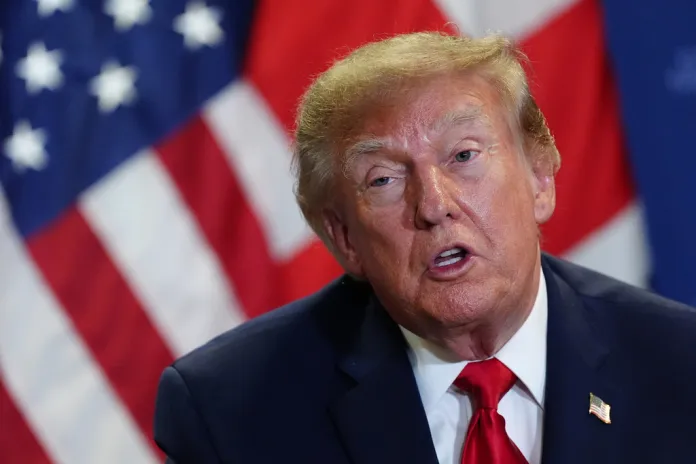




Rep. Maria Elvira Salazar (R-FL) looked into a camera this week and told President Donald Trump something Miami has been saying quietly for months. “Some of your immigration enforcement efforts have gone too far,” she said, citing a July count in which half of the roughly 50,000 people detained had no criminal record.
Salazar represents one of the most heavily Hispanic districts in the country and says many of the voters who helped elect Trump in 2024 now feel betrayed. Her warning deserves attention for another reason. Washington is increasingly treating Nicolas Maduro’s removal as evidence that Venezuela has changed enough for Venezuelans to go home.
That is a dangerous assumption.
The Department of Homeland Security terminated the CHNV parole program in June 2025, telling hundreds of thousands of Cubans, Haitians, Nicaraguans, and Venezuelans to prepare to leave. The administration has also fought to end temporary protected status for Venezuelans while immigration enforcement has intensified across South Florida.
The effects are particularly visible in Doral, the Miami-Dade suburb so identified with Venezuelan immigration that locals call it Doralzuela. Businesses have reported fewer customers, families are worried about detention, and people who built lives there are reconsidering whether leaving home is worth the risk.
The administration has an obvious response: Elections have consequences, and Trump promised to enforce immigration law. True. But it does not answer the question Salazar is actually asking.
What happens when the country Washington wants to send people back to is still governed largely by the people they fled?
On Jan. 3, a U.S. military operation captured Maduro and brought him into American custody, ending 13 years of his rule. It was a significant achievement, and I do not say that lightly, having watched an earlier Venezuelan crisis unravel in Caracas in 2002.
But a capture is not a collapse.
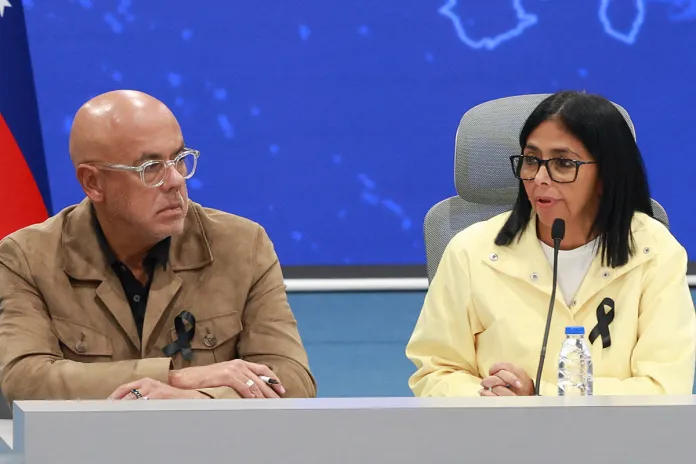
Venezuela’s interim president, Delcy Rodriguez, is accompanied by the president of the National Assembly, Jorge Rodriguez, during a press conference for national and international media in Caracas, Venezuela, on July 2, 2026. (Photo by Javier Campos/NurPhoto via Getty Images)
" data-large-file="https://www.washingtonexaminer.com/wp-content/uploads/2026/07/GettyImages-2283833917.jpg?w=696" height="683" width="1024" src="https://www.washingtonexaminer.com/wp-content/uploads/2026/07/GettyImages-2283833917.jpg?w=696" alt="Venezuela's interim president, Delcy Rodriguez, is accompanied by the president of the National Assembly, Jorge Rodriguez, during a press conference for national and international media in Caracas, Venezuela, on July 2, 2026. (Photo by Javier Campos/NurPhoto via Getty Images)" class="wp-image-4642353" srcset="https://www.washingtonexaminer.com/wp-content/uploads/2026/07/GettyImages-2283833917.jpg 1200w, https://www.washingtonexaminer.com/.../07/GettyImages-2283833917.jpg?resize=300,200 300w, https://www.washingtonexaminer.com/.../07/GettyImages-2283833917.jpg?resize=768,512 768w, https://www.washingtonexaminer.com/...07/GettyImages-2283833917.jpg?resize=1024,683 1024w, https://www.washingtonexaminer.com/.../07/GettyImages-2283833917.jpg?resize=150,100 150w, https://www.washingtonexaminer.com/.../07/GettyImages-2283833917.jpg?resize=696,464 696w, https://www.washingtonexaminer.com/...07/GettyImages-2283833917.jpg?resize=1068,712 1068w" sizes="(max-width: 1024px) 100vw, 1024px">
Venezuela’s interim president, Delcy Rodriguez, is accompanied by the president of the National Assembly, Jorge Rodriguez, during a press conference for national and international media in Caracas, Venezuela, on July 2, 2026. (Photo by Javier Campos/NurPhoto via Getty Images)
Maduro was removed. The system beneath him largely remained.
Delcy Rodriguez, Maduro’s vice president since 2018, became interim president under an order from Venezuela’s Supreme Court. Diosdado Cabello, the regime’s longtime interior minister and one of the most powerful figures in Chavismo, remains in government. Maraa Corina Machado’s opposition movement remains outside the transition.
The military has changed, but not necessarily toward democratization. Rodriguez replaced longtime Defense Minister Vladimir Padrino Lopez in March with Gustavo Gonzalez Lopez, a former intelligence chief who had also run the presidential guard and military counterintelligence.
I wrote recently in these pages that those moves look less like military reform than an effort to keep the officer corps dependent on Rodriguez. Rotate commanders before they build independent power bases, reward officers whose careers depend more on favors than competence, and preserve the counterintelligence apparatus that made collective action dangerous under Maduro. The faces can change while the machinery keeps working.
That distinction became harder to ignore this week. A U.N.-mandated fact-finding mission concluded that Venezuela’s “repressive machinery” remains largely intact. The government has released some political prisoners, adopted an amnesty measure, and closed the notorious El Helicoide detention facility.
But investigators found that the security and intelligence structure responsible for years of repression has not been fundamentally reformed. Senior officials associated with the old system remain in power, hundreds remain arbitrarily detained, and pro-government colectivos continue to intimidate opponents.
Venezuela is beginning to reopen economically while much of its political machinery remains in place.
The economic picture tells much the same story. Venezuelan oil exports have rebounded dramatically since Maduro’s capture and Washington’s easing of restrictions, exceeding 1 million barrels per day this spring. Oil production, investment, and government revenue can improve faster than the institutions ordinary Venezuelans depend upon.
Healthcare is one of them. Millions of Venezuelans still struggle to obtain medical care, safe water, food, and other basic services. The June earthquakes made an already fragile system worse, damaging health facilities and leaving hospitals in affected areas operating beyond capacity.
Education has endured the same long deterioration. Teachers have left the profession, families have struggled to keep children in school, and buildings and basic services have deteriorated after years of economic crisis. The earthquakes damaged still more schools.
Inflation reached 71.8% in the first quarter alone, according to official figures. The electrical system remains fragile, public services are badly degraded, and years of institutional decay cannot be repaired by several months of rising petroleum exports.
An oil tanker leaving Venezuela is easy to count. A functioning hospital, reliable electrical grid, working school, independent court system, and police force a family trusts enough to return home to are harder to manufacture.
That is where immigration policy and Venezuela policy collide.
None of this requires an open border, and Salazar is not asking for one. The question is whether immigration enforcement can distinguish among the people already here.
A Venezuelan with a criminal record and a final removal order presents one case. Someone who has lived here for years, works, supports a family, receives no government assistance, pays taxes, has no criminal record, and has a pending legal claim presents another. Treating those cases identically may produce a larger enforcement number, but it does not make Venezuela or America better or safer.
Case-by-case judgment is not amnesty. Immigration law operates on human beings, not monthly quotas.
There is also a foreign-policy contradiction. Washington is reopening Venezuela’s oil economy, working with Rodriguez’s government, and pointing to Maduro’s removal as evidence of progress. Those may be defensible steps in a transition. They are not proof that the transition is complete.
Maduro is gone. Venezuela is changing. Oil is moving again, prisoners have been released, and some visible symbols of repression have disappeared.
But the people who fled Venezuela did not flee only Maduro. They fled a system.
Salazar’s warning also raises a political question for Republicans heading into November. Latino dissatisfaction with Trump has grown, but that does not mean every disaffected Trump voter becomes a Democrat voter. National polling shows a substantial bloc of Hispanic voters who remain undecided, independent, or otherwise politically movable.
That creates a turnout risk. A voter can become unhappy enough with Republicans to withhold a vote without becoming willing to cast one for a Democrat. In closely contested districts, relatively few voters making that choice can matter.
That may be the message coming from Doral that Washington is missing. Many of these voters supported stronger borders and immigration enforcement. What they did not necessarily vote for was treating a Venezuelan family that works, pays taxes, receives no government assistance, and has no criminal record as indistinguishable from someone the administration promised to remove because he posed a danger.
POLLS SHOW REPUBLICANS ARE STARING DOWN A MIDTERM RECKONING
The Trump administration got Maduro. That changed Venezuela’s possibilities. It did not rebuild its schools and hospitals or dismantle the institutions that made millions of its citizens leave.
Before Washington sends them back, it should make sure the country they fled is actually gone.
Continue reading...
[ H/T Washington Examiner ]