

Big Oil’s long-running alliance with the Republican Party is hitting a major roadblock as a growing number of GOP candidates, and President Donald Trump himself, back a temporary ban on diesel exports.
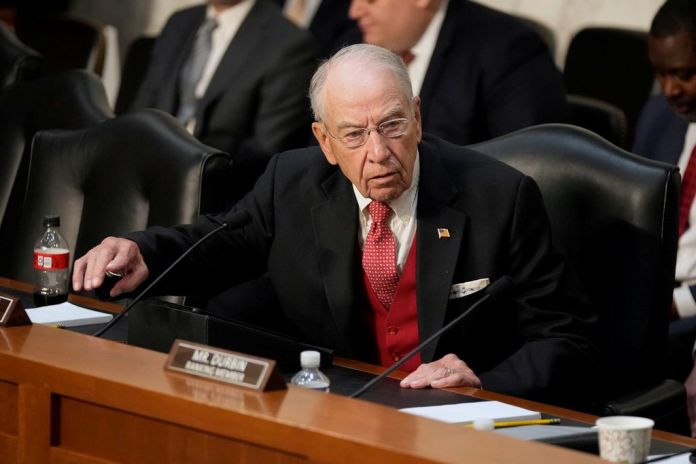
The rift, driven by the war in Iran and Ukrainian strikes on refineries in Russia, broke into public view this week when Sen. Chuck Grassley (R-IA), the president pro tempore of the Senate, became the most prominent Republican to advocate the proposal.
Since then, GOP candidates from Iowa to Michigan have endorsed the ban as a way to drive down prices and signal to voters this fall that they are sensitive to the pain the wars have caused for both farmers and consumers.
The average cost of diesel stands at $6.52 a gallon as of Wednesday, according to AAA – an increase of more than 80% from a year ago in the hardest-hit states, many of them competitive in the November midterm elections.
The response from the American Petroleum Institute and other industry groups has been loud warnings that a diesel export ban would backfire and ultimately raise the price of gas due to shifts in production.
Yet the policy has enough traction in Washington that the president has tasked his advisers with formulating an administration response.
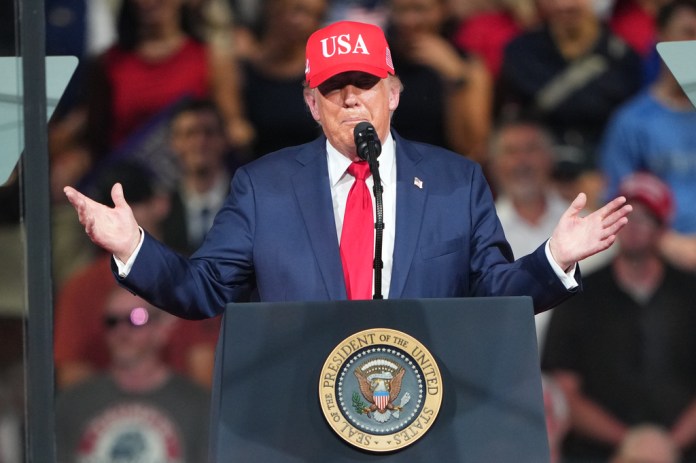
“I’ve said let’s not send out the diesel,” Trump told reporters on Tuesday.
“We make a lot of diesel, and it could have a little bit of an effect on regular automobile gasoline … but no, I’ve called for it,” Trump said.
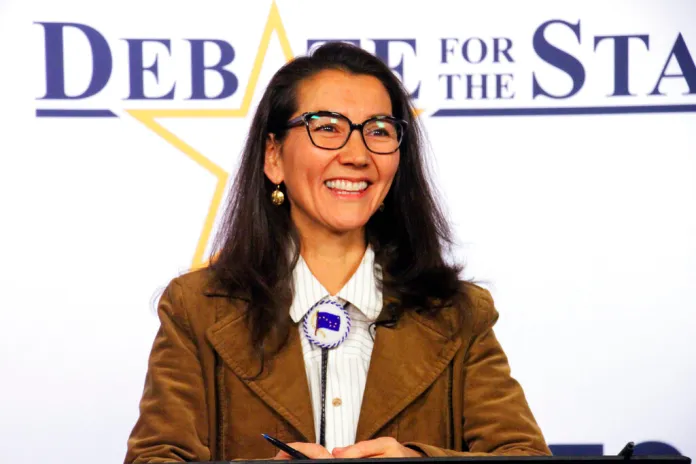
Republican backers of the policy include Rep. Ashley Hinson in Iowa, Mike Rogers in Michigan, and Sen. Dan Sullivan in Alaska. Each is running in a competitive Senate race this fall and has paired their support with other proposals, including a gas tax holiday.
Support for a diesel export ban is hardly uniform among Republicans, with many staying on the fence and others, particularly those in oil-rich states, opposing such a move.
It’s also unclear whether the White House is pursuing a strict ban or voluntary caps, as Energy Secretary Chris Wright suggested on Wednesday.
Still, the high diesel prices have fanned an unusual level of pushback from a party that ordinarily takes a fossil fuel-friendly approach to regulation and benefits from millions in contributions each cycle from the oil and gas industry.
Trump alone received $2.6 million from employees and PACs associated with the industry in 2024, according to OpenSecrets.
The shift is driven, in part, by the fear that the high diesel prices are putting agriculture-heavy states in play this cycle — a fear borne out by repeated polls showing closer-than-expected races in Iowa and even more reliably Republican states such as Kansas.
“Right now, if you’re growing something from the ground, you’re losing money,” said Sen. John Boozman (R-AR), the chairman of the Senate Agriculture Committee. “It’s just really difficult.”
There are also downstream effects to high diesel prices and the inflationary impact it has on consumers.
Rogers released an ad on Monday with a grocery store as his backdrop, arguing that “American energy should provide relief to American families first.”
The backlash is so pronounced, in fact, that Republicans such as Rep. Tim Burchett (R-TN), who represents a safe GOP district in Tennessee, are accusing the oil and gas industry of price gouging.
The industry has, in turn, responded with hostility to those calling for a ban, with the Oil and Gas Workers Association taunting Grassley on Wednesday when he urged the White House not to “listen 2 Big Oil.”
Most of the proposals envision a diesel export ban that lasts months or until the war with Iran ends. Sen. Susan Collins (R-ME), one of the most endangered incumbent Republicans running for Senate, separately called on the Trump administration to release a stockpile of diesel set aside as heating oil on Tuesday.
On the question of a diesel export ban, Collins told reporters, “It’s worth looking at.”
RAND PAUL BACKS JAMES COMER FOR KENTUCKY GOVERNOR, SAYS ‘GOOD SHOT’ GOP WILL COALESCE
The debate comes as Trump faces GOP blowback over another policy designed to bring down the cost of beef in the United States and as concerns over affordability dominate the 2026 election cycle.
The administration is reportedly weighing whether to cut back on foreign beef imports that have been opposed by the American cattle ranching industry.
Ramsey Touchberry contributed to this report.
Continue reading...
[ H/T Washington Examiner ]