

The United States is talking about dialogue with North Korea. North Korea is firing missiles.
On Sept. 20, North Korea launched two short-range ballistic missiles toward the East Sea from the Wonsan area. The first missile flew approximately 450 kilometers, while the second, launched about three hours later, traveled more than 600 kilometers, according to South Korean, U.S., and Japanese authorities. Both missiles landed outside Japan’s exclusive economic zone.
The launches cannot be viewed simply as another show of force. Just days earlier, on Sept. 17, Kim Yo Jong condemned U.S.-led military exercises and warned that North Korea could respond in a more offensive manner. She said that if military activities involving the U.S., South Korea, and Japan threatened North Korea’s security, Pyongyang would respond using all available means.
OPINION: NUCLEAR WEAPONS END WARS. KIM JONG UN’S AI WILL START THEM
The problem is that Washington’s message toward Pyongyang has not been exclusively confrontational.
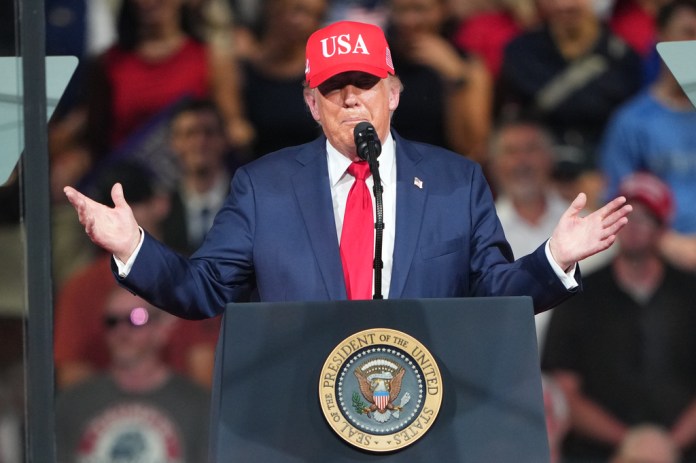
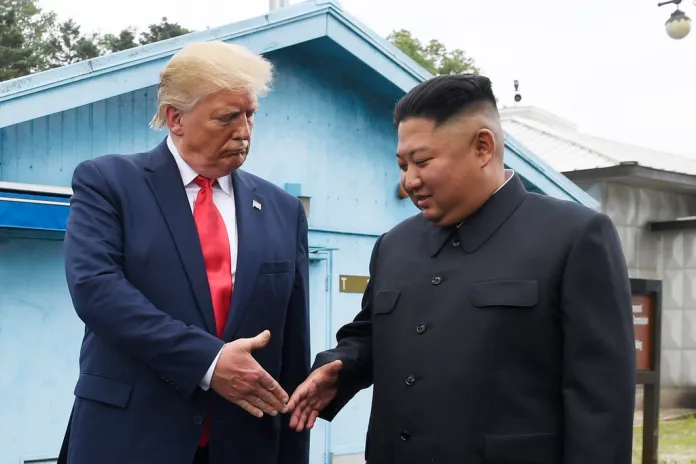
President Donald Trump has repeatedly expressed his willingness to meet Kim Jong Un again later this year. The U.S. has also adjusted the scale and duration of joint military exercises with South Korea, creating some space for diplomacy with North Korea. Trump has continued to emphasize that he has a good relationship with Kim.
Yet North Korea continues its military pressure.
So why is North Korea firing missiles?
One possibility is that Pyongyang wants to strengthen its bargaining position before accepting Washington’s offer of dialogue.
For North Korea, a missile launch means more than a military exercise. Each launch demonstrates to the U.S. and its neighbors that its nuclear and missile capabilities continue to develop. Even if negotiations begin, Pyongyang may want to enter them from a stronger position than before.
But there is a more fundamental change in North Korea’s behavior. North Korea no longer treats its nuclear weapons merely as a bargaining tool. It has recently rejected international calls for denuclearization and emphasized that it will continue strengthening its nuclear forces. Kim Yo Jong has also described North Korea’s status as a nuclear state as irreversible and called for further strengthening of its nuclear deterrent. For that reason, it is not enough to explain North Korea’s missile launches simply as an attempt to provoke the U.S.
From Pyongyang’s perspective, missiles are no longer merely military instruments separate from diplomacy. They have become a central means of supporting its diplomatic strategy.
That makes Washington’s approach to dialogue more difficult. Even if the U.S. reduces military tensions to open negotiations, there is no guarantee that North Korea will not interpret such moves as a sign of weakness. Conversely, if Washington increases military pressure, Pyongyang could use that pressure to justify further expansion of its nuclear forces.
Ultimately, Washington faces a difficult question: How far is it willing to go to engage North Korea in dialogue? And there is an even more important question.
What does North Korea want to gain from that dialogue? When Trump and Kim met in Singapore in 2018, denuclearization of the Korean Peninsula was at the center of their summit. Since then, however, North Korea’s nuclear and missile capabilities have expanded, and Pyongyang has made clear that it no longer accepts denuclearization as the starting point for negotiations.
That is one of the biggest differences between 2018 and today. It is also why Washington must first determine whether the dialogue it wants is the same dialogue that Pyongyang wants.
If the U.S. seeks to reduce tensions on the Korean Peninsula and manage North Korea’s nuclear and missile threats through dialogue, Pyongyang may instead seek recognition of its status as a de facto nuclear-armed state, sanctions relief, and security guarantees.
If another summit takes place, it would therefore be difficult to expect negotiations to follow the same path as before.
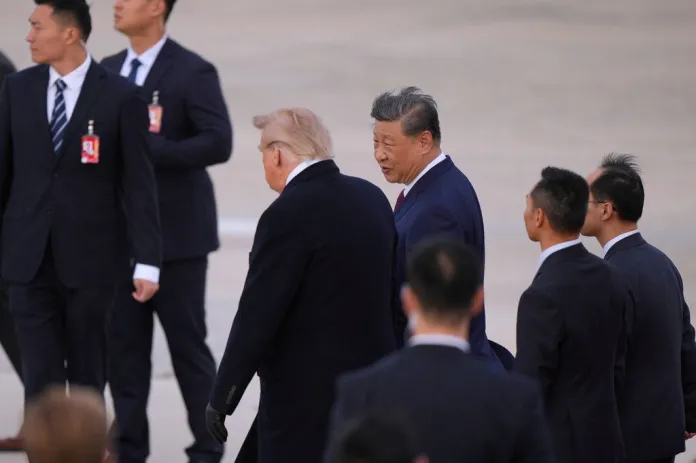
North Korea already possesses more nuclear weapons and a wider range of missiles than it did years ago. Its military cooperation with Russia has also deepened. Its relationship with China provides Pyongyang with additional diplomatic room to maneuver.
Under these circumstances, why would North Korea be in a hurry to return to the negotiating table? The fact that the U.S. wants dialogue could itself become a bargaining asset for Pyongyang.
That is why the Sept. 20 missile launches may not necessarily have occurred on the opposite side of dialogue.
They may instead be part of the way North Korea is showing what it believes the conditions for dialogue should be.
North Korea may be sending a simple message: If you want dialogue, first recognize the reality we have created. The U.S., in turn, will have to make its own choices. Should Washington begin talks without recognizing North Korea’s nuclear forces? Or should it adjust its existing goal of denuclearization to make dialogue possible?
Those choices would affect more than the Korean Peninsula. They could have direct implications for the security of South Korea and Japan, U.S. alliance policy, and the broader nuclear order in Northeast Asia.
When North Korea’s missiles flew toward the East Sea, Pyongyang once again sent the message it wanted to send.
KIM JONG UN JUST TOOK HIS NUCLEAR THREAT TO SEA
The U.S. is talking about dialogue. North Korea is answering with missiles. What matters now is not simply how many more missiles North Korea will launch. It is understanding what kind of dialogue Pyongyang wants with Washington — and what it expects to gain from it.
The door to dialogue is not yet closed. But standing in front of that door, North Korea is still holding missiles.
Park Joonhye is a research fellow at the Institute for Far Eastern Studies, Kyungnam University. She holds a Master of Arts and a doctorate in Politics and Unification Studies from the University of North Korean Studies. Her research focuses on North Korean politics, nuclear policy, society and culture, and unification discourse. She has published peer-reviewed research and writes regularly on North Korea and Northeast Asian security.
Continue reading...
[ H/T Washington Examiner ]