



President Donald Trump’s promise to send out a $5,000 “dividend” check to every adult citizen if the Republican Party maintains control of Congress has raised questions about the budgetary and economic ramifications.
Here’s what to know.
What Trump promised
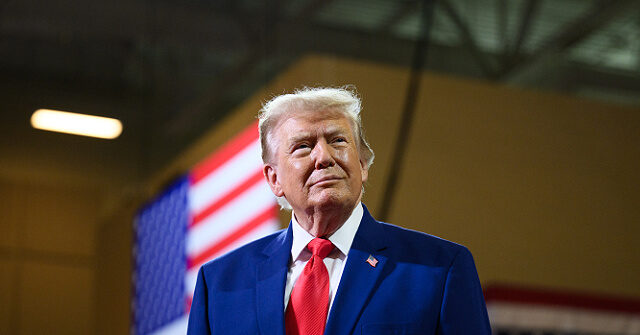
Trump said at the Republican midterm convention Wednesday that if the GOP holds on to the House and the Senate, the government would send a $5,000 check to every adult citizen.
He said that the check would be a “dividend” for the “tremendous economic success” of the United States.
He stipulated, though, that the money would have to be spent in the U.S.
How much would it cost?
The dividend check would cost the Treasury somewhere in the ballpark of $1.3 trillion if every adult in the U.S. received the $5,000 payment as Trump indicated.
For context, that is about half of what the federal government collected in individual income taxes in fiscal 2025.
Or, to put it another way, it well eclipses the $870 billion the War Department spent on military programs last fiscal year.
It is possible that the fiscal cost could be significantly lowered if the checks were limited based on income, as has been done with previous rounds of stimulus checks.
How would it be paid for?
Trump said in his speech that the checks would be paid for through revenues raised by his tariffs.
“We’re making a fortune,” he said.
But the tariffs are not bringing in enough money to offset the cost of the checks. Nor are they sufficient to keep the government from running a large deficit.
Overall customs duties, which include the Trump tariffs, have brought in $167 billion so far through the first 11 months of fiscal 2026, according to the Congressional Budget Office. That is far short of the trillion-dollar-plus price tag for the dividend checks.
Meanwhile, the federal government shortfall for the fiscal year is over $2 trillion so far. In other words, the government is already spending much more than it is taking in, before any checks are set out.
The cost of the checks could be offset by tax hikes or spending cuts, in theory. But a Republican majority would not be likely to raise taxes. Federal spending, too, has increased while Republicans have been in charge during Trump’s second term.
Former Rep. Carolyn Bourdeaux, a Georgia Democrat who is the executive director of the Concord Coalition, which focuses on balancing the budget, emphasized that the term “dividend” would indicate the U.S. is turning a profit, which it certainly is not.
“If the president wants to put $5,000 in every American’s pocket, the best thing he can do is get the deficit and debt under control, find a bipartisan solution to Social Security’s imminent insolvency, and set the fiscal future of the nation back on the right track,” Bourdeaux said.
“Checks for votes is among the worst possible uses of money we don’t have,” she added.
But Vice President JD Vance defended the idea following the speech. He tried to tie it to tariff revenue, even though revenue is not going far enough to cover the price tag for such a stimulus.
“All of these tariffs … those penalties have generated a lot of revenue,” Vance said. “They’ve helped us pay down debt. What the president’s just saying is, if you keep it going to the American people, if you keep us in power and allow us to continue to do these things, then you’re going to share in some of the benefit of this incredible wealth that we’re creating in the United States of America.”
Would it stoke inflation?
Experts said that sending out more than a trillion dollars in checks, without offsetting tax hikes or spending cuts, would add to inflationary pressures.
“What we’re going to see is either No. 1, the federal government borrowing more dollars, or having the Federal Reserve print the dollars to buy more government debt to make this possible,” said Joel Griffith, a senior fellow at Advancing American Freedom, a group founded by former Vice President Mike Pence. “Either one of those scenarios causes a higher cost of living.”
Many supply-siders blame former President Joe Biden and Democrats, as well as Trump and Republicans to an extent, for pumping the economy full of stimulus spending during the pandemic, which juiced demand and in turn created the inflation monster that the Federal Reserve is still grappling to vanquish.
Inflation is already high. It stood at 5.4% for the year ending in August, according to the producer price index.
“While pandering is all too tempting to politicians, the reality is that the more goodies politicians promise, the more ordinary Americans will pay the price at the grocery store, on their mortgage statements, or in the burden they leave their children,” said Maya MacGuineas, president of the Committee for a Responsible Federal Budget.
Would Congress pass it?
Sending the checks would require an act of Congress.
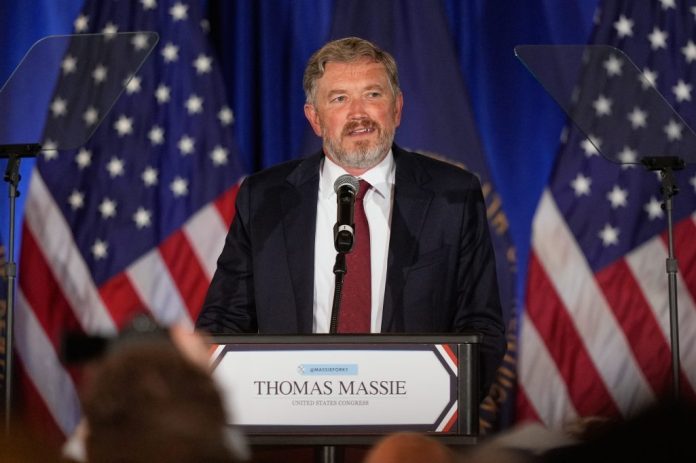
Sen. Bernie Moreno (R-OH) said Wednesday that he would begin working on legislation to authorize the payments.
Rep. Jason Smith (R-MO), chairman of the tax-writing Ways and Means Committee, said that Trump has been talking to him about the idea for several months.
“This is something he wants to accomplish, and there’s billions of dollars that’s coming in with his tariffs,” Smith said on Newsmax after the announcement.
Smith said that Trump wants to give money back to people.
“Because it’s the people’s money, the less money that the government has and the more that you have in your pocketbook is [Trump’s desire], and we’re working towards it,” Smith added.
But it is not clear that Republicans would be on board. Some fiscal hawks in the party would likely oppose the plan.
With the national debt now over $40 trillion and the bond market signaling increased worries about the fiscal situation, getting legislation enacted would be a major lift.
“I think it’s highly unlikely that Congress would approve such a scheme,” Griffith said. “I believe that many people are beginning to connect the dots between heavy printing, borrowing, and spending, and the high inflation that we are still dealing with.”
For example, Sen. Ron Johnson (R-WI), the chairman of the Budget Committee, has resisted previous proposals to send out stimulus checks on the grounds that they would add to the debt.
Other Republicans are likely in the same camp.
“Suffice it to say, I don’t think it’s a good idea,” former GOP Pennsylvania Sen. Pat Toomey told the Washington Examiner during a phone call.
Conservatives might oppose the checks not just on fiscal grounds but also because they would encourage dependency on the government.
Griffith said that the idea of stimulus checks is more aligned with the Left. He called the idea “outright wealth redistribution.”
“This is really a first giant step — more of a sprint — towards universal basic income, which has been a long-time goal of the far left,” Griffith told the Washington Examiner. “To see this coming from a Republican president as a proposal is deeply shocking.”
Trump’s past promises
Trump has floated direct payments to Americans in the past — but those ideas never came to fruition.
In the early days of the Department of Government Efficiency last year, there was talk of $5,000 DOGE dividend checks derived from the savings. That did not happen.
And later last year, Trump promoted the idea of issuing $2,000 rebate checks to Americans from tariff revenue. White House press secretary Karoline Leavitt said at the time that the White House was “exploring the legal options of how we get that done.”
TRUMP LAYS OUT AGENDA IF REPUBLICANS WIN MIDTERM ELECTIONS
Still, stimulus checks were doled out under the president’s watch — but they came amid the pandemic in the form of $1,200 checks that were approved by Congress as part of its relief bill at the height of COVID-19 in 2020.
Those pandemic-era checks came at a time when the economy was still reeling from lockdowns, not a time like the present, when unemployment is relatively low and inflation is high.
Continue reading...
[ H/T Washington Examiner ]