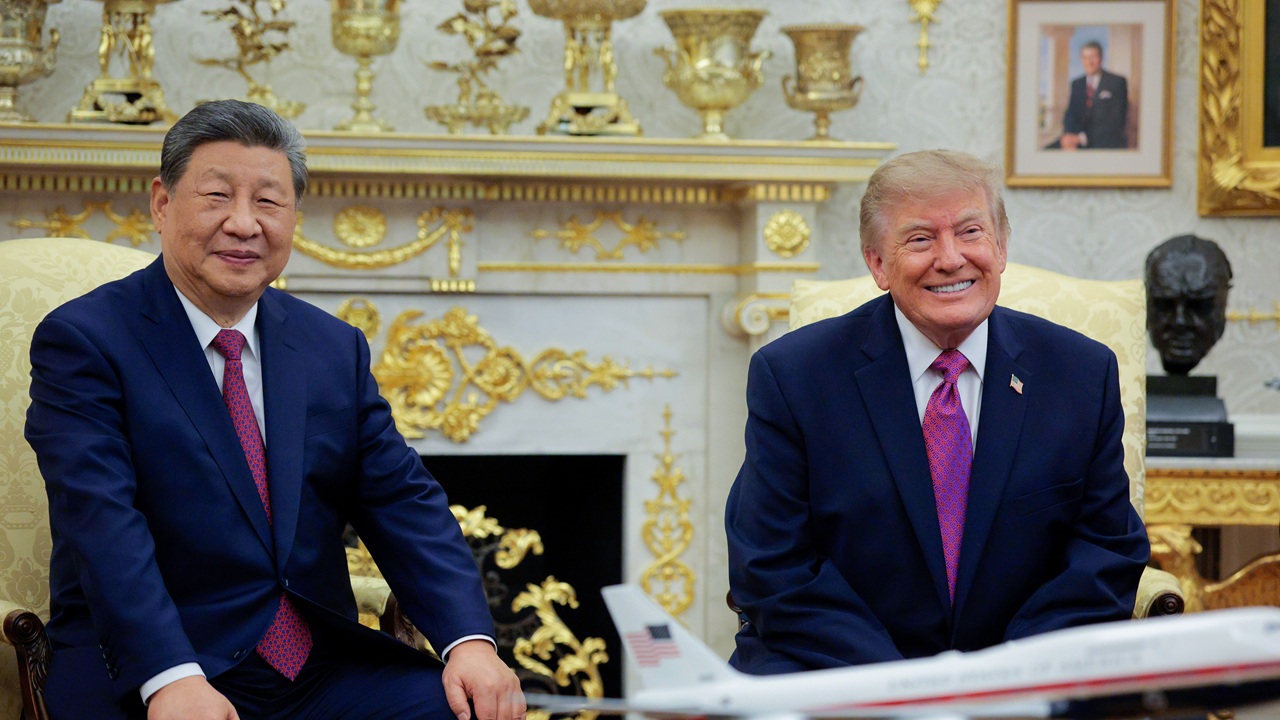






President Donald Trump just put a $200 billion U.S. energy buildout on the table — and the plan reaches from a massive Texas power complex to new nuclear reactors and the long-discussed Alaska LNG pipeline.
The package goes well beyond a vague promise to “invest in America.” It is a three-part attempt to turn Trump’s trade deal with South Korea into power plants, construction jobs and strategic infrastructure on American soil.
During an Oval Office announcement, Trump said the Republic of Korea would invest up to $200 billion across the package.
The first piece is a roughly $22.3 billion natural-gas power project in Encinal, Texas, designed to produce about 6.4 gigawatts. The broader plan also identifies eight large nuclear reactors and a major allocation for Alaska LNG.
Those projects would touch three pressure points at once: the huge electricity demand created by AI and data centers, America’s need for dependable baseload power, and the strategic value of exporting U.S. gas to Asian allies.
The money comes from the $200 billion strategic-investment commitment Trump negotiated with South Korea as part of the two countries’ larger trade agreement. It is separate from another $150 billion Korean commitment aimed at rebuilding American shipbuilding capacity.
The White House presented the package as a major energy-security win:
The Texas project is the most concrete part of the announcement.
According to Aju Press, “Project Star” would build a 6,472-megawatt gas-fired power complex in Encinal. The stated investment is $22.3 billion, making it a serious piece of industrial infrastructure rather than a modest pilot program.
That much power matters because the United States is racing to build data centers while utilities struggle to add generation quickly enough. Gas can provide around-the-clock electricity in a way intermittent sources cannot, while new nuclear capacity offers the same kind of dependable output over a much longer operating life.
The proposed nuclear component is even larger: eight reactors under a cooperation framework valued at up to $120 billion. If those plants move from planning to construction, the ripple effects would run through American steel, concrete, engineering, uranium services and skilled trades for years.
That is the real economic prize here. Energy abundance reaches far beyond a lower utility bill; it is the platform that lets factories, chip plants and AI infrastructure get built in the United States instead of somewhere else.
Energy Secretary Chris Wright said Trump asked about the Alaska pipeline on his first day back in office:
Alaska LNG would carry natural gas roughly 800 miles from the North Slope to a liquefaction and export terminal in southern Alaska.
Supporters have chased the project for decades because it could open a direct route from enormous Alaskan gas reserves to Asian markets. It could also bring cheaper energy to Alaskans and create thousands of construction and operating jobs.
There is an important distinction, however: the entire $200 billion is not landing in a bank account tomorrow.
The Associated Press reported that South Korean officials are treating the Alaska component as subject to a commercial-viability review. Seoul’s governing framework also caps strategic-investment disbursements at $20 billion per year and requires project-level review before money is released.
The deal remains real, and that caveat tells us how to read it accurately. Texas is the first selected project, while the nuclear and Alaska pieces still have to clear financial, legal and technical gates.
In other words, Trump has created a lane for up to $200 billion in allied capital to flow into U.S. strategic industries. The next test is converting that leverage into final investment decisions, permits, contracts and steel in the ground.
Alaska Sen. Dan Sullivan called the pipeline announcement historic and projected more than 10,000 jobs:
The political contrast is hard to miss.
Washington spent years arguing over energy scarcity, delayed permits and which sources should be phased out. Trump is trying to make abundance the policy — more gas, more nuclear power, more exports and more industrial capacity.
And he is using trade negotiations to bring foreign capital into the buildout.
That is an America First deal structure worth watching: access to the world’s largest consumer market in exchange for investment that strengthens the country providing that access.
The cautious details matter, and every project should be judged by the contracts it ultimately signs. But the scale of the opening is undeniable.
If even a substantial portion of this package gets built, Trump will have done more than announce a big number.
He will have turned a trade agreement into American power.
Continue reading...
[ H/T WLT Report ]