

President Donald Trump ought to hammer Iran tomorrow. He has been waiting for the political season to end, and he ought to wait no more.
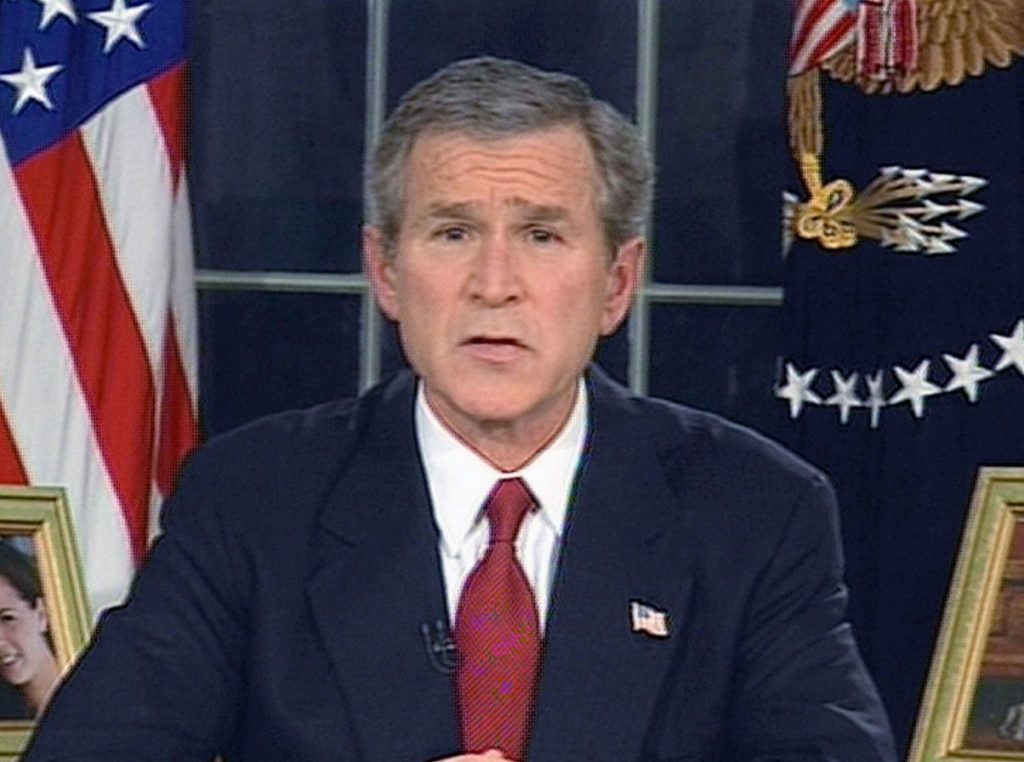
Two months after the 2006 midterm elections — a vote which President George W. Bush called a “thumpin’” for the Republicans — “W” announced his Iraq troop surge. On Jan. 10, 2007, in a nationally televised address from the Library Room in the White House, Bush made it clear he would not order the U.S. to turn and run from that battle. It was the finest hour of his second term, demonstrating the courage of his conviction that the United States had to subdue the insurgency in Iraq.
The next two years were challenging for Bush. The first warning of the looming financial crisis came when HSBC announced major subprime mortgage losses in February, a month after “the surge” was announced. By December 2007, the Great Recession had begun. The deepening market woes touched bottom on Sept. 15, 2008, when Lehman Brothers filed for bankruptcy.
Dredging up hard times from past presidencies is not a prediction of the future. But we ought to remember “the surge” as Trump considers his next steps vis-a-vis Iran.
The “finish the job” camp is present around the president. So is the “negotiate another memorandom of understanding” camp.
Trump should recall W’s “all-in” approach that effectively won the war in Iraq and adapt it to Iran. Such decisive action would be Trump’s greatest legacy.
The collapse or cowing of Ayatollah Mojtaba Khamenei‘s regime is the objective. The next president ought not to be able to undo a victory over the ayatollah and the Iranian Revolutionary Guard Corps, as President Barack Obama did with his precipitous withdrawal of American troops from Iraq, which concluded in December 2011.
The scamper from Iraq was the worst of many terrible decisions by Obama, who would compound it when he pronounced ISIS “the JV team” in January 2014. But presidential declarations don’t change facts on the ground, and the fact is the vacuum left by Obama’s bug-out was filled by ISIS. America returned to Iraq to battle ISIS in June of that year.
Trump should reject the fecklessness of Obama and see the campaign against Iran through to an actual victory.
Asking presidential candidates whether they support or would change past foreign policy decisions, like whether President Bush should have sent the U.S. military into Iraq to depose Saddam Hussein in 2003, is the most common line of questioning among members of the media. (Getty Image) | Getty Images
" data-large-file="https://www.washingtonexaminer.com/...9f7eb897e30d-scaled-e1793819643141.jpg?w=1024" src="https://www.washingtonexaminer.com/...9f7eb897e30d-scaled-e1760205054607.jpg?w=1024" alt="Asking presidential candidates whether they support or would change past foreign policy decisions, like whether President Bush should have sent the U.S. military into Iraq to depose Saddam Hussein in 2003, is the most common line of questioning among members of the media. (Getty Image)" class="wp-image-2703843">
Asking presidential candidates whether they support or would change past foreign policy decisions, like whether President Bush should have sent the U.S. military into Iraq to depose Saddam Hussein in 2003, is the most common line of questioning among members of the media. (Getty Image) | Getty Images
We ought to ask all of our allies to join, including Israel and the “little Sparta” of the United Arab Emirates.
The renewal of major combat operations against the Iranian Revolutionary Guard Corps, especially strikes directed at Pickaxe Mountain and the Guard’s 1,400 missiles and massive stockpiles of drones, would rid the region and world of a menace. If the regime continues to strike out, demolishing oil export facilities and the remnants of its defense industrial base will leave the shattered regime struggling to hold down a people yearning to be free. A “color revolution” will eventually rise to overthrow the barbarians that have repressed a great people since 1979.
Or Trump could ignore the verdict of history and agree to another disastrous MOU. MOU 2.0 would all but surrender the next two years to his most deranged critics in legacy media on Capitol Hill, and the impeachment circuses would start when the gavel drops on the new Congress in January.
Even if there is one or even two flips on Tuesday night, Trump is commander in chief, and he controls the outcome in the battle with Iran — no one else.
Eventually, almost every president’s entry in history’s textbooks is reduced to three or four lines. Trump’s paragraph will begin with whether or not he “won” the battle with Iran. The U.S. is presently winning decisively, but he has not yet decisively won.
If Trump walks away now, it would be as if FDR ordered Ike to stop at the borders of Germany in 1945 and Stalin agreed to do the same on the Eastern Front. Both FDR and then Harry Truman committed to and carried on until complete victory was achieved over Hitler and Imperial Japan.
Trump’s eight years will be the subject of endless books, eventual reappraisal, and then more reappraisal. Of course, his policies in both terms unleashed enormous economic growth. His appointments to the Supreme Court rescued the Constitution. He sealed a wide-open border.
But the battle with Iran will define him and his presidency more than anything else.
VANCE BLAMES IRAN WAR FOR GOP MIDTERM BLOWOUT
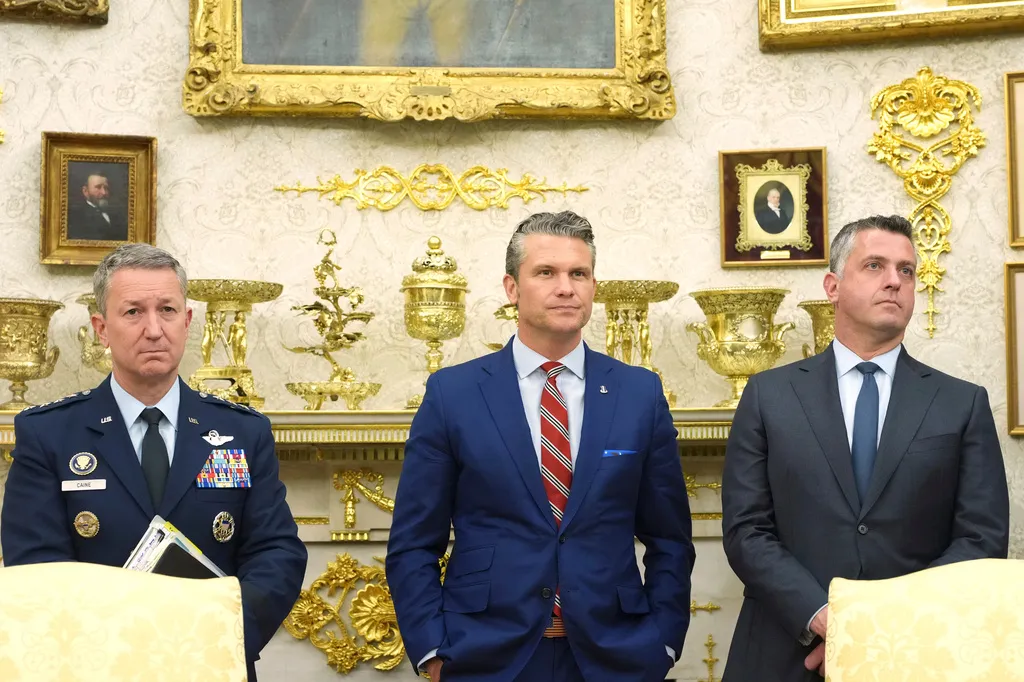
Adm. Brad Cooper, who commands U.S. Central Command and is actually the officer in charge of this battle, was in Washington this week to consult with Trump and Gen. Dan Caine, chairman of the Joint Chiefs.
Trump may have told both men to “finish the job” already. That’s a presidential decision. Pray he made the right one.
Continue reading...
[ H/T Washington Examiner ]