



Einstein never said that the definition of madness was to repeat the same action in the expectation of different results. Still, it does seem an odd way to behave.
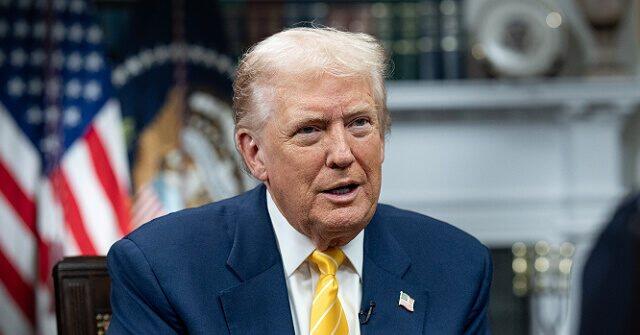
President Donald Trump’s approval ratings began to slide in April 2025 when he unveiled his “Liberation Day” tariffs. The announcement was chaotic, the justifications absurd, and the impact disastrous. From that day, Republicans were fighting to stay afloat. The wave that pushed them under came in the midterm elections, which swept away all the GOP gains since the 1994 Gingrich revolution.
I traveled through the Midwest in October and could sense the incoming tsunami. I predicted in this magazine that Republicans would pay a terrible price in states that did a lot of trade, and so it fell out.
Much has been made of the Republicans’ first Senate loss in Kansas in 94 years, but U.S. corn and wheat sales plummeted when China responded to the Trump tariffs, and the president went out of his way to attack the Canadian aircraft manufacturer Bombardier, which employs over a thousand people in Wichita. Every district along the Mexican border is now also held by the Democrats. It turns out that wrecking businesses that depend on cross-border supply chains is unpopular.
Yet Trump’s response, incredibly, has been to announce yet another round of tariffs, these mainly aimed at Europe and Asia. It is hard not to think of that scene in The Simpsons where Homer keeps electrocuting himself by repeatedly trying to grab the same beer can out of some tangled cables.
It is not just tariff craziness. Trump has doubled down on his disgusting Putinism, his abjectness before dictators, his demented late-night social media posts, his vileness toward supporters whom he regards as insufficiently submissive. His extended family coterie continues to get rich.
Still, it is the tariffs that count, and for an interesting reason. If you are reading these words, you are unusual. Most people do not buy political magazines. Most people notice the news only when something impacts them personally.
The things that bothered a lot of commentators about Trump — his coarseness, his cruelty, his habitual lies — do not register with most voters, because most voters do not follow politics that closely. The same goes for the way Trump systematically torched decades of accumulated international goodwill through his attacks on Canada, his territorial claims against Denmark, his dismissiveness of — and trade sanctions against — long-standing allies. Sure, when confronted with the facts, Americans disapproved, but most people rarely think about foreign policy.
The tariff disruption was different because it touched people’s lives directly. The man they had elected to deal with the Biden-era price rises was wantonly raising prices further. Worse, he seemed to be doing so as a result of deliberate policy. Biden might have pleaded that the inflation that followed the pandemic was a global phenomenon, a product of lockdown and of excessive money-printing. Tariffs, on the other hand, were a conscious choice — a choice made again and again, as every diplomatic and judicial off-ramp was ignored.
Only when they notice things going wrong, such as rising prices, do unpolitical people start being interested in the things that animate their more political compatriots, such as the blending of public office and private business interests, the threats against constitutional norms, or the needless diplomatic isolation.
Trump was elected as a businessman who could get things done, and, in fairness, he did get some things done: illegal immigration fell, while a combination of energy abundance and deregulation spared Americans from the slowdown that has overtaken Europe. But the man who seemed so effortlessly in control on The Apprentice was an altogether more costly and chaotic proposition in real life.
INCOMING DEMOCRATIC CONGRESSIONAL MAJORITIES SET TO CHALLENGE TRUMP TARIFFS
So, as happens in politics, people reasoned outward from their own experience. They did not say, “Trump’s nutty ideas on trade are at odds with high-school economics, and his personal flaws make him unfit for office, so he will be a bad president and my life will not improve.” They approached the issue precisely the other way around: “My life is not improving, because we have a bad president who is creating economic problems, so he must be governing in his own interest rather than mine, so he is a crook.”
If you understand why free trade works, and why tariffs are in principle bad for the nation that applies them, this reasoning might strike you as odd. Then again, if you understand why free trade works, you are in a small minority. Most people judge, not unreasonably, from final outcomes. It is there that Trump failed so spectacularly. How painful to see him reaching once again for those tangled electric wires.
Continue reading...
[ H/T Washington Examiner ]