


The Republican Party may not have much to be grateful for this Thanksgiving. Weeks after the midterm “bluenami,” Republicans are still sifting through the wreckage. Astute pundits have taken to calling the electoral reckoning a “red riptide,” given how much of the damage was self-inflicted.
While the GOP bickers over whom to blame and try to rebuild President Donald Trump’s fractured coalition, a familiar refrain keeps surfacing in the exit polls: “It’s the economy, stupid.” The warning flags for this tsunami were waving well before Election Day. The University of Michigan’s consumer sentiment index sat at 48 in October, the second-lowest reading in the survey’s history, 10% below a year earlier and 15% below February, just before the Iran war began.
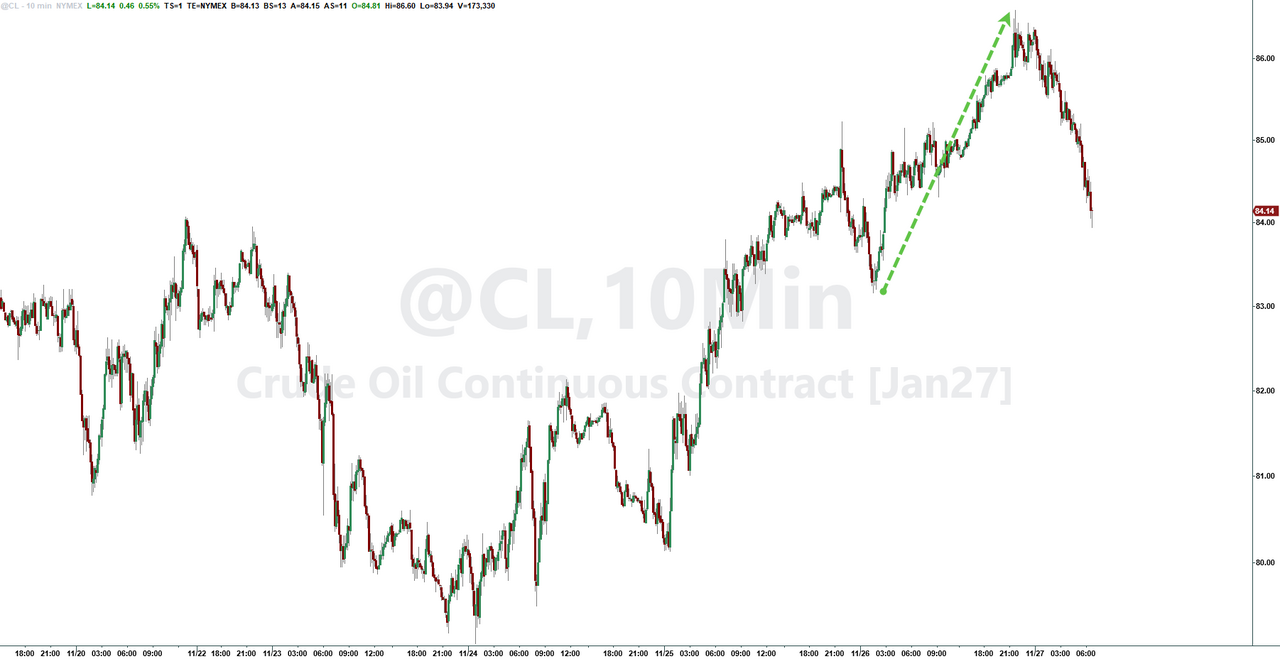
What made voters sour on the economy? Vice President JD Vance offered the simplest diagnosis: “The reason we lost is the war.” He has a point. Before the first strikes on Iran, a gallon of regular gasoline cost $2.98; by Election Day, it had soared to $4.15. Diesel, which hauls nearly everything Americans buy, jumped from $3.76 to a record $6.53 in September.
The Iran conflict undoubtedly helped whip up the storm that sank the GOP’s electoral chances. But it wasn’t the only war voters rejected at the ballot box. They also spurned the Trump administration’s ill-conceived, poorly executed trade war — and by overwhelming margins.
Economic historian Phil Magness took stock of the damage. Two-thirds of exit poll respondents said tariffs hurt the economy. Economists agree: New York Federal Reserve researchers found Americans bore nearly 90% of the cost of Trump’s 2025 tariffs, which, at their peak, added 3 percentage points to consumer goods inflation. No matter how Vance’s “smartest data guy” tries to spin it, Trump’s tariffs were an albatross around Republicans’ necks in November. Long before the Iran war gave Americans pain at the pump, Trump’s tariffs were giving them sticker shock at the checkout counter.
Together, the administration’s two wars formed a perfect storm that few GOP candidates could weather. Democrats were, of course, more than happy to ride the resulting blue wave into power. Turns out, Americans don’t like politicians gaslighting them into believing the economy is “roaring” when it is clearly sputtering. Nor do they like being told that affordability concerns are a “hoax” when their pocketbooks say otherwise. When Americans find themselves having to flex their mental math muscles with every trip to the gas station or grocery store, the idea that we’ve been ushered into a new “Golden Age” starts to seem downright farcical.
Nor did it help that the trade war came with a generous helping of cronyism. The administration handed out thousands of exemptions with no application process — relief that seems to flow disproportionately to companies that “play ball” with the administration. As P.J. O’Rourke observed, “When buying and selling are controlled by legislation, the first things to be bought and sold are legislators.” Within months, Trump resurrected the corrupt 19th-century “spoils system” that Americans at the time rejected whole cloth. Voters noticed: more than half called government corruption “crucial” to their vote, tying the cost of living as the top concern.
Perhaps most frustrating for Republicans, particularly if they believe the trade and Iran wars were absolutely necessary, is that things didn’t have to turn out this way. Americans have shown they can be convinced to sacrifice their economic well-being for greater national security goals. During World War II, millions of Americans put country over comfort. America’s economy was mobilized to defeat the Nazis and imperial Japan. Americans willingly accepted restrictions on trade across both the Atlantic and Pacific with Germans and Japanese as part of that war effort. They accepted similar restrictions against the Soviets during the Cold War. They likewise showed resolve and willingness to make sacrifices in the immediate aftermath of 9/11.
But today’s sacrifice is different, partly because the administration denies there is any sacrifice at all. Rather than explaining to voters why their sacrifice is necessary, the Trump administration has spent most of its second term insisting the affordability crisis is “FAKE NEWS” — that Americans shouldn’t believe their lying eyes.
OPINION: TRUMP MUST NOT MISTAKE IRAQ’S MILITIA RESHUFFLE FOR IRAN’S RETREAT
Students of history know this isn’t the first time tariffs have torpedoed Republicans electorally. After the disastrous McKinley Tariff, Republicans lost a staggering 93 House seats in the 1890 midterm elections. Four decades later, the notorious Smoot-Hawley Tariff Act cost them 52 House seats and eight Senate seats in the 1930 midterm elections. Both rank among the worst midterm drubbings in U.S. history.
Of course, this realization should come as cold comfort for the GOP. They could’ve averted today’s sorry state of affairs if only they’d bothered to crack open a history book — or an economics book. Instead, they proved an old adage right: Those who cannot remember the past are doomed to repeat it.
Scott A. Burns is the Charles Blackwell associate professor of economics at Southeastern Louisiana University in Hammond, Louisiana, and a research fellow with the Independent Institute. Caleb S. Fuller is an associate professor of economics in the Winklevoss School of Business at Grove City College and a research fellow with the Independent Institute. They are coauthors of the forthcoming book published by the Independent Institute, titled Trade Wars: Why Freedom Trumps Tariffs.
Continue reading...
[ H/T Washington Examiner ]