


TRUMP AND THE MAGA ENTHUSIASM STRATEGY. In a conversation on board Air Force One, bound for Sioux City, Iowa, and another midterm rally for Republican candidates, I asked President Donald Trump whether, despite the excitement he sees at his rallies, he thinks the GOP is going to lose the House. Instead of answering immediately, he asked what I thought. I said yes, I think the GOP is going to lose. But I hoped to hear his view on the widespread belief that House Republicans are headed for defeat.
“People say that,” Trump said. “I just don’t see it. There’s such enthusiasm. You’ll see, you’ll go there today.”
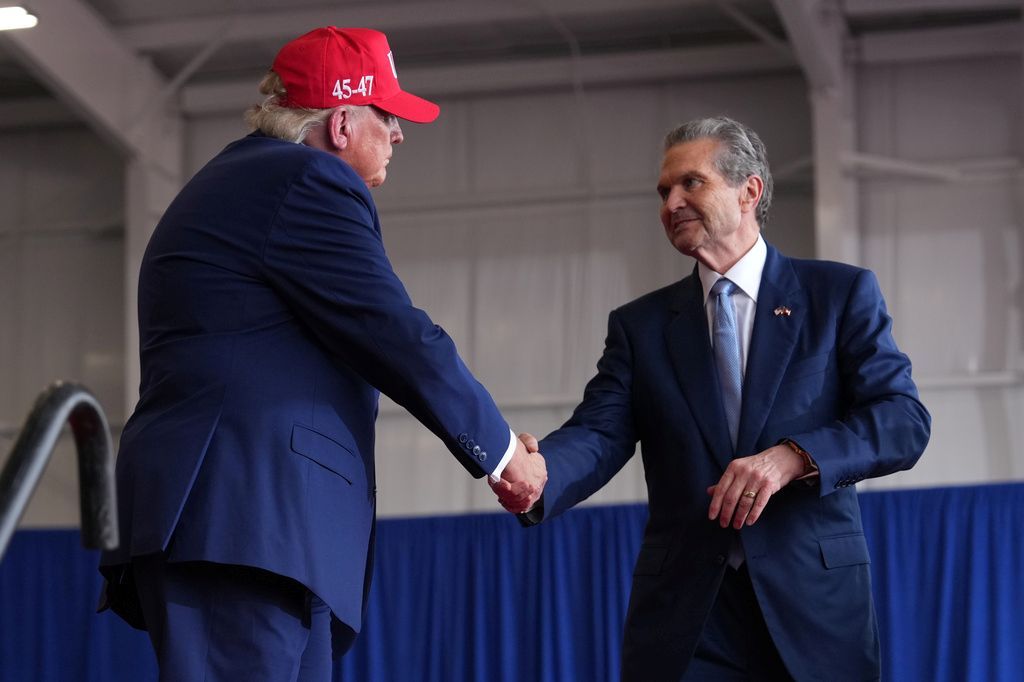
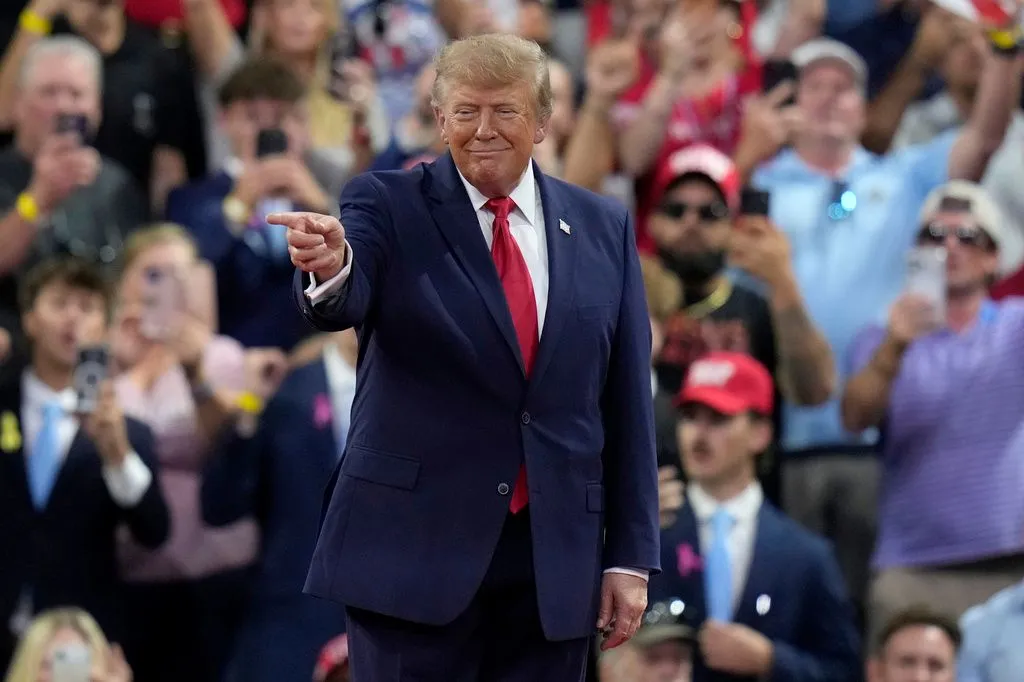
Indeed, the Sioux City rally, held at the airport, was raucous; the crowd was clearly stoked. Then the president pointed to several of his other rallies. “You saw last night?” he said, referring to a wildly enthusiastic rally in South Carolina. And then he mentioned his much-talked-about Oct. 13 trip to Alaska.
“I took him from losing to being ahead,” Trump said of Republican Sen. Dan Sullivan, who is fighting for reelection not only against a strong bid from former Democratic Rep. Mary Peltola but also against what is essentially a Democratic dirty trick by a man named “Dan Sullivan” who registered as a Republican to run in hopes of pulling votes away from the real Sen. Sullivan. Trump couldn’t believe that on the Alaska ballot the real and the fake Dan Sullivan appeared indistinguishable.
As we discussed how Republicans can win, Trump pointed to GOP redistricting efforts to flip some Democratic seats. “We have the advantage of picking up some seats, right?” he said. He then asked “How many?” I said five, or maybe 10. Trump responded with “Eight? Nine?” All those numbers, including mine, were a little higher than some recent predictions that the GOP redistricting work will backfire, and Republicans will pick up seats in the low single digits. But who knows?
“I might be wrong,” Trump told me. “The country’s never done better. People feel good. The gasoline’s a little high, but it’s coming down. You know, gasoline is lower than it was with Biden and Obama, and I got rid of the nuclear threat.”
Trump’s critics will scoff at his “never done better” claim, and at least some of his supporters might wince. Indeed, one could make the alternative argument that Trump was elected to do one big thing — bring down inflation — and inflation on a yearly basis was 3% when Trump took office in January 2025, and it is 3.7% today. That’s nowhere near where it was — 9.1% — in the worst of the Joe Biden years, but Trump promised it would go down, and it hasn’t.
On the other hand, there is the bill of particulars Trump offered voters in Sioux City and every other place he has held rallies. Look at the stock market, he told the crowd in Iowa, and look at your 401(k). They’re both up. Then: “Income for hardworking Americans has soared to the highest level ever recorded.” That’s true. And then: “The poverty rate has just reached its best level in American history.” That’s true, too, referring to the period in which the rate has been recorded. Then Trump cited other improvements, in manufacturing and exports, some of which were overstated but did indeed reflect progress under Trump. In addition, for Iowa specifically, on Sept. 30 Trump announced the planned construction of a huge new steel plant in the state, which outgoing Republican Gov. Kim Reynolds called “transformational.”
“You just heard six statistics,” Trump told the crowd, resting his case. “Ladies and gentlemen, goodnight. I love Iowa very much. I’m leaving. How the hell can I beat it?” Trump jokingly started to walk offstage, his work done, while the audience cheered.
Say what you want, but that’s not nothing. At his rallies, Trump presents a compelling case for solid economic accomplishments — to go along with the higher energy and food prices that have made inflation so stubborn in the months after Trump started the war in Iran. He promises, of course, that gas prices will plunge as soon as the war ends, which he thinks will be after the midterm elections. That will be great if it happens, although until then prices will remain a real problem. Still, the good indicators in the economy are real.
So are Trump’s tax cuts. Onstage in Sioux City, he polled the crowd on their opinion of his moves to eliminate taxes on tips, overtime, and Social Security. Reflecting the area’s economic and demographic makeup, no tax on tips was somewhat popular; no tax on overtime was more popular; and no tax on Social Security was really, really popular.
All of this, good and bad, factors into Trump’s job approval rating, which stands at 38.8% approval and 60.4% disapproval, according to the RealClearPolitics average of polls. A president’s job approval rating is one of the best predictors of his party’s midterm results, and Trump’s is, for Republicans, dangerously low.
I asked him about the job approval number. “It’s fake,” he quickly said. “It’s fake.” He pointed to the New York Times’s use of phony “Wedgewood” polls. That was a moment of real embarrassment for the paper, even though the New York Times said it did not use “Wedgewood” polls in calculating the president’s job approval rating. Nevertheless, Trump made the fake poll part of a larger indictment of polling. “The job approval, they said it’s 37, 38?” he asked incredulously. “I’m not at 38.”
I asked where he thought his approval rating actually stands. “I don’t believe I could be beaten by anybody,” Trump said. “I think that if I needed it, which I don’t, I think 60.”
What does that mean? Trump would say it means what he says — that his real job approval rating is 60%. I asked if he meant that he would be at 60 if he were running for office himself. “Yeah, I think I’d be in the 60s now,” he said. “Now, in the Republican Party, I’m way up. Show him the 99%. Have you seen it?”
By that last part, Trump was asking an aide to show me a video clip that he is fond of playing, of CNN’s Harry Enten, from Sept. 27, in which Enten said, “In the 2024 election versus Kamala Harris, [Trump] got 99% of the MAGA GOP vote. Perhaps surprisingly, I might have thought it would be 100%, but it was 99%. Compare that to his approval rating now with the MAGA GOP. It’s 98%.”
Put those numbers together with Trump’s experiences at his rallies, where he addresses large, enthusiastic crowds, and then add to that the persuasive fact that he has twice been elected president of the United States — add that all together and it accounts for Trump’s belief in his own popularity and ability to influence elections, even those in which he is not running.
I asked, “Do you ever think that you get such big, adoring crowds, and it’s almost like a bubble? Do you think, These 10,000 people, man, they love me, but the larger electorate, I’ve got to win their votes. I mean, there are independents out there?”
“I always cater to my base,” Trump said. “My base is big. I think my base is close to 100% of the Republican Party. … I think I’m close to 100. … It’s not MAGA, it’s just —.” At that moment, I interjected, “But it’s not the whole Republican Party.” Trump answered: “I think it’s close. I think the Bushes have largely faded. They’re gone.”
That’s certainly true. But the bottom line is that Trump sometimes views his Republican base as if it is the electorate as a whole. He draws impressive crowds made up of supporters who love him. He spends much of his time among people who revere him. Viewed from that perspective, a job approval rating of 38.8% just doesn’t make any sense.
If you start with Trump’s belief that economic indicators are strong for coming growth, and add his skepticism of polls, and then throw in his confidence in his sky-high, rock-solid approval ratings among his MAGA base — together, they add up to Trump’s belief that Republicans can win not just the Senate, which many observers see as too close to call right now, but the House, too, which those observers believe is lost to the GOP.
Trump knows the polls, of course. He is a close and discriminating reader of news stories. And he has certainly heard advisers, consultants, and others describe the adverse conditions Republicans face in races across the country. But what should he do? Tell his party that they’re going to lose? Trump knows how many Republicans look to him for leadership. If he appears to lose hope, they will, too. So he keeps at it as he nears the end of an extraordinary 32-day cross-country campaign tour. And he has a case to make.
Continue reading...
[ H/T Washington Examiner ]