![REES-MOGG & TUCKER CARLSON; British Ruling Class Russophobia – Letter from Great Britain – [10-07-26]](https://substackcdn.com/image/fetch/$s_!OiIG!,w_1456,c_limit,f_auto,q_auto:good,fl_progressive:steep/https%3A%2F%2Fsubstack-post-media.s3.amazonaws.com%2Fpublic%2Fimages%2Fdce9e797-6b75-4aae-95ab-87397fe6dcf1_1045x689.png)




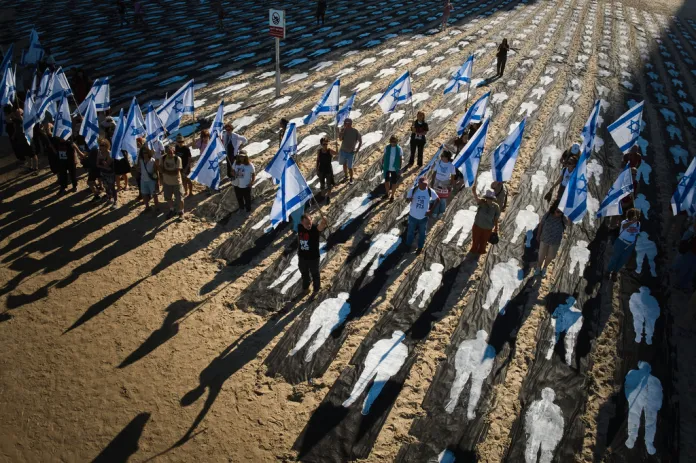
Three years ago this week, on Oct. 7, 2023, Hamas attacked Israel, killing about 1,200 people and kidnapping some 250 more in the deadliest attack on Jews since the Holocaust. Three years later, I am still trying to make sense of everything that has happened since.
It has been a very hard three years. There was the horror of Oct. 7 itself, the hostages, the war, and so much death. But for many Jewish Americans, there was also the experience of watching our own communities, workplaces, and institutions change almost overnight. So many people and communities we thought we knew and thought we were part of said things we never expected them to say, and places where we had spent years suddenly felt very different. That has certainly been my experience.
I have spent much of the past three years fighting battles at my college that I never imagined I would have to fight. I have been called names, and my family has been physically threatened. Students have been warned about taking my classes, many have boycotted me, and I have had to spend far too much time defending myself and my place at an institution where I have taught for almost two decades. I have written a lot about what has happened, and I am sure I will write more about it. But that is not what I want to write about on this anniversary.
I want to write about a last-minute concert in New York where I had the honor of seeing the Israeli musician Idan Raichel perform. I have listened to Raichel for more than 20 years, but something struck me that night: His songs mean something very different to me now. The songs have not changed, of course, but after Oct. 7 and everything that has happened since, I hear them and interpret them differently.
Bo’i is a perfect example.
The title means “come,” and I have always loved the song. It is about taking someone’s hand and moving forward without knowing exactly where you are going. Don’t ask where. Don’t ask when happiness will come. Don’t ask about home. Don’t ask for more time. Time keeps moving, and so do we.
When I first heard those words more than 20 years ago, I heard a love song. It was a beautiful song about two people confronting all the uncertainty that comes with life together. We do not know where we are going. We cannot promise each other happiness or even know how much time we have. But take my hand and let us go together anyway.
I still hear that song, but after Oct. 7, the “we” has become much larger for me. I hear something about the Jewish experience of the past three years and about how to live in a dangerous and uncertain world. We do not know what comes next. We do not know when happiness will come or exactly where we are going. But we take one another’s hands, we keep moving forward, and we do not surrender who we are.
Early in the concert, which was just Raichel and his piano, he began singing “Bo’i“, and the audience began singing with him.
There is obviously nothing unusual about people singing along at a concert, but this time I heard the song in a completely different way. Perhaps it was because we were only days away from the third anniversary of Oct. 7. Maybe it was because of everything that has happened over the past three years. Or it could have been that I was just tired and needed to hear it.
But being in the room and listening to hundreds of people singing together in Hebrew, I had a very simple thought: We are a people who sing.
We really are. Jews sing all the time. We sing on Friday night and at the end of Shabbat. We sing around the Passover table and under the chuppah at weddings. We sing at celebrations, and we sing when we mourn. My son and I sing together in synagogue. I know melodies because my parents knew them, and my children now know some of those same melodies because I sing them.
Some of these words and melodies have been passed from one generation to another for thousands of years. Others are new, and Bo’i is only a little more than two decades old. But there we were, singing it together, three years after the deadliest attack on Jews since the Holocaust.
Our shared singing of a song about moving forward hit me hard. So much of the Jewish experience since Oct. 7 has been about responding to other people. We respond to antisemitism. We respond to protests. We respond to things said about Israel. We respond when Jewish students are targeted or excluded. I have spent an enormous amount of my own time responding to people who have attacked me or said things about me that are simply not true.
But for a few minutes at the concert, none of the mess in the world mattered. Nobody was responding to anyone. Nobody was arguing a case or defending himself. We were simply singing.
I think that is part of what has allowed Jews to survive and thrive through thousands of years of persecution, threats, and hate. Survival obviously requires physical security, and Oct. 7 was a terrible reminder of what happens when that security fails. But surviving as a people requires something beyond physical safety: it requires a shared sense of purpose, a set of values and precepts, and a tradition worth carrying forward, and those attributes are what have carried the Jewish people forward for centuries. Parents have to teach children things. Families have to gather around tables. People have to remember words, melodies, traditions, and stories and then pass them along.
You have to keep living.
And that is what I now hear differently in “Bo’i.” I used to hear a beautiful song about two people taking each other’s hands and facing an uncertain future together. I still hear that, certainly. But I hear something else, and it is a much larger “we.” I hear a song about what it means for a people to keep moving when we cannot know what comes next. We take the hand beside us and go anyway.
Three years after Oct. 7, the pain remains, and I wish that none of what happened that terrible day had happened. I suspect there are things from that day I will never forget. But the Jewish community is still raising children, celebrating Shabbat, arguing with one another, building communities and institutions, trying to repair the world, families, remembering, and singing. We are doing exactly what Jews have done for thousands of years.
THE WAR ON EUROPEAN JEWS AND THE NEW REALITY OF AMERICAN JEWISH LIFE
Certainly, we do not know exactly where the path leads. I wish we did, and “Bo’i” reminds us that we never really do. But we take the hand next to us and move forward. We keep living, and we keep singing.
We are still here, and we will not disappear.
Continue reading...
[ H/T Washington Examiner ]