



The Iranian crisis has dominated the headlines for months. But discussion of Iran has become narrowly focused on geopolitical tensions related to oil exports, military conflict, and the persistent threat of the regime’s pursuit of nuclear weapons capability. Far less attention has been paid in the West to the plight of the Iranian people in general and that of Iran’s religious minorities in particular.
We must be reminded that behind all of this are the Iranian people — the men, women, and children who, even in the face of war, continue to stand up for freedom, dignity, justice, and the right to life.
Last month, more than 30 Christian and Jewish leaders joined a campaign in support of Iran’s democratic opposition movement, condemning the wave of political arrests, executions, and severe restrictions imposed on Christians and people of the Jewish faith across the Islamic Republic.
Wherever people are terrorized by a brutal regime, our religious, humanitarian, and democratic conscience must not remain silent. By the same token, wherever an alternative to such a regime offers guarantees of religious coexistence and equality before the law, that same conscience should guide us to support it in whatever ways we can.
Our moral obligations compel us to speak out against the oppression of the Iranian population, particularly Christians and Jews in Iran. But they also extend to defending freedom of religion, opinion, and belief for all people in Iran and throughout the world.
Regarding Iran, this commitment has been articulated in many forums and formats by the National Council of Resistance of Iran (NCRI), a coalition of pro-democracy opposition groups that had planned to host an international rally attended by more than 100,000 Iranian expatriates in Paris on Saturday, June 20, to highlight these issues. But French authorities banned the gathering at the last moment for highly questionable reasons, most likely tied to political considerations involving the Tehran theocracy.
The banning of that event only further underscores the importance of public endorsement and political support for Iranian dissidents by people of faith, policymakers, and private citizens concerned about the oppression fostered by a violent theocratic system known throughout the world for its support of terrorism and its unparalleled abuse of the death penalty.
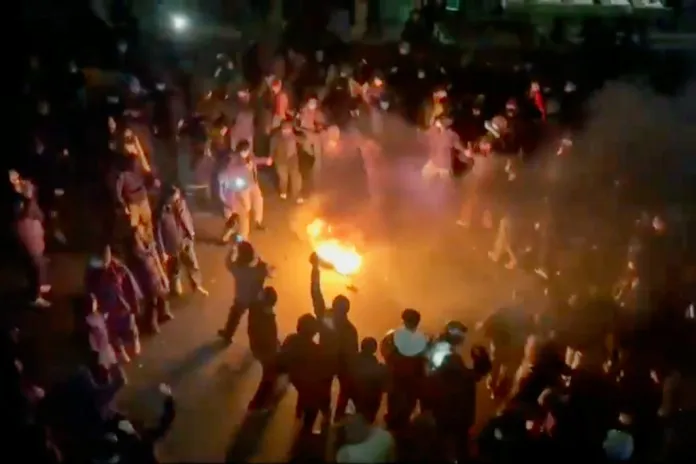
These phenomena have grown notably worse in recent years, with a sharp increase in Iran’s already world-leading rate of executions beginning in the immediate aftermath of the nationwide uprising in 2022. Another uprising in January of this year prompted authorities to carry out mass shootings that killed thousands of people. Since then, the regime has embarked on a campaign of targeted repression, executing additional protesters and at least nine members of the People’s Mojahedin Organization of Iran, the principal constituent group within the NCRI coalition.
There are those who argue that the regime’s survival in the wake of this uprising is evidence of its enduring strength. Some even contend that it has been strengthened by surviving the war launched against it by the United States and Israel in February. But this analysis disregards the fact that, despite all the hardship, the Iranian people have refused to fall silent or abandon their struggle for a democratic alternative based on the rule of law and the separation of religion and state.
Resistance networks continue to operate across the country, directly challenging institutions such as the Islamic Revolutionary Guard Corps and sending a clear message that the mullahs’ regime has no future. While the war has made public protest more difficult, another uprising is likely to emerge in its aftermath, and when it does, the international community should be prepared to support it.
Christians, in particular, should be prepared to stand alongside the Iranian people and embody the spirit of their own forebears, such as Paul Schneider, the “Preacher of Buchenwald,” who bore witness against the idolatry of power even within a Nazi death camp.
Faith can inspire courage in the face of injustice, becoming a living force that bears witness to the freedom of the children of God. And while the majority of Iranians may adhere to a different faith than ours, the power of faith remains the same. Their resilience in the face of profound injustice stands as testimony to that truth.
THE IRAN WAR STARTED UNDER BIDEN, NOT TRUMP. JOE SAID ‘DON’T,’ AND TEHRAN DID
In the end, Iran’s liberation must come from within Iranian society itself. But in the meantime, its people can be strengthened by expressions of solidarity from people of many nations, faiths, and denominations. There is ample justification for such solidarity in the Ten-Point Plan advanced by Maryam Rajavi, President-elect of the NCRI, which explicitly commits to religious freedom and equality for people of every ethnicity, gender, and creed.
People of faith should trust God to bring about the triumph of the righteous, but they must also strive for a future of peace and justice through solidarity with those who suffer today. That is why we must remain focused on the plight of the Iranian people and stand with those who seek freedom, including freedom of religion.
Ambassador Ken Blackwell is a former U.S. Ambassador to the UN Human Rights Commission, former Mayor of Cincinnati, and a senior adviser to the Trump Transition Teams of 2016 and 2024. Rev. Dr. Margot Kaessmann was elected head of the Protestant Church in Germany in 2009. She kept the position until 2010. She is the first woman to hold this position. She has been a visiting lecturer at Emory University.
Continue reading...
[ H/T Washington Examiner ]