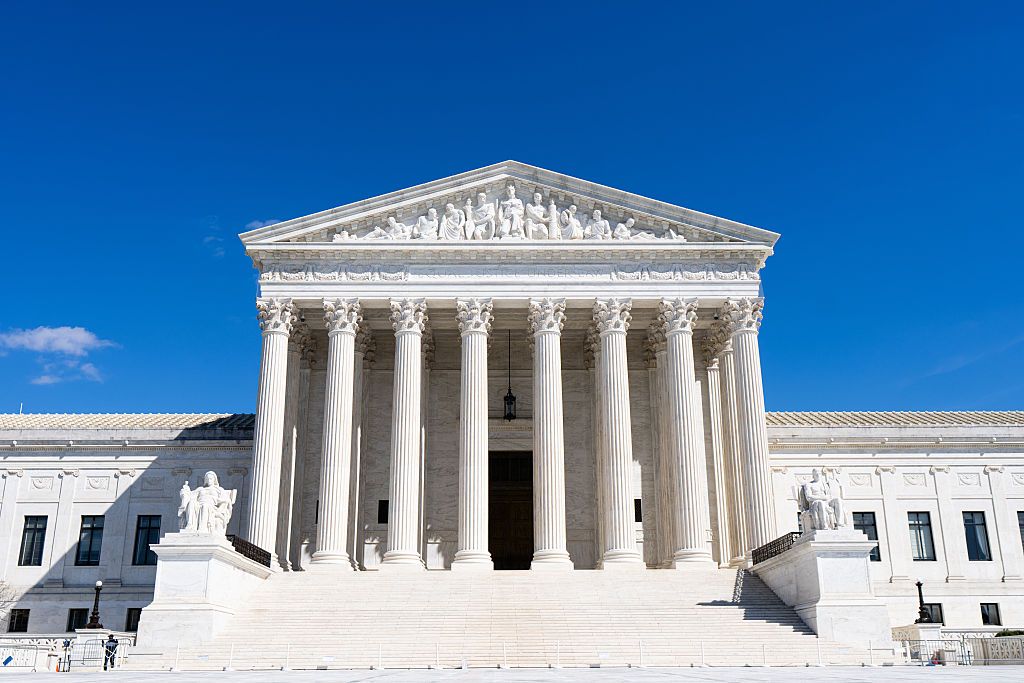


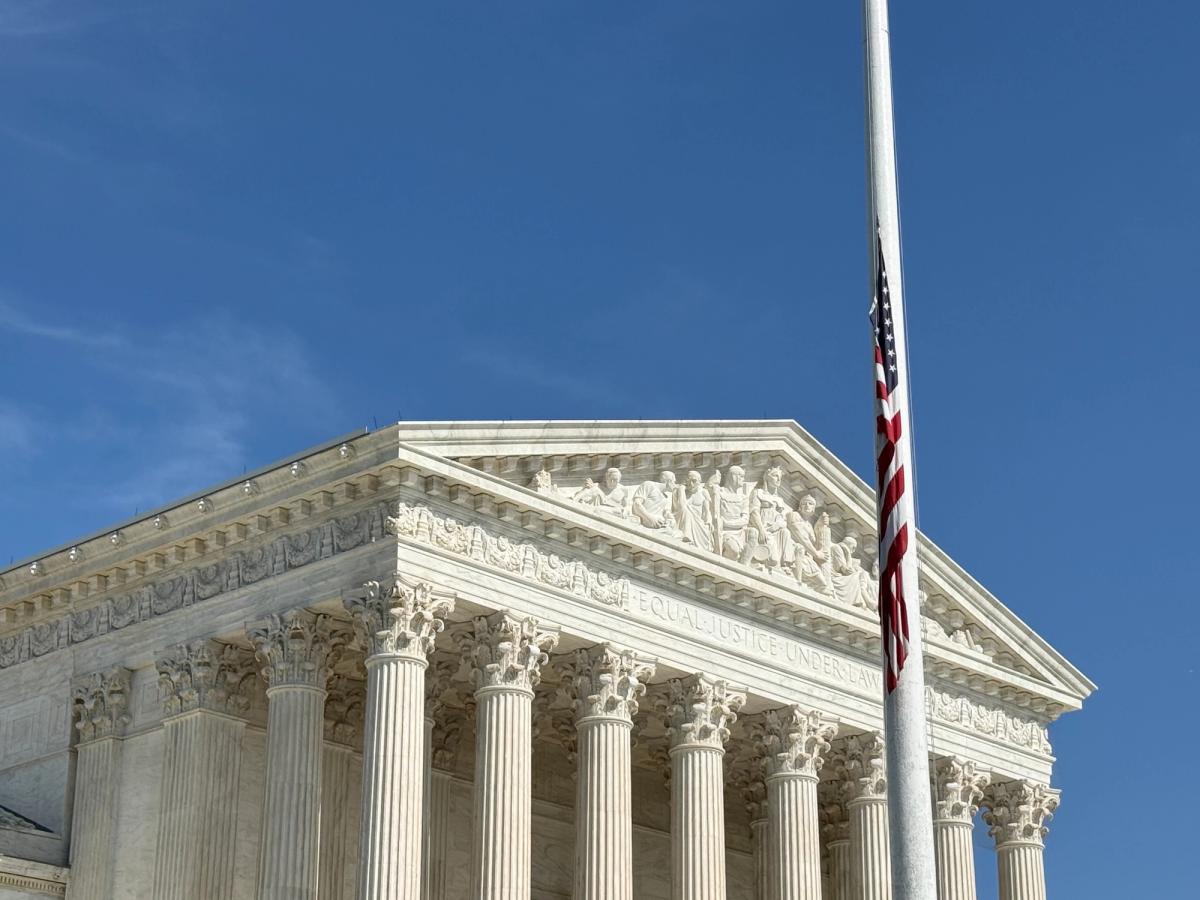
On Tuesday, Nov. 10, the court will hear argument in Department of Labor v. Sun Valley Orchards, LLC. This case concerns the H-2A visa program for temporary alien immigrant workers. The issue is whether the Department of Labor’s Article II administrative law judges have the authority to collect ruinous fines from employers who violate their employment contracts with such individuals.
In early August of this year, I signed an amicus brief supporting Sun Valley Orchards along with former Attorneys General Edwin Meese III and Michael Mukasey and law professor Gary Lawson, prepared and filed by our lawyer Amit Vora. We argued that the respondent was entitled not only to a Seventh Amendment civil jury but also to an Article III federal court.
After reading the government’s opening and reply briefs by Solicitor General D. John Sauer, I stand by our argument that a DOL administrative law judge may not deprive Sun Valley of property by imposing ruinous fines for violating a contract that bound it to follow certain labor laws in employing foreign immigrant H-2A workers. Rather, Sun Valley has a Seventh Amendment right to have its claims heard by a jury if it desires to do so.
The government is obviously correct that the government has a sovereign right to control immigration into the United States under the H-2A program. It does not follow from that, however, that the government can condition the admission of foreign workers under this program on Sun Valley’s surrendering its constitutional right to have employment disputes with those workers adjudicated by Article III courts with a Seventh Amendment right to a jury trial. Constitutional rights cannot be taken away without due process of law or in violation of, for example, the First, Fourth, or Seventh amendments. But that is exactly what the government is trying to do in this case.
By way of example, in 1987’s Nollan v. California Coastal Commission, the Supreme Court, in an opinion by Justice Antonin Scalia, held that the California Coastal Commission could not use its plenary power over zoning to condition a renovation construction permit on the Nolans ceding a public easement to walk along their valuable California coastal property, as doing so would violate the takings clause of the Fifth Amendment. Likewise, the government cannot impose unconstitutional conditions when using either its zoning power or its plenary power over immigration. Nor can the government use its commerce power or any of its other enumerated powers to violate one’s constitutional rights. The government can shut down the foreign immigrant H2A program. But it cannot use it as a cudgel to make Americans surrender their constitutional rights simply because the rights of immigrants are at stake.
Central to the government’s argument otherwise is the public-rights doctrine. This doctrine – properly understood – allows for privileges created by the government to be adjudicated by non-Article III judges, such as the privileges to receive social-security, disability, or welfare payments; the privilege to immigrate into the United States; or the privilege to receive tax rebates under the federal government’s partial waiver of sovereign immunity. With regard to such privileges, the Constitution’s guarantee of an Article III forum and the Seventh Amendment civil jury trial right are inapplicable because the receipt of these were not property rights recognized at common law, but privileges created by the government. The government argues that because immigration into the country is also a privilege, not a right, Sun Valley’s conduct related to this are not subject to Article III protections.
It is true that the public rights doctrine was profoundly altered (one could say poisoned), in the 1977 case of Atlas Roofing Co. v. Occupational Safety and Health Administration. In Atlas Roofing, Justice Byron White denied access to an Article III court and a Seventh Amendment civil jury trial to a party subject to an OSHA enforcement order. According to White, because such orders were based on “new statutory obligations,” they could be “committed exclusively to an administrative agency [for] deciding whether a violation has in fact occurred.” This was incorrect: while OSHA created new torts that can occur in the workplace, these were analogous to the kinds of tort actions that would have been heard at common law. Indeed, such torts are classic “Cases in Law,” which Article III gives sole jurisdiction over to life-tenured federal judges assisted by a civil jury if the plaintiffs choose one. Thus, Atlas Roofing Co. changed the law to say that the public-rights doctrine not only allowed Article II administrative law judges to deprive persons of privileges, but, for the first time, it also eliminated the guarantee of a Seventh Amendment jury trial when a person or entity was deprived of property rights by the government.
Fortunately, this dangerous precedent was limited by the more recent 2024 case of SEC v. Jarkesy. In Jarkesy, the Supreme Court held that when the SEC imposed civil penalties against a defendant for securities fraud, the Seventh Amendment entitled the defendant to a jury trial. This is because in 1787 a fraud case, like the employment contract case at issue in Sun Valley (or, for that matter, the property seized in Atlas Roofing), would have been “Case in Law” assigned to the sole jurisdiction of the Article III courts.
So the lesson of Jarkesy is this: While the vast majority of cases which ALJs decide only “privileges” and not “rights” only require an Article II hearing, when federal regulatory agencies impose ruinous fines on a corporation or person, those fines are deprivations of one’s right to property. And in depriving one of such property, it is not enough to have an administrative hearing: The case must be heard by an Article III court with the right to a Seventh Amendment civil-jury trial.
The public-rights doctrine then does not apply to enforcement orders that deprive a person of property by agencies such as OSHA in Atlas Roofing, the SEC in Jarkesy, or the DOL in Sun Valley. Nor does calling a case an immigration matter empower the government to take away the constitutional rights of Americans even if immigration into the United States is itself a privilege and not a right.
So let’s hope that the Supreme Court in Sun Valley rejects, as unconstitutional, the DOL’s attempt to funnel a private-rights dispute away from an Article III forum. And let’s further hope that the court clearly reframes the public-rights doctrine, as limited in Jarkesy, as a mere manifestation of the rights/privileges distinction – and continues to prevent the doctrine from taking the form that Justice White allowed for in Atlas Roofing: an ominous threat to Article III, the Seventh Amendment, and the due process clause.
Continue reading...
[ H/T SCOTUSblog ]