


This week, during the first half of the November argument session, the justices heard oral arguments in four cases and quickly declined a request from the Trump administration to intervene in a voting dispute in California. However, headlines about these developments were overshadowed by Tuesday’s midterm elections. The blue wave brought new significance to debates over court reform and when Justices Samuel Alito and Clarence Thomas might retire.
At the Court This Week
Today, the justices will meet in a private conference to discuss cases and vote on petitions for review. Orders from today’s conference are expected on Monday at 9:30 a.m. EST.
On Thursday, the Supreme Court denied two requests for a stay of execution from Jesse Guardado, who was sentenced to death for the 2004 murder of Jackie Malone. Hours later, Guardado was executed in Florida.
On Wednesday, the justices heard argument in Guerrero v. Johnson, on the limited circumstances in which a state prisoner can return to federal court for a second round of post-conviction review. Here is the link to our Case Preview.
On Tuesday, the justices heard argument in St. Mary Catholic Parish v. Roy, a religious discrimination challenge brought by Catholic preschools in Colorado over the state’s requirement that all schools participating in its universal preschool program must admit everyone – including LGBTQ children and children with LGBTQ parents. Here are the links to our Case Preview and Argument Analysis.
On Monday, the justices heard argument in Maxwell v. Dinis, on a federal inmate’s ability to use a habeas statute, 28 U.S.C. § 2241, to contest the Federal Bureau of Prisons’ refusal to accelerate his transfer to a halfway house or home confinement. Here are the links to our Case Preview and Argument Analysis.
The justices also heard argument on Monday in Younge v. Fulton Judicial Circuit District Attorney’s Office, Georgia, on whether an affirmative defense may be asserted as a basis for summary judgment if not presented earlier in a pleading. Here are the links to our Case Preview and Argument Analysis.
Monday morning, the Trump administration returned to the Supreme Court’s interim docket, asking the justices to intervene in its efforts to keep California from counting ballots cast by individuals who it contends are noncitizens. Just hours later, the court denied the request. There were no noted dissents.
Later on Monday, the court released its calendar for the January argument session, which will begin on Monday, Jan. 11.
On Oct. 21, the Trump administration asked the court to allow it to resume construction of its border wall in the Big Bend region of southwestern Texas. The request has been fully briefed since last Friday, and the court’s decision could come at any time.
Looking ahead, the justices will hear arguments on Monday in two cases: Nielsen v. Watanabe, on whether and when federal officials can be held liable for constitutional violations; and Hoffmann v. WBI Energy Transmission, Inc., on whether the “just compensation” paid to land owners losing property to a pipeline project should be determined by referring to state law, which often provides for a higher payment than what the Constitution requires.
Morning Reads
Justice Dept. Steps Up Criminal Inquiry of Supreme Court Abortion Decision Leak
Jodi Kantor and Michael S. Schmidt, The New York Times (paywalled)
In May 2022, Politico released a leaked draft of the Supreme Court’s decision in Dobbs v. Jackson Women’s Health Organization, which overturned the right to abortion. The leak was “a seismic breach of confidentiality” and led to “an internal inquiry by the court,” although “no leaker has ever been publicly identified.” But The New York Times reported on Thursday that the Justice Department is now “pursuing a criminal investigation into who leaked” the draft opinion and that this “investigation has ramped up in recent weeks as prosecutors have sent grand jury subpoenas for testimony and sought information from people who worked at the court at the time of the leaks.”
Midterm Rout Closes Trump’s Window on the Supreme Court
James Romoser, The Wall Street Journal (paywalled)
Tuesday’s midterm elections “all but guaranteed” President Donald Trump won’t be able to put a fourth justice on the Supreme Court. Beginning in January, Democrats will have “a Senate majority—with a several-seat cushion—that will make it easy to block Trump judicial nominees, especially for any Supreme Court vacancies that might arise in 2027 or 2028,” according to The Wall Street Journal. Faced with this reality, “
Senate Democrats will not let Trump put a ‘right-winger’ on the Supreme Court, Schumer vows
Mary Clare Jalonick, Associated Press
In a Thursday interview with the Associated Press, Senate Democratic leader Chuck Schumer said “that Democrats will not allow President Donald Trump to put ‘a right-winger’ on the Supreme Court once they take power.” He “would not say if he would hold a Supreme Court vacancy open until after the next presidential election, as former Senate Republican leader Mitch McConnell did in 2016. But he said that Democrats are ‘not going to allow any crappy nominees’ to be confirmed to the Supreme Court.” “The bottom line is we’re not going to allow a right-winger on the court,” Schumer said.
Democrats Can Now Fix the Supreme Court Without Reforming It
Noah Feldman, Bloomberg
In a column for Bloomberg, Noah Feldman contended that Tuesday’s election results “should cause Democrats to reconsider the wisdom of plans to pack the court or strip it of jurisdiction over certain issues.” It should no longer feel as urgent to make such changes, according to Feldman, because “f a Democrat wins the presidency in 2028 and the Democrats hold the Senate, the Democrats will have a chance to flip the court from 6-3 conservative to 5-4 liberal” simply by filling predicted or expected vacancies. The reform proposals floated in recent months “make little sense if Democrats take seriously the prospect of a liberal recapture of the institution,” Feldman wrote.
On Site This Week
Argument Analysis
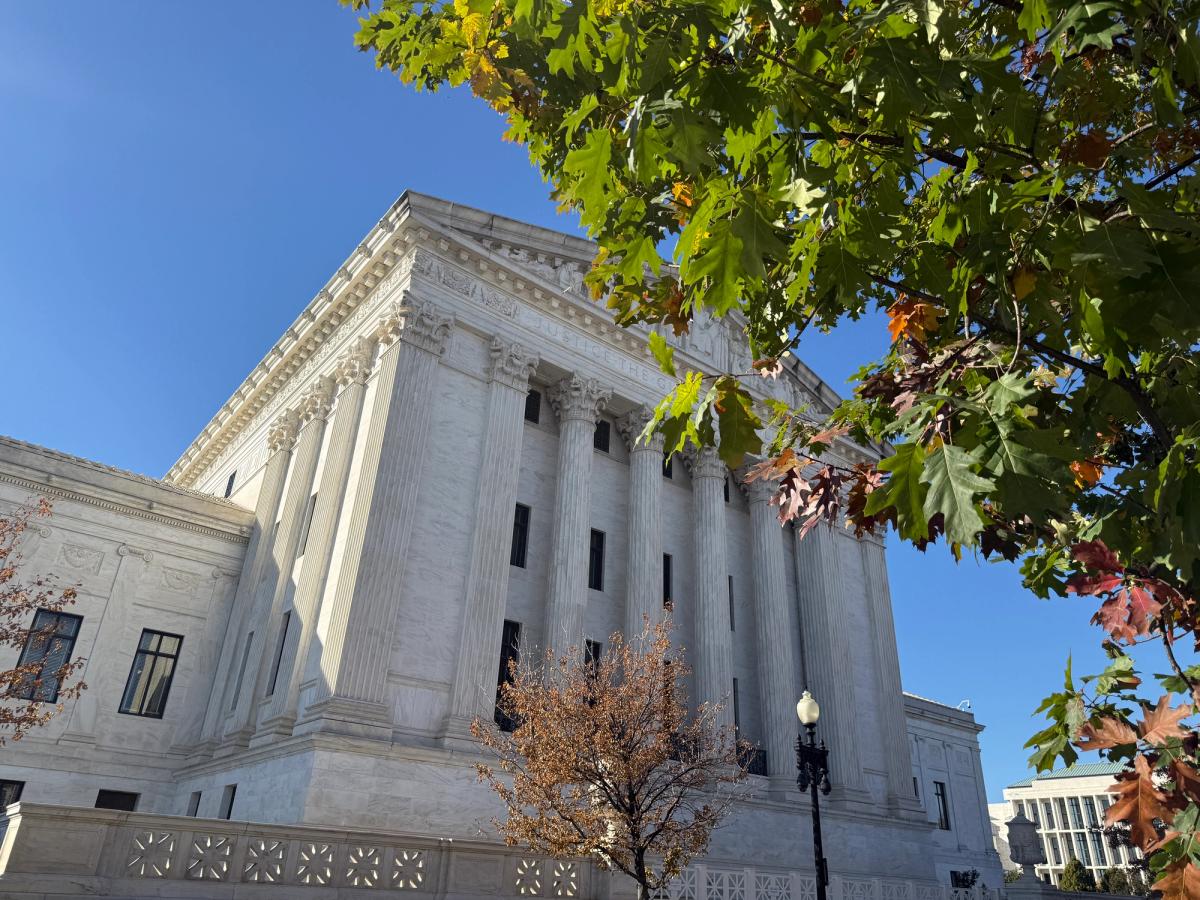
Court leans toward narrow ruling on inmate’s use of habeas for accelerated transfer to a halfway house or home confinement
The Supreme Court heard argument on Monday in Maxwell v. Dinis on whether a federal inmate may use a habeas statute to contest the Federal Bureau of Prisons’ refusal to accelerate his transfer to a halfway house or home confinement.
Case Preview
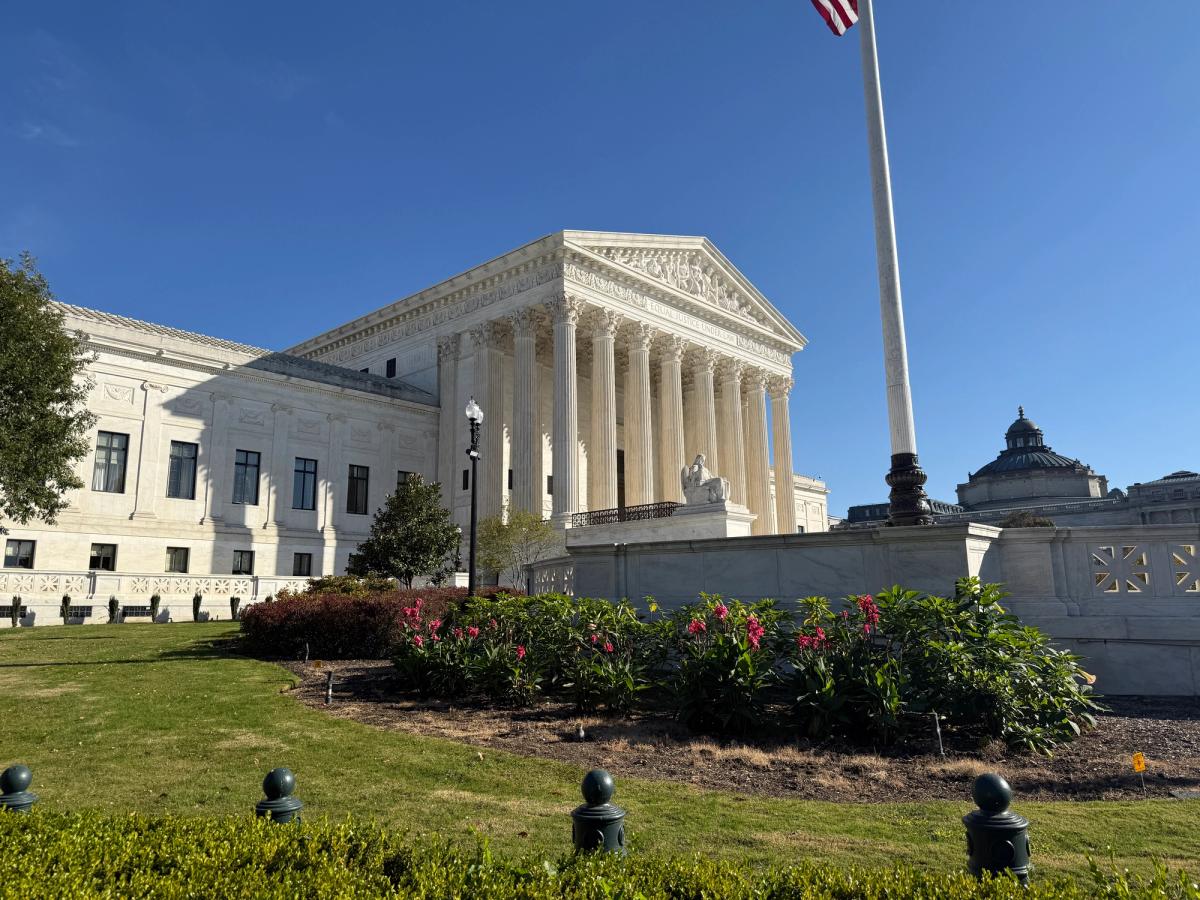
Court to consider the reach of Article III courts in immigration contract dispute
The argument on Nov. 10 in Department of Labor v. Sun Valley Orchards brings the justices a complex constitutional problem: Does the Constitution allow Congress to delegate to the executive branch – as opposed to the courts – the authority to adjudicate the obligation of an employer to comply with employment agreements it makes with temporary immigrant workers?
Contributor Corner
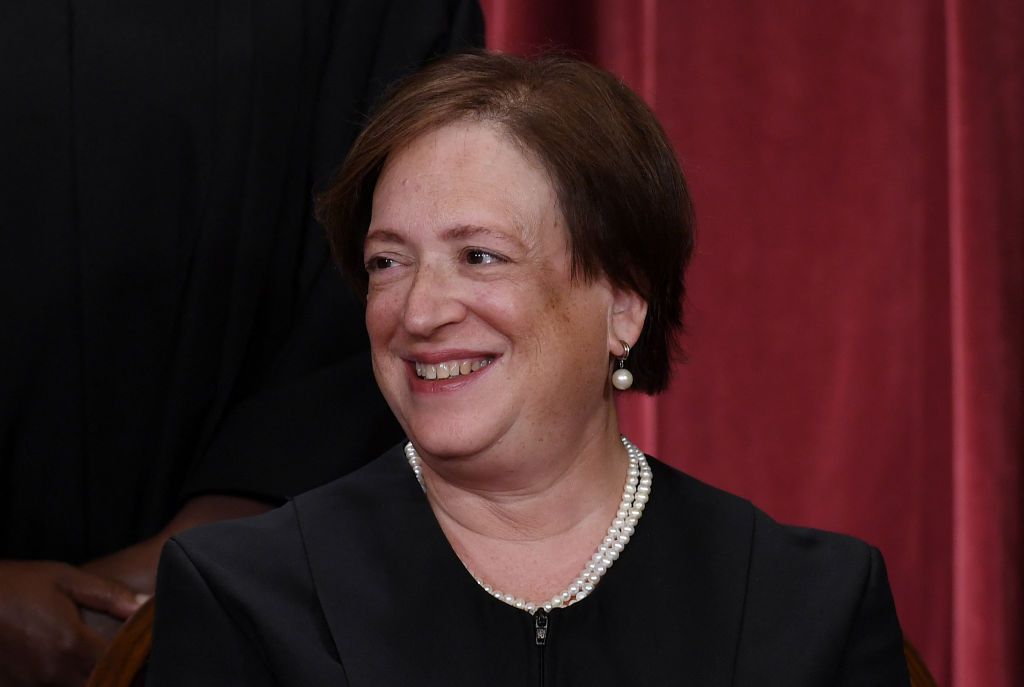
Who Is Elena Kagan? Ideology, strategy, and the art of disagreement
In his Empirical SCOTUS column, Adam Feldman offered an in-depth analysis of Justice Elena Kagan, examining not only how she votes, but also how she chooses to agree and disagree.
Contributor Corner
St. Mary and the shrinking reach of Smith
In her Ratio Decidendi column, Stephanie Barclay revisited Tuesday’s argument in St. Mary Catholic Parish v. Roy, noting that the discussion put a spotlight on 1990’s Employment Division v. Smith, a controversial ruling that made it easier for the government to overcome free exercise challenges. The ruling in St. Mary, according to Barclay, “will determine how much is left of” Smith, which has already fallen out of favor with the court.
Relist Watch
Mootness, maps, and motor vehicles
In his Relist Watch column on Wednesday, John Elwood explored four petitions for review that will get a second look from the justices at today’s conference. Three concern a long-running dispute over Alabama’s congressional districts and the fourth asks whether using a car makes an otherwise local kidnapping a federal crime – even when the car never crosses a state line.
Contributor Corner
Will an ability to hold federal officers accountable survive this term?
In his Courtly Observations column on Tuesday, Erwin Chemerinsky explored Nielsen v. Watanabe, in which the court is considering under what circumstances federal officers may be sued for money damages for constitutional violations, noting that the case comes at a time when efforts “to hold ICE agents accountable” have taken on new urgency.
Contributor Corner
Is Montgomery affirmative action’s final chapter?
On Oct. 19, the Supreme Court granted review in Association for Education Fairness v. Montgomery County Board of Education, a case on race and school admissions. In his AV Ristorante column on Monday, Brian Fitzpatrick explained why he believes “it could be the final nail in affirmative action’s coffin.”
Podcasts
Advisory Opinions
Legal Ramifications of a Bluenami
Sarah Isgur and David French discuss the Texas Supreme Court’s blue wave, the possibility of a majority-Democrat Supreme Court, and one of the biggest Supreme Court cases of the term: St. Mary Catholic Parish v. Roy.
A Closer Look
Justice Peter V. Daniel
Friday’s A Closer Look is typically a judicial biography. This week we cover Justice Peter V. Daniel, who served on the court from 1841/2 to 1860.
Like some of the other justices we’ve covered, Justice Peter V. Daniel is one that “[f]ew recall or have ever heard of.” Those who know of Daniel have not been complimentary. He was called “a brooding proslavery fanatic” by law professor Earl Maltz, and a 1965 book review likened him to the notoriously bigoted Justice James C. McReynolds, minus McReynolds’ occasional “charm.”
Daniel was born in April 1784 on his family’s estate in Stafford County, Virginia. After studying with private tutors and a brief stint at the College of New Jersey (now Princeton University), he read law in Richmond under Edmund Randolph, President George Washington’s attorney general and secretary of state. In 1810, Daniel married Randolph’s daughter, Lucy.
In November 1808, Daniel fought a duel in Maryland against businessman John Seddon; Seddon later died from his injuries. This did not appear to significantly slow Daniel’s career, however: He subsequently spent two one-year terms in the Virginia House of Delegates, a tenure his biographer, John P. Frank, judged as “utterly undistinguished.” In 1812, Daniel joined Virginia’s Council of State, which advised the governor, and from 1818 to 1835 served as lieutenant governor. His “friends” “apparently lacked any real warmth or affection for him, complaining of his ‘frozen deportment,’” which played out literally: In the winter of 1813, Daniel reportedly balked at spending a modest sum to keep militiamen warm, despite their officer’s warning that the men’s lives were at stake, on the reasoning that Virginia state law made the soldiers responsible for their own clothing.
Daniel’s Richmond law practice was modestly successful, but he had other aspirations. Through the Richmond Junto (a Virginia Democratic-Republican network) he organized and led the state’s Jacksonians, and, along with then-New York governor Martin Van Buren, built an “Albany-Richmond axis,” which backed Andrew Jackson for president. Daniel subsequently turned down Jackson’s offer of attorney general. In 1836, however, he accepted a federal judgeship in eastern Virginia, Jackson’s reward for his party loyalty and his support for the president’s war on the national bank.
When Justice Philip Barbour died in February 1841, Van Buren had roughly a week left in office and rushed to nominate Daniel to the court. Aware of Daniel’s reputation, Whig senators tried to stall the vote, at one point walking out together to leave the chamber without a quorum, while Democratic leaders searched the capital for their own absent senators. Daniel was ultimately confirmed 22-5 in a midnight vote. The exact date he took the oath is unclear; the Federal Judicial Center lists it in January 1842 “based on questionable authority,” while one biography entry has him joining the court in December 1841.
After he joined the bench, Daniel’s circuit assignment included Arkansas and Mississippi, which involved arduous trips from Washington. While circuit riding in 1851, for example, Daniel rode in a canal boat for two days to get from D.C. to Pittsburgh (and was not a fan of the other “vulgar and filthy” passengers).
On the court itself, close to one in three of Daniel’s written opinions was a dissent, and during his tenure, his solo dissents outnumbered any other justice’s by more than two to one. He fought against extending federal admiralty power to inland waters, and when the court did just that in 1852’s Genesee Chief v. Fitzhugh, Daniel was the lone dissenter. Perhaps his best-known majority opinion came in 1848’s West River Bridge Co. v. Dix, which put Daniel opposite the famed lawyer and statesman Daniel Webster. Daniel detested Webster so much that, after meeting him, he reported his hand “was actually contaminated by contact with his.” In the case, Vermont had taken over a privately chartered toll bridge, paid compensation, and opened it as a free road, but the bridge company argued that the takeover breached the contract clause of the Constitution. Writing for the majority, Daniel held that the franchise was ordinary property that the state could take through eminent domain.
Daniel, who was a slaveholder, concurred in 1842’s Prigg v. Pennsylvania, which held that the federal Fugitive Slave Act preempted Pennsylvania’s ban on recapturing formerly enslaved persons. After Van Buren joined the antislavery Free Soilers, Daniel’s friendship with him ended, and Daniel reportedly swore he would never again set foot north of Maryland (he came to blame even bad weather on the North). In Dred Scott v. Sandford, Daniel argued that freed slaves could not be citizens because they had once been held as property and that the Northwest Ordinance of 1787 (which, among many other things, had kept slavery out of land north and west of the Ohio River) was unconstitutional, thus taking a more extreme position than even Chief Justice Roger Taney, who wrote the majority opinion.
Daniel’s first wife, Lucy, died in 1847, and his second wife died in 1857 after a candle accidentally lit her clothes on fire. Daniel died in Richmond in May 1860 following a lengthy illness. In February 1861, Republican senators blocked President James Buchanan’s pick to replace him, Jeremiah Black, making the seat one of the three vacancies that President Abraham Lincoln filled in 1862. It stayed open until July 1862, when Lincoln chose Justice Samuel Miller.
In a December 1860 memorial, the attorney general said that Daniel “held the pen of a ready writer,” but “was sometimes in danger of going too directly to his purpose and treating with too much contempt the obstacles that intervened.”
SCOTUS Quote
Continue reading...
[ H/T SCOTUSblog ]