






The Supreme Court heard three oral arguments this week, wrapping up the November argument session. It also decided an interim docket case on border wall construction in southwestern Texas, granting the Trump administration’s request to be allowed to continue construction in an apparent 8-1 vote.
At the Court This Week
Today, the justices will meet in a private conference to discuss cases and vote on petitions for review. Orders from today’s conference are expected on Monday at 9:30 a.m. EST.
On Thursday, the Supreme Court denied a request for a stay of execution from James Pavatt, who was sentenced to death for the 2001 murder of Rob Andrew. Just over an hour later, Pavatt was executed in Oklahoma.
On Tuesday, the justices heard oral argument in Department of Labor v. Sun Valley Orchards, LLC, on whether the Constitution allows the executive branch – as opposed to the courts – to adjudicate an employer’s obligation to comply with employment agreements concerning temporary immigrant workers. Here are the links to our Case Preview and Argument Analysis.
On Monday, the justices heard argument in Nielsen v. Watanabe, on whether and when federal officials can be held liable for constitutional violations. Here are the links to our Case Preview and Argument Analysis.
Also on Monday, the justices heard argument in Hoffmann v. WBI Energy Transmission, Inc., on whether the “just compensation” paid to land owners losing property to a pipeline project should be determined by referring to state law, which often provides for a higher payment than what the Constitution requires. Here are the links to our Case Preview and Argument Analysis.
Later on Monday, the Supreme Court granted the Trump administration’s request to be allowed to resume construction of its border wall in the Big Bend region of southwestern Texas. Only Justice Ketanji Brown Jackson indicated, without explanation, that she would have denied the government’s request.
In Monday’s order list, the Supreme Court denied review in over 200 cases, including disputes involving the George Floyd protests in Minneapolis, actor Randy Quaid, and the sons of former baseball player Roberto Clemente. It also asked the United States solicitor general to share the government’s views on a case over whether U.S. terrorism victims may sue 21 pharmaceutical and medical-device companies under the Antiterrorism Act for allegedly aiding and abetting Iraqi terrorists.
In early October, a high school wrestler in Washington state and her mother came to the Supreme Court’s interim docket and asked the justices to prevent transgender girls from competing against her during this year’s wrestling season. The application has been fully briefed since Oct. 15, but the Supreme Court has not yet taken action. In a Monday letter, the Washington Interscholastic Activities Association asked the court not to intervene, highlighting the passage last week of a ballot initiative in Washington that aims to prevent “biologically male students from competing with and against female students in athletic activities that have separate classifications for male and female students” at K-12 schools.
Morning Reads
Alito warns Congress can ‘turn off the lights’ at Supreme Court
Zach Schonfeld, The Hill
While speaking to the Federalist Society on Thursday, Justice Samuel Alito “warned against any potential congressional action to defund the Supreme Court as he defended the importance of an independent judiciary,” according to The Hill. “Congress can turn off the lights at the Supreme Court and stop everything from happening if they want to defund their activities,” he said. “So, it is important to preserve the independence of the judiciary. If that is eliminated, then the Constitution as adopted in 1789 will no longer be the same.” He also described the judicial branch as “the least powerful branch,” adding that “it is ‘vulnerable’ to Congress and the executive.” But that doesn’t mean judges can’t go too far, Alito added. “If you think about a hand grenade, a 500-pound bomb and a nuclear weapon,” he said, “the hand grenade is the least dangerous. But that is not to say that it is not dangerous.”
FTC urged to probe companies not sharing tariff refunds with consumers
Rachel Barber, USA Today
In February, “the Supreme Court struck down tariffs President Donald Trump imposed last year under the International Emergency Economic Powers Act,” holding that the law does not grant the president the power to impose tariffs. The next month, the U.S. Court of International Trade “ordered Customs and Border Patrol to issue refunds to importers totaling about $166 billion.” Now, seven Senate Democrats are asking the Federal Trade Commission “to investigate whether large corporations that received billions of dollars in tariff refunds violated federal law by not passing them on to their customers,” according to USA Today. “By increasing consumer prices, ostensibly due to tariff costs, and then refusing to provide refunds to consumers when they are later reimbursed for those tariff costs,” the senators wrote, “corporations may be in violation of the” Federal Trade Commission Act, which “empowers the commission to prevent ‘unfair or deceptive acts or practices in or affecting commerce.’”
White House counsel says Supreme Court delivered ‘generational win’ on presidential firing power
Sophie Brams, The Hill
During a Thursday panel at the Federalist Society’s annual National Lawyers Convention, “White House counsel Will Scharf praised the Supreme Court’s June decision strengthening presidential firing power as a ‘generational win’” that “righted what he viewed as a ‘historic constitutional wrong,’” according to The Hill. “A president who can’t control who’s exercising the executive power that is vested in him, that’s a cabined presidency,” Scharf said. “The Supreme Court did a masterful job,” he added. “Really got it right.”
Richard Glossip pleads guilty to accessory to murder in 1997 case
Kimberly Querry-Thompson, KOKH
On Thursday, former death row inmate Richard Glossip appeared in Oklahoma County District Court “for what was supposed to be his second hearing on pretrial motions” in the state’s effort to retry him for the 1997 murder of Barry Van Treese. “However, the hearing took a turn when the state announced an agreement between the prosecution and the defense,” under which “Glossip pleaded guilty to one count of accessory to murder,” according to KOKH in Oklahoma City. The plea agreement comes after the Supreme Court in 2025 “threw out Glossip’s murder conviction and death sentence,” determining that prosecutors had failed to correct false testimony. “Glossip’s sentencing is set for Dec. 17 and Dec. 18.”
Will the Supreme Court Thwart Congressional Investigations?
Adam Liptak, The New York Times (paywalled)
In his newsletter for The New York Times, Adam Liptak highlighted “hurdles and roadblocks [] erected by the Supreme Court” that may stand in the way of at least some of the new Congress’ planned investigations into “the Trump administration and its allies.” For example, in 2024’s Trump v. United States, in which the court granted the president “substantial immunity from prosecution, Chief Justice John Roberts indicated that some subjects may be entirely off limits to congressional investigators.” “Those subjects included issuing pardons, firing subordinates and deciding ‘which crimes to investigate and prosecute.’” It is also significant, according to Liptak, that “the court has never definitively resolved” whether Congress can “sue the executive branch,” an issue that will likely arise if the administration refuses “to give Congress documents or let officials testify.” Liptak noted that “it is not at all clear that the Supreme Court would be willing to mediate” disputes between Congress and the executive branch over access to information, “or if the justices would side with the Democratic Congress if it does.”
On Site This Week
From the SCOTUSblog Team
What Trump cases might soon return to the Supreme Court?
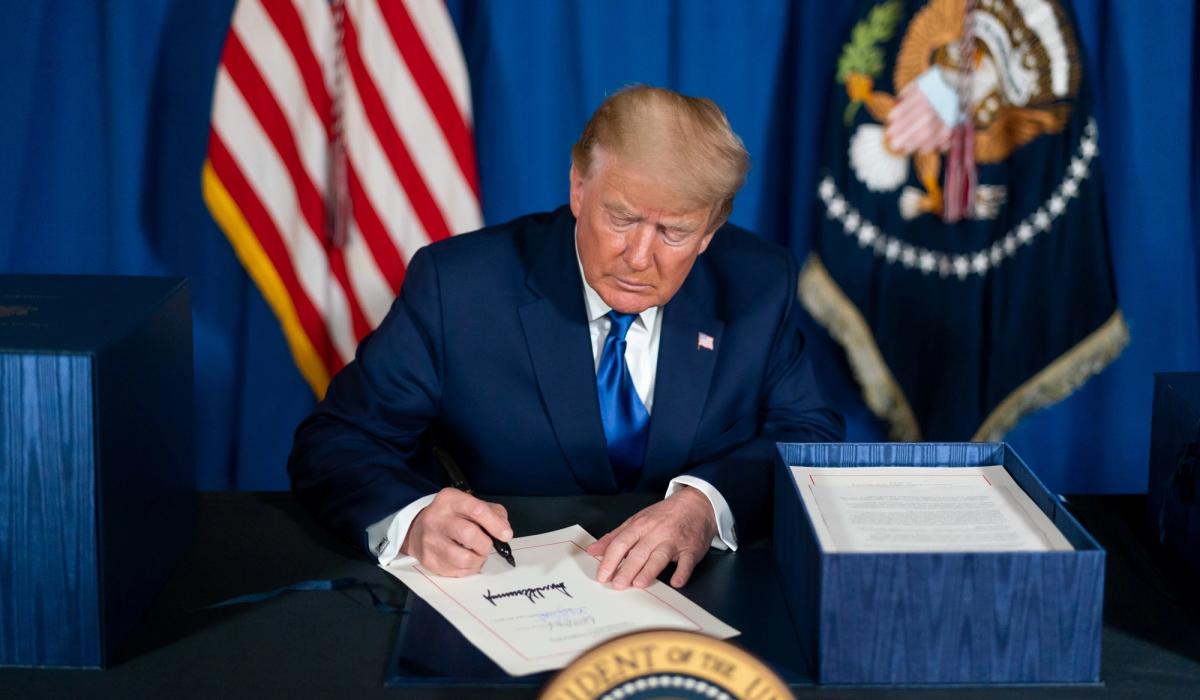
During the 2025-26 term, the Supreme Court handed President Donald Trump defeats in cases on birthright citizenship, tariffs, and his effort to fire Lisa Cook. But those rulings do not necessarily mean the justices have seen the last of any of those issues.
Contributor Corner
The sometimes straightforward, sometimes befuddling certiorari process
In his Nuts and Bolts column, Stephen Wermiel explored how the Supreme Court decides what cases to decide, also known as the certiorari or “cert.” process. According to him, “questions will continue to arise about how th[is] process works – but one should not hold their breath waiting for all the answers.”
SCOTUS Outside Opinions
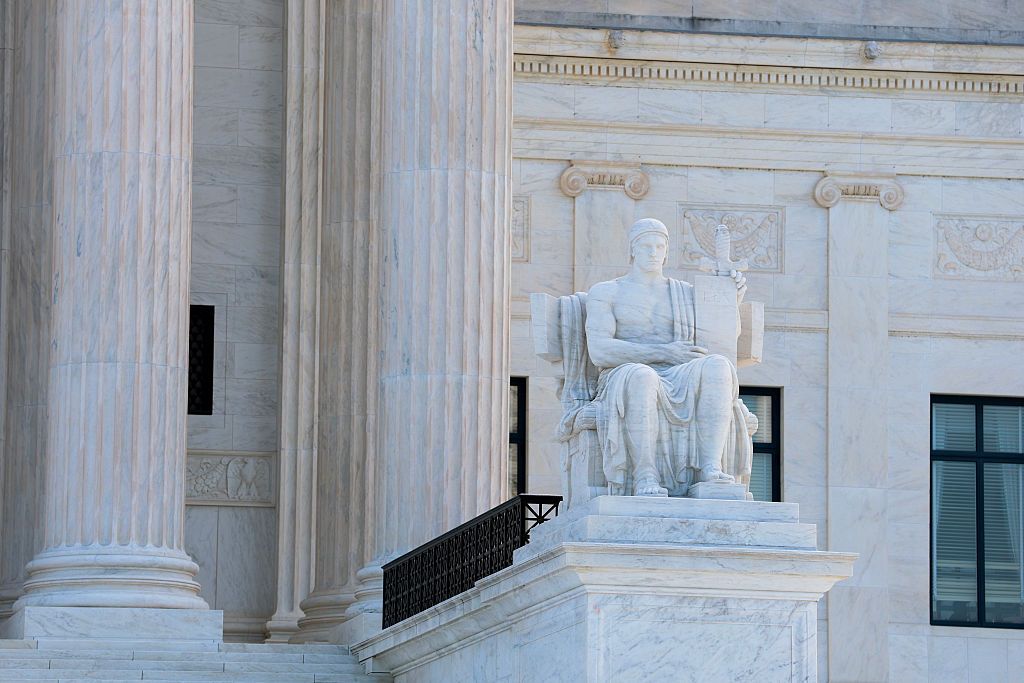
What is a discriminatory effect? The Montgomery County case and unpacking when schools may try for racial diversity without using race
In a column for SCOTUSblog, Deborah Hellman and Lily Hu revisited the Supreme Court’s decision to grant review in Association for Education Fairness v. Montgomery County Board of Education, a case on the circumstances under which facially neutral admissions policies violate equal protection by producing a discriminatory effect.
Relist Watch
Eleven new relists in search of four votes
In his Relist Watch column on Wednesday, John Elwood explored 11 petitions for review that will get a second look from the justices during today’s conference, which cover such issues as the Trump administration’s effort to remove certain noncitizens from the country without first allowing them to apply for asylum and a ban on carrying firearms in “sensitive places.”
Contributor Corner
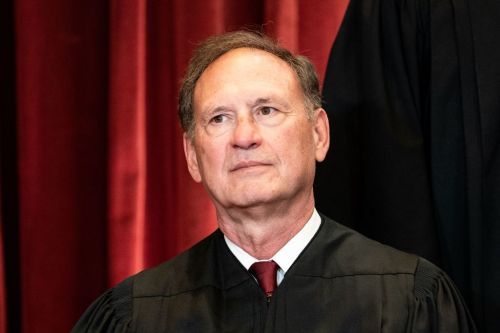
Justice Alito and the tradition of a written constitution
In his Born Free and Equal column on Wednesday, Steven Calabresi reviewed Justice Samuel Alito’s new book and commended it as “exceptionally intellectual and provocative.” “The book fills the shoes of the late Justice Scalia, and I would recommend it to everyone – whether they agree with Justice Alito’s jurisprudence or not,” Calabresi concluded.
Court News
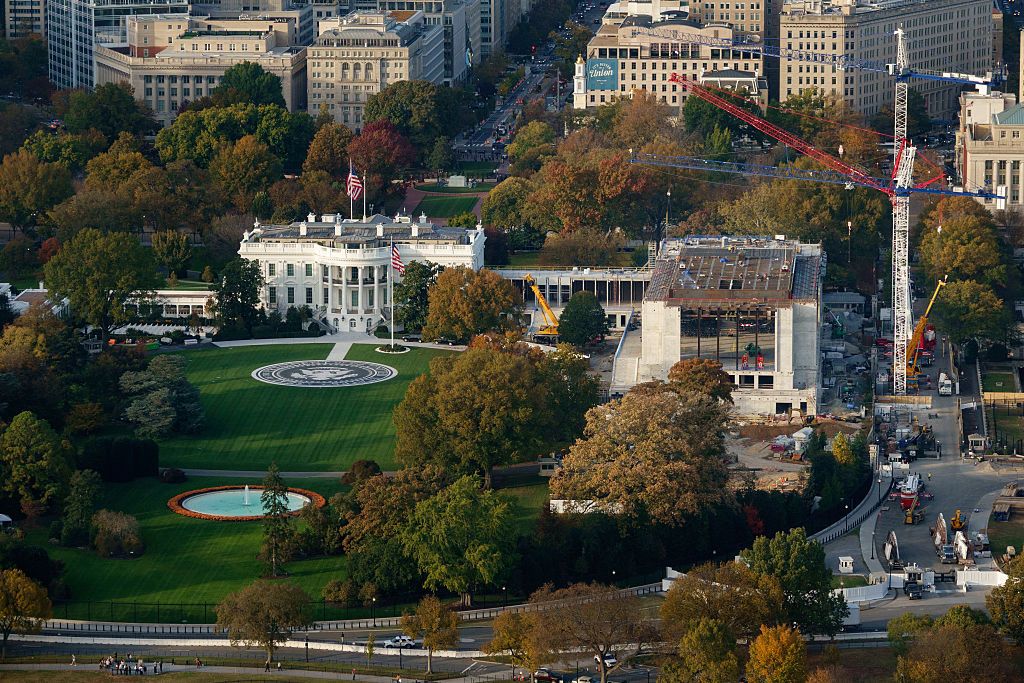
Trump administration brings White House ballroom battle back to Supreme Court
On Tuesday, Amy reported that the Trump administration has once again asked the Supreme Court to intervene in its efforts to build a new White House ballroom. U.S. Solicitor General D. John Sauer told the justices that the project “should be permitted to move forward outside the shadow of judicial superintendence.”
Contributor Corner
Whose tradition, which history? Agency adjudication and Sun Valley Orchards
In her inaugural Substance and Procedure column on Monday, Rachel Bayefsky explored the Supreme Court’s application of a “history-and-tradition” analysis in recent cases on the constitutionality of agency adjudication – that is, “the practice of resolving disputes ‘in-house’ within administrative agencies instead of addressing” them in a court. According to Bayefsky, the court’s decision in Department of Labor v. Sun Valley Orchards “may have an important impact not only on the future of agency adjudication, but also on the trajectory of historically driven interpretation across a variety of pressing constitutional debates.”
Podcasts
Advisory Opinions
First Amendment, Still Revolutionary
Sarah Isgur and David French analyze free speech issues from the past three election cycles, including Donald Trump’s “they/them” ad in 2024 and the Trump administration’s threats to social media companies. They then discuss a free speech fight that may define the next two years.
A Closer Look
Justice Samuel Nelson
The Closer Look in Friday editions is typically a judicial biography. This week, we cover Justice Samuel Nelson, who served on the court from 1845 to 1872.
While you might think there’s only one justice with the name Samuel based on recent news coverage, there have actually been five with that first name in the court’s history – and in today’s justice biography, we’ll take a look at the second. (The first, if you recall, didn’t get things off to a particularly great start: He is the only justice to have been impeached.)
Although referred to as “one of those nineteenth-century justices of whom we often lose sight” (the Journal of Supreme Court History said it, not us), Justice Samuel Nelson served on the court for 27 years as a “pragmatic yet low-key man,” as described by Oyez. Things began for him in Hebron, New York, where he was born in November 1792 to Scot-Irish farmers. His father helped pay Nelson’s Middlebury College tuition by selling a person who was enslaved. Nelson graduated from Middlebury in 1813; clerked at a Salem law firm; followed one of its partners to Madison County, New York when the firm split; and was admitted to the bar in 1817 (two years later, he married his law firm practice partner’s daughter).
In 1820, Nelson was appointed the town’s postmaster and served as a presidential elector for James Monroe. He became a delegate to the 1821 state constitutional convention, where he pushed to eliminate property requirements for male voters.
New York Gov. Joseph Yates appointed Nelson as a state circuit judge in 1823. Gov. Enos Throop elevated him to the New York Supreme Court of Judicature (that state’s highest trial court) in 1831, and he became its chief justice in 1837. In Jack v. Martin, he held that New York could not interfere with enforcement of the federal Fugitive Slave Act and noted that anyone who seized a free man would, under state law, “be answerable like any other trespasser or kidnapper.”
In 1845, Nelson ran for the U.S. Senate and lost. Shortly after, President John Tyler nominated him to succeed Justice Smith Thompson. The Senate confirmed Nelson by voice vote in February 1845, and he served as circuit justice for the 2nd Circuit (Connecticut, New York, and Vermont) while on the Supreme Court.
On the bench, Nelson “kept a low profile,” generally voting with the majority. He did write a few notable decisions, one of them in 1850’s Hotchkiss v. Greenwood, a landmark patent law case. In 1857’s Fellows v. Blacksmith, Nelson wrote for a unanimous court that a land company could not forcibly evict the Tonawanda Senecas, calling such litigation “appalling.” According to one scholar, Nelson “persuaded all his brethren, including those who had supported Jacksonian Indian removal policies, of the merits of the Tonawandas’ Seneca treaty arguments.” The same scholar wrote that Fellows eventually allowed for the treaty that let the tribe buy back 7,500 acres of its reservation.
Fellows was decidedthe same year as Dred Scott v. Sandford. Nelson reportedly resisted behind-the-scenes pressure from incoming President James Buchanan to endorse at least part of Chief Justice Roger Taney’s opinion (unlike Justice Robert Grier). Nevertheless, he concurred with the majority, and scholars have “castigat[ed] him, along with Justice Robert Grier of Pennsylvania, for being the only two Northern jurists on the bench who voted with the majority in the case.” (Ten years later in Georgia v. Stanton, Nelson refused to let Georgia block Congress’ Reconstruction program, holding that its claims “call for the judgment of the court upon political questions.”)
In the lead-up to the Civil War, Nelson and Justice John Campbell acted as intermediaries between Secretary of State William Seward and Southern commissioners who wanted the Confederacy recognized. Privately, Nelson wrote on Christmas Day in 1860 that “we almost despair of the republic” and in 1862 wrote to Justice Benjamin Curtis that he hoped the country might survive both “the fierceness of the enemy without and imbecility of the authorities within.”
Nelson also dissented in the 1863 Prize Cases, arguing that President Abraham Lincoln could not legally blockade Southern ports until Congress declared war. The dissent (along with his vote in Ex parte Milligan to overturn the conviction of a man charged with helping the Confederacy and opposing expanding federal power) led critics to question his loyalty to the Union.
Following the civil war, President Ulysses S. Grant in 1871 named the 79-year-old Nelson one of five American members of the commission handling claims against Great Britain for the damages caused by British-built Confederate ships, which Nelson accepted (although he wrote that he was “hardly at liberty to refuse”). The proceedings won the United States $15.5 million.
Nelson retired in November 1872. He died in Cooperstown, New York, in December 1873, at age 81. One historian wrote that Nelson was a “quietly competent jurist” in comparison to several of “his more flamboyant and controversial judicial brethren” (some of whom we will be covering soon).
SCOTUS Quotes
On Nov. 10, Judge Richard Posner passed away at the age of 87. Posner, who served on the U.S. Court of Appeals for the 7th Circuit from 1981 to 2017, was one of the most influential jurists never to have served on the Supreme Court. In addition to his voluminous opinions (some affirmed, others denied), Posner authored over 60 books and more than 500 articles and served as a Senior Lecturer in Law at the University of Chicago Law School. Among his many contributions, Posner helped give life to the law and economics movement and to the study of judging as an empirical pursuit. As Zach, our executive editor, can attest to first-hand, he was both charming and hilarious in person and did not suffer bad ideas lightly.
But this is SCOTUSblog. So what did Posner have to say about the court specifically? Here are some choice quotations (you may notice a theme):
- 2006: “A Supreme Court Justice writing a book about constitutional law is like a dog walking on his hind legs: The wonder is not that it is done well but that it is done at all.”
- 2006: “The standard argument is that secrecy [of the court’s proceedings] is necessary for candid communications among the justices and between the justices and their clerks. But judicial decisions, unlike business and political and military decisions, are supposed to be based, and rightly so, on reasons that can be stated publicly without embarrassment.”
- 2013: “I don’t think it’s a real court. I think of it as basically ... it’s like a House of Lords. It’s a quasi-political body. President, Senate, House of Representatives, Supreme Court. It’s very political. And they decide which cases to hear, which doesn’t strike me as something judges should do. You should take what comes. When you decide which case to hear it means you’ve decided the cases ahead of time.”
- 2013: “Now the Supreme Court justices write very, very few majority opinions. Last year they saw 74 cases. Divide that by nine and that’s a little more than eight opinions a year. That’s ridiculous! I write around 90 opinions a year.”
- 2016: “There are something like 1.2 million American lawyers, some of whom are extremely smart, fair minded, experienced, etc. I sometimes ask myself: whether the nine current Supreme Court Justices (I’m restoring Scalia to life for this purpose) are the nine best-qualified lawyers to be Justices. Obviously not. Are they nine of the best 100? Obviously not. Nine of the best 1,000? I don’t think so. Nine of the best 10,000? I’ll give them that.”
Continue reading...
[ H/T SCOTUSblog ]