







The Latest Wildfire Panic Is Refuted By Data
Authored by Kit Knightly via Off-Guardian.org,
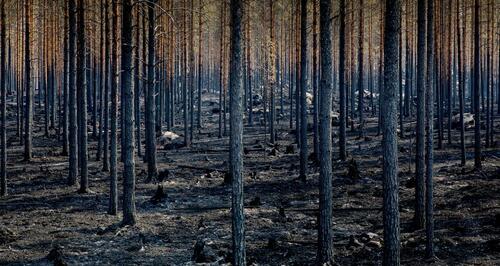
Wildfires are in the news. With a hot, dry summer it was bound to happen. And, naturally, this is bringing with it talk of climate change.
The Independent is screaming and rending its garments:
The Guardian has an opinion piece calling for prosecutions for climate crimes. Twitter experts are calling for changes to the way we live our lives.
Prince William is saying stuff:
I suppose we should make the usual point, that wildfires are a natural phenomenon that are an important part of the life cycle of many ecosystems. And that some years are bound to be worse than others.
But there’s just one issue, wildfire activity is actually down.
A new study from the University of East Anglia, published in May, found that 2025 was 16% below the average in terms of burnt area, and that’s despite policies known to increase both the chance of wildfires starting and the area they will burn.
But that was last year, this year must be different given the coverage, right?
Wrong.
Data from the EU’s Copernicus Atmosphere Monitoring Service shows that, to the end of June, this year had substantially lower wildfire activity – across every continent – than any year since they began collecting data in 2003.
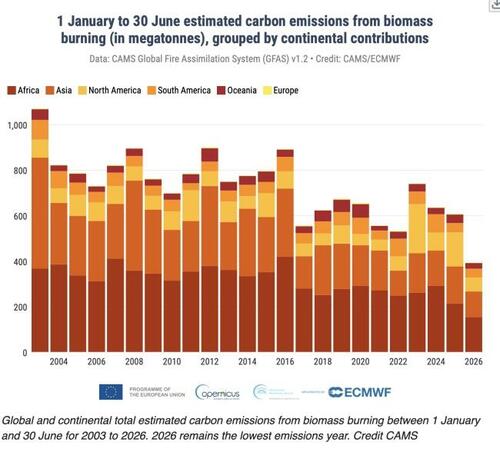
Of course, this data does not yet include the fires from the past couple of weeks, and there is a chance that 2026 will not remain a record-breaking low in fire terms, but this is largely due to the known effect of El Nino years.
The authors note in the conclusion [emphasis added]:
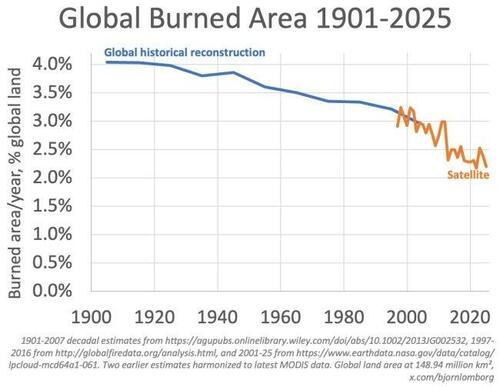
In fact, the yearly global area burnt by wildfires has been steadily decreasing for over a century (we recommend following Bjorn Lomborg on X, a great source of data):
So, why the panic?
The caveat here – according to the University of East Anglia paper – is that while the number of fires, and total area burnt is down, “severity” is up.
In short, less overall wildfire activity seems to be somehow translating to greater human cost, both in lives and money. Evacuations are allegedly up, insurance costs are allegedly up, and fatalities are allegedly up:
Now, first instinct would be this is either linguistic or statistical manipulation designed to camouflage research that failed to correctly serve the climate change agenda.
A case of cope to cover misbehaving data:
That’s entirely possible. But supposing the stated data is accurate, what does this mean?
Well, there are several potential explanations
It could be the predictable result expanding human habitation and growing population.
It could be that the areas of fire activity shifting to more populated areas by some as yet not understood natural process.
It could be that fires being deliberately started close to inhabited areas in order to create fear.
It could be that these statistics are manipulated or fabricated.
…Or it could be any or all or a mixture of several.
We don’t know, but we can’t rule anything out at this stage.
The data is clear though, there’s no need to panic. No matter what the press says.
Tyler Durden Thu, 07/30/2026 - 13:25
Continue reading...
[ H/T ZeroHedge ]
Authored by Kit Knightly via Off-Guardian.org,
Wildfires are in the news. With a hot, dry summer it was bound to happen. And, naturally, this is bringing with it talk of climate change.
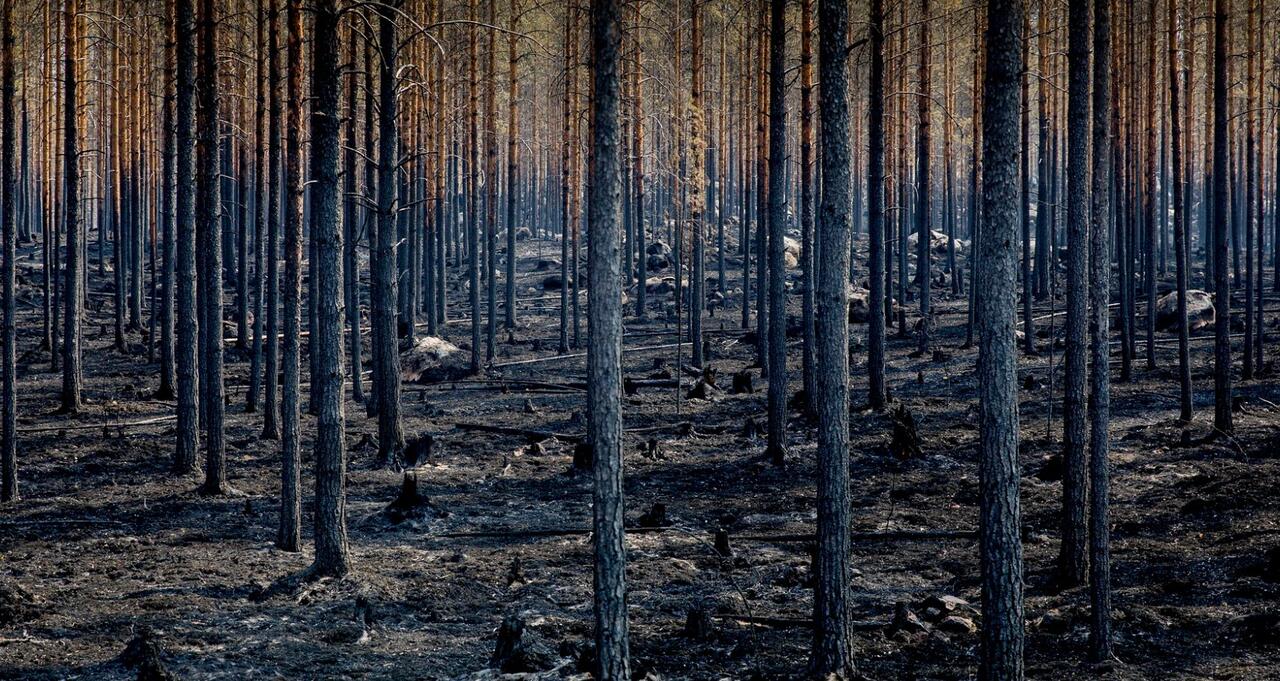
The Independent is screaming and rending its garments:
The Guardian has an opinion piece calling for prosecutions for climate crimes. Twitter experts are calling for changes to the way we live our lives.
Prince William is saying stuff:
I suppose we should make the usual point, that wildfires are a natural phenomenon that are an important part of the life cycle of many ecosystems. And that some years are bound to be worse than others.
But there’s just one issue, wildfire activity is actually down.
A new study from the University of East Anglia, published in May, found that 2025 was 16% below the average in terms of burnt area, and that’s despite policies known to increase both the chance of wildfires starting and the area they will burn.
But that was last year, this year must be different given the coverage, right?
Wrong.
Data from the EU’s Copernicus Atmosphere Monitoring Service shows that, to the end of June, this year had substantially lower wildfire activity – across every continent – than any year since they began collecting data in 2003.
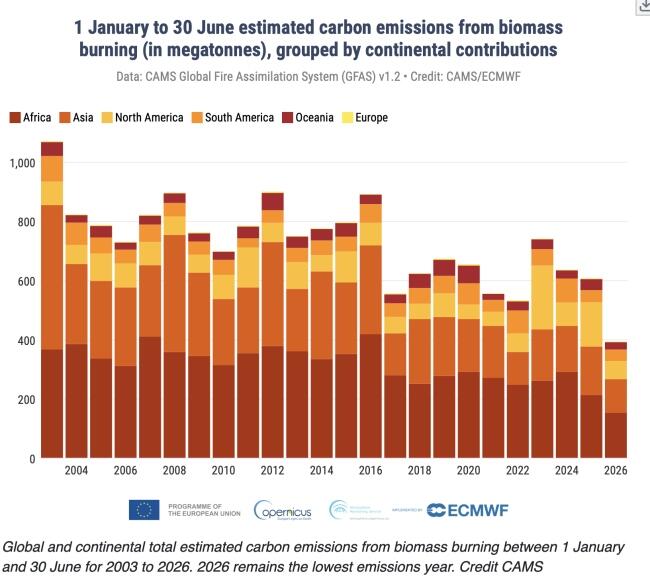
Of course, this data does not yet include the fires from the past couple of weeks, and there is a chance that 2026 will not remain a record-breaking low in fire terms, but this is largely due to the known effect of El Nino years.
The authors note in the conclusion [emphasis added]:
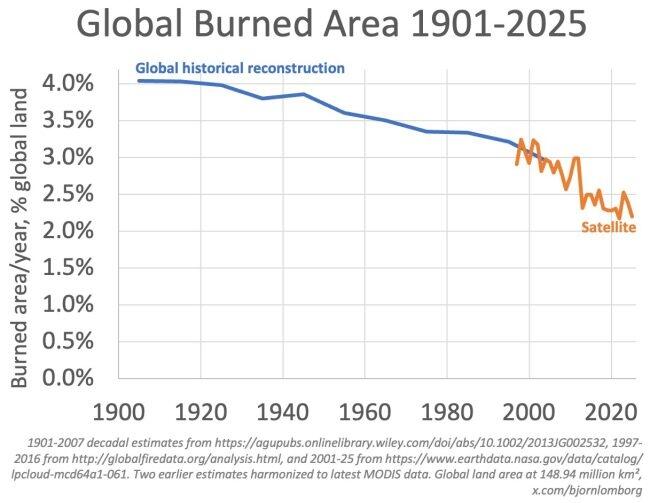
In fact, the yearly global area burnt by wildfires has been steadily decreasing for over a century (we recommend following Bjorn Lomborg on X, a great source of data):
So, why the panic?
The caveat here – according to the University of East Anglia paper – is that while the number of fires, and total area burnt is down, “severity” is up.
In short, less overall wildfire activity seems to be somehow translating to greater human cost, both in lives and money. Evacuations are allegedly up, insurance costs are allegedly up, and fatalities are allegedly up:
Now, first instinct would be this is either linguistic or statistical manipulation designed to camouflage research that failed to correctly serve the climate change agenda.
A case of cope to cover misbehaving data:
That’s entirely possible. But supposing the stated data is accurate, what does this mean?
Well, there are several potential explanations
It could be the predictable result expanding human habitation and growing population.
It could be that the areas of fire activity shifting to more populated areas by some as yet not understood natural process.
It could be that fires being deliberately started close to inhabited areas in order to create fear.
It could be that these statistics are manipulated or fabricated.
…Or it could be any or all or a mixture of several.
We don’t know, but we can’t rule anything out at this stage.
The data is clear though, there’s no need to panic. No matter what the press says.
Tyler Durden Thu, 07/30/2026 - 13:25
Continue reading...
[ H/T ZeroHedge ]