









Guest Post by Antonius Aquinas
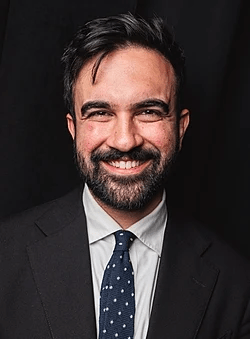
New York Mayor Zohran Mamdani
The election of Zohran Mamdani as mayor of New York City earlier this year is another stark indicator of the growing popularity and influence that Democratic Socialist candidates and their ideas are having on American politics. Mamdani’s victory, no doubt, is worrying Democratic Party elites. They fear that the radical ideas of Democratic Socialism will alienate voters, which might mitigate the party’s projected mid-term election prospects this fall. It could, they fret, even prevent a return of a Democrat to the White House in 2028.
Blazing the electoral trail for Mamdani has been long-time Vermont politician Sen. Bernie Sanders (I-Vt.), who garnered millions of votes in his bid to be the Democratic Party’s presidential nominee in 2016 and 2020.
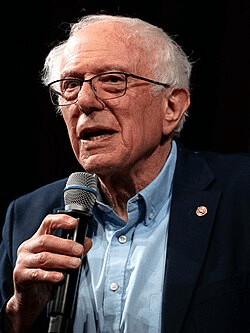
Bernie Sanders
The success of Sanders and Mamdani is due, in part, in how they describe themselves and their platforms – “Democratic Socialist” – which sounds less ominous than Socialist, or worse, Communist. The inclusion of “Democratic” plays well with the American public and its love for democracy, elections, and the misguided believe that the popular will is the true sovereign of the nation.
Democratic Socialism is the latest variant of Socialism or, more accurately, “economic interventionism,” all of which are derivatives of the ideas of the founder of modern Communism Karl Marx (1818-1883), who formulated and described them in Das Kapital and, with Friedrich Engels (1820-1895), in their infamous publication The Communist Manifesto.
Full-blown Marxian Communism is a system where the means of production are collectively owned, and all economic affairs are directed by the state through central planning. In addition, private property, money, interest and profit are abolished and goods are equally distributed.
Communism does away with the supposed exploitation and alienation of labor that exists in market economies where workers do not share in the profits of corporate enterprises.
The theoretical impossibility of economic calculation without prices and private property was exposed as nonsense by right-thinking economists long ago, and the system was never implemented in reality. The closest that pure Communism came into being was the Soviet Union, although it was forced to adopt all sorts of market features to keep it afloat. They still could not prevent the USSR economy from becoming a basket case.
Nevertheless, the ideas of Marx and other Socialist thinkers were adopted by America and many Western economies over the years, despite the fact that the United States fought a “Cold War” against the Soviet Union for decades to prevent the spread of Communism.
The hypocrisy of this was illuminated by a number of prominent dissident scholars including Frank Chodorov (1887-1966).
In his famous essay, “How Communism Came to America,”* Chodorov asks: “How many of these planks of the Communist Manifesto do you support?” He then lists the many features of Communism that had already been adopted in America by the 1950s: the Federal Reserve Bank, the Interstate Commerce Commission, the Tennessee Valley Authority, the Sixteenth (income tax) Amendment, the inheritance tax, as well as government schooling with compulsory attendance and support.
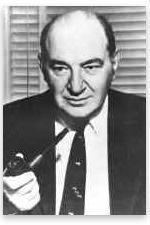
Frank Chodorov
While the likes of Sanders and Mamdani want to greatly expand Socialism in America, conservatives, because they have already accepted and supported these tenets, have sparse ideological grounds to oppose further measures such as a Universal Basic Income (UBI) or wealth taxes.
While these and other planks of Socialism have been a part of America’s economic fabric for quite some time, an equally pernicious and socially divisive development, which has been a factor in the rise of Democratic Socialism, has become more pronounced.
The American economy, especially Big Business and finance, is no longer one of competition, but can best be described as “corporatism,” or “crony capitalism” where the government is used to ensure profits and industry dominance for the politically well-connected.
This non-competitive environment has been facilitated by the easy money and credit policies of the Federal Reserve and beneficial regulatory measures for government business favorites. This has produced in recent years the widest wealth gap between rich and poor Americans ever recorded in our history.**
One of the most egregious manifestations of crony capitalism can be seen in President Donald Trump’s second term, where he has blatantly used his office, to enrich himself, family members, and friends to obscene amounts. This included his establishment of the U.S. Strategic Bitcoin Reserve to the manipulation of oil futures via his war against Iran. ***
Not only is the legality of Trump’s wheeling and dealing highly problematic, but the optics lead to resentment and give a false impression of a market economy. Free enterprise is a system where entrepreneurs supply goods and services that consumers need. Those who anticipate consumer demand make profits. Those who do not go out of business.
A market economy is not one where the state doles out favors and subsidies to insiders, nor should it lead to a pronounced disparity between rich and poor.
Since Republicans and conservatives will not renounce the socialistic aspects of the American economy, which are the root causes of the nation’s continued fall in living standards, Democratic Socialism will sadly continue to gain popularity.
*Fugitive Essays: Selected Writings of Frank Chodorov | Online Library of Liberty
**The Fed – Distribution: Distribution of Household Wealth in the U.S. since 1989 **Kyle Khan Mullins, “How Donald Trump Jr’s Fortune Jumped Six-Fold in a Year,” Forbes, 8 December 2025; Here’s How Much Donald Trump Jr. Is Worth
Tweet
Continue reading...
[ H/T The Burning Platform ]
New York Mayor Zohran Mamdani
The election of Zohran Mamdani as mayor of New York City earlier this year is another stark indicator of the growing popularity and influence that Democratic Socialist candidates and their ideas are having on American politics. Mamdani’s victory, no doubt, is worrying Democratic Party elites. They fear that the radical ideas of Democratic Socialism will alienate voters, which might mitigate the party’s projected mid-term election prospects this fall. It could, they fret, even prevent a return of a Democrat to the White House in 2028.
Blazing the electoral trail for Mamdani has been long-time Vermont politician Sen. Bernie Sanders (I-Vt.), who garnered millions of votes in his bid to be the Democratic Party’s presidential nominee in 2016 and 2020.
Bernie Sanders
The success of Sanders and Mamdani is due, in part, in how they describe themselves and their platforms – “Democratic Socialist” – which sounds less ominous than Socialist, or worse, Communist. The inclusion of “Democratic” plays well with the American public and its love for democracy, elections, and the misguided believe that the popular will is the true sovereign of the nation.
Democratic Socialism is the latest variant of Socialism or, more accurately, “economic interventionism,” all of which are derivatives of the ideas of the founder of modern Communism Karl Marx (1818-1883), who formulated and described them in Das Kapital and, with Friedrich Engels (1820-1895), in their infamous publication The Communist Manifesto.
Full-blown Marxian Communism is a system where the means of production are collectively owned, and all economic affairs are directed by the state through central planning. In addition, private property, money, interest and profit are abolished and goods are equally distributed.
Communism does away with the supposed exploitation and alienation of labor that exists in market economies where workers do not share in the profits of corporate enterprises.
The theoretical impossibility of economic calculation without prices and private property was exposed as nonsense by right-thinking economists long ago, and the system was never implemented in reality. The closest that pure Communism came into being was the Soviet Union, although it was forced to adopt all sorts of market features to keep it afloat. They still could not prevent the USSR economy from becoming a basket case.
Nevertheless, the ideas of Marx and other Socialist thinkers were adopted by America and many Western economies over the years, despite the fact that the United States fought a “Cold War” against the Soviet Union for decades to prevent the spread of Communism.
The hypocrisy of this was illuminated by a number of prominent dissident scholars including Frank Chodorov (1887-1966).
In his famous essay, “How Communism Came to America,”* Chodorov asks: “How many of these planks of the Communist Manifesto do you support?” He then lists the many features of Communism that had already been adopted in America by the 1950s: the Federal Reserve Bank, the Interstate Commerce Commission, the Tennessee Valley Authority, the Sixteenth (income tax) Amendment, the inheritance tax, as well as government schooling with compulsory attendance and support.
Frank Chodorov
While the likes of Sanders and Mamdani want to greatly expand Socialism in America, conservatives, because they have already accepted and supported these tenets, have sparse ideological grounds to oppose further measures such as a Universal Basic Income (UBI) or wealth taxes.
While these and other planks of Socialism have been a part of America’s economic fabric for quite some time, an equally pernicious and socially divisive development, which has been a factor in the rise of Democratic Socialism, has become more pronounced.
The American economy, especially Big Business and finance, is no longer one of competition, but can best be described as “corporatism,” or “crony capitalism” where the government is used to ensure profits and industry dominance for the politically well-connected.
This non-competitive environment has been facilitated by the easy money and credit policies of the Federal Reserve and beneficial regulatory measures for government business favorites. This has produced in recent years the widest wealth gap between rich and poor Americans ever recorded in our history.**
One of the most egregious manifestations of crony capitalism can be seen in President Donald Trump’s second term, where he has blatantly used his office, to enrich himself, family members, and friends to obscene amounts. This included his establishment of the U.S. Strategic Bitcoin Reserve to the manipulation of oil futures via his war against Iran. ***
Not only is the legality of Trump’s wheeling and dealing highly problematic, but the optics lead to resentment and give a false impression of a market economy. Free enterprise is a system where entrepreneurs supply goods and services that consumers need. Those who anticipate consumer demand make profits. Those who do not go out of business.
A market economy is not one where the state doles out favors and subsidies to insiders, nor should it lead to a pronounced disparity between rich and poor.
Since Republicans and conservatives will not renounce the socialistic aspects of the American economy, which are the root causes of the nation’s continued fall in living standards, Democratic Socialism will sadly continue to gain popularity.
*Fugitive Essays: Selected Writings of Frank Chodorov | Online Library of Liberty
**The Fed – Distribution: Distribution of Household Wealth in the U.S. since 1989 **Kyle Khan Mullins, “How Donald Trump Jr’s Fortune Jumped Six-Fold in a Year,” Forbes, 8 December 2025; Here’s How Much Donald Trump Jr. Is Worth
Tweet
Continue reading...
[ H/T The Burning Platform ]