





Welcome to the inaugural edition of Pentagon Posture, a revamped version of Daily on Defense. I am Mike Brest, senior defense reporter at the Washington Examiner, and I’m very excited to be at the helm of this new project. Pentagon Posture will bring you insightful reporting and analysis on the Pentagon, national security, military developments, and the defense decisions shaping our country and the world.
This week, we will deliver Pentagon Posture to your inbox daily, before transitioning to a weekly edition, offering a focused look at the most important defense stories and developments. Before we begin, I would like to wish Jamie McIntyre a belated congratulations on his retirement, and hope opsec is secure wherever he is.
Without further ado, our first edition will take a forensic look at the national security priorities of the Republican Party during the lame-duck congressional session.
Republicans only have a couple weeks left in session to pass as much of the Trump agenda as they can before they lose power when the new Congress is inaugurated in early January.
One of the top national security priorities they will pursue is getting a defense budget passed, even if it’s looking unlikely that the administration’s requested $1.5 trillion budget gets approved. The administration structured the request to include $1.15 trillion in the base budget, known as the National Defense Authorization Act, with a requested $350 billion reconciliation package that would only need a party-line vote to pass. The department also wants Congress to pass an $87 billion supplemental package that would include about $67 billion to cover the cost of the Iran war.
“I think what we’ve got to focus on is getting the NDAA passed, and then also get a supplemental passed, [and] do reconciliation,” Sen. Rick Scott (R-FL), who is on the Senate Armed Services Committee, told Pentagon Posture, adding that he believes “we have the votes to pass reconciliation with defense spending.”
Democrats were largely resistant to the amount and disliked the administration’s strategy, and that was before they won dominating majorities in the House and Senate in the midterm elections. Both President Donald Trump and Vice President JD Vance have blamed the historic election losses at least partially on the Iran war, potentially making it an uncomfortable decision to give the department its largest budget ever.
A smaller than requested defense budget would likely jeopardize some of the military projects Trump has personally announced and backed like the Golden Dome and Golden Fleet.
The $1.5 trillion budget would mark the largest American defense budget by the dollar figure, but is still roughly in line with the defense spending mark the administration pushed NATO allies to adopt last year, which is for countries to spend 5% of their gross domestic product on defense.
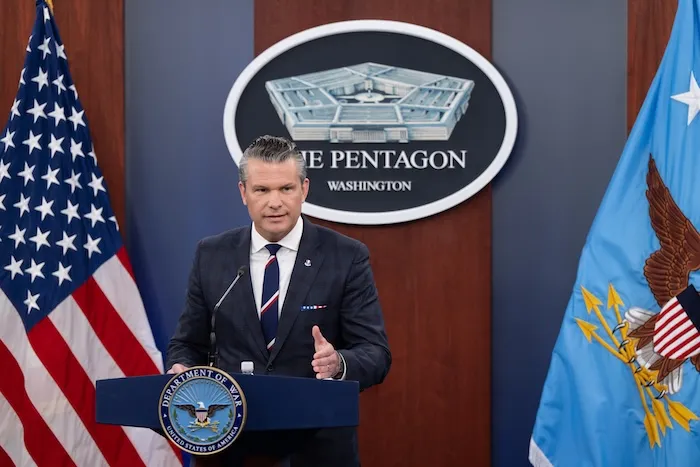
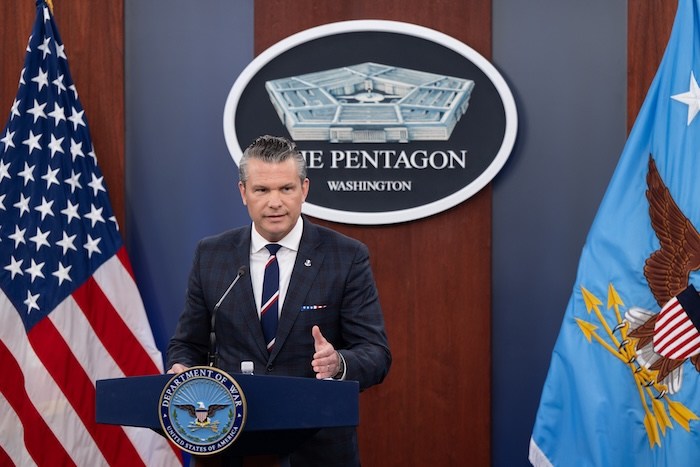
Secretary of War Pete Hegseth, who said the lame-duck period is “critically important for funding our department,” believes reconciliation should be “$350 billion at a minimum,” and noted that his team is working with House Speaker Mike Johnson (R-LA) and Senate Majority Leader John Thune (R-SD) to get it over the finish line because “we know the Democrats won’t do it, sadly.”
Trump called on Senate leadership to “IMMEDIATELY move on” reconciliation because “The Radical Democrat Majority in the next Congress has already made it clear that their Number One Agenda is to BLOCK and RESIST this historic investment in our National Security.” (Trump’s capitalization, not mine.)
The pentagon began the fiscal year on Oct. 1 under a short-term continuing resolution that keeps funding at the previous year’s levels, and it expires on Dec. 11. Some Democrats have urged the party not to agree to any short-term funding deal that includes funds that would allow the Pentagon to continue the Iran war.
“I think the White House has to lay out their plan,” Sen. Mike Rounds (R-SD), another member of the Senate Armed Services Committee, told Pentagon Posture, saying they will “have to lay out the parameters with what all would be included within a reconciliation product, recognizing that you have to not only say what you want to spend the money on, but where you get the money as well.”
He called getting reconciliation passed “a very challenging thing to get done.”
This is Pentagon Posture, written by senior defense reporter Mike Brest. You can follow me on X at @mikebrestdc, my email address is mbrest@washingtonexaminer.com, and I can be reached on Signal at mikebrest.80. Send tips, suggestions, calendar items, or just talk sports with him. If you aren’t already subscribed, do so here, and if you are, sign up a friend!
Continue reading...
[ H/T Washington Examiner ]