






This is the sixth of seven introductory articles on the relevance for constitutional law and the Supreme Court of the “born free and equal” clauses, which appeared in the Declaration of Independence and in six out of 12 state constitutions when the federal Bill of Rights was ratified in 1791, in 24 out of 37 state constitutions when the 14th Amendment was ratified in 1868, and which is in 37 out of 50 state constitutions today. The “born free and equal” clause of the Massachusetts Constitution of 1780, for example, provided that:
In my initial articles, I showed that the “born free and equal” idea is deeply rooted in American history and tradition, and applied this clause within the context of same-sex marriage and eugenics laws, among other major Supreme Court precedents.
Today, I want to turn to the court’s incorporation of the first eight amendments of the Bill of Rights and argue that they should all be fully incorporated – that is, applied to the states – which the Supreme Court has not yet done. I will also argue that the court in Kian v. Florida, which it is hearing this coming term, should hold that state criminal defendants are entitled to a 12-person criminal jury trial and not a six-person one, as prior precedent wrongly allows for. Likewise, the court should overturn its 1916 decision in Minneapolis & St. Louis R. Co. v. Bombolis and incorporate the Seventh Amendment’s right to a civil jury trial to apply against the states.
***
In 2010’s McDonald v. City of Chicago, the court held the Second Amendment right to own a gun in one’s home was deeply rooted in American history and tradition, thus meriting incorporation. Specifically, the court correctly reasoned that because 22 out of 37 states in 1868 and 59% of the states in 1868 (when the 14th Amendment was ratified) had Second Amendment analogues, the right to own a gun in one’s home was an enduring one.
Based on McDonald, I use 22 states as a benchmark for incorporation and show that 22 or more states in 1868 recognized an analogue to almost all of the rights in the federal bill of rights (these numbers are further detailed here).
- The entire First Amendment was deeply rooted in American history and tradition in 1868. As of that year, 27 out of 37 states forbade an establishment of religion in their state bills of rights and all 37 states forbade state laws prohibiting the free exercise of religion; 32 of 37 states forbade laws abridging freedom of speech, and all 37 forbade laws abridging freedom of the press; 34 states out 37 forbade limits on the right to petition the government for the redress of grievances; and 36 out of 37 guaranteed the right to assemble.
- The Second Amendment right to keep and bear arms, as mentioned above, was protected by 22 out of 37 state bills of rights in 1868.
- The Third Amendment right not to have soldiers quartered in one’s house was protected by 26 out of 37 states in 1868.
- The Fourth Amendment protection from unreasonable searches and seizures was protected by 36 out of 37 states in 1868, and 36 out 37 states in 1868 also had rules, as the Fourth Amendment does, as to the lawful issuance of warrants.
- The Fifth Amendment protection against double jeopardy was recognized by 31 out of 37 states in 1868; 34 out of 37 states in 1868 guaranteed a right against self-incrimination; 32 out of 37 states guaranteed a right to confront the witnesses against you in 1868; 35 out of 37 states had due process of law clauses; and 33 out 37 state bills of rights had taking clause analogues in 1868.
- The Sixth Amendment right to jury trial in criminal cases was protected in all 37 states in 1868.
- The Seventh Amendment right to a jury trial in civil cases was protected in 1868 by 36 out of 37 state bills of rights.
- And the Eighth Amendment protection against excessive bail was protected in 36 of 37 state bills of rights in 1868; the protection against excessive fines existed in 35 out of 37 states as of that year; and the protection from cruel and unusual punishments was recognized in 34 out of 37 states.
Given this, it is clear as a bell that the entire federal Bill of Rights – except for the right to indictment by a grand jury – was deeply rooted in American history and tradition, as expressed in the state bills of rights in 1868 when the 14th Amendment was ratified.
The legislative history of the 14th Amendment (as argued by fellow SCOTUSblog columnist Akhil Amar) also supports complete incorporation of the Bill of Rights. Senator Jacob Howard, who reported the 14th Amendment’s text to the Senate on behalf of the Joint Committee on Reconstruction said the following:
It is high time for the court to also adopt this understanding.
***
This all brings us to Kian v. Florida. In the 1970 case of Williams v. Florida, the Supreme Court allowed for six-person rather than 12-person juries in state criminal cases. I think the word “jury” is a legal term of art that means 12 people by definition – and this was historically understood as such. Thus, Noah Webster’s 1828 online Dictionary of American English, which the ratifiers of the 14th Amendment would have used, defines “jury” as follows:
Samuel Johnson’s Online Dictionary of English defines “jury” in the same way:
The ratifiers of the federal Bill of Rights would then have understood that a jury of 24 persons was required to indict a person, while a jury of 12 persons, not six, was required by the Sixth Amendment to try a person. (Amar also explains this in his splendid amicus brief in Kian v. Flordia.)
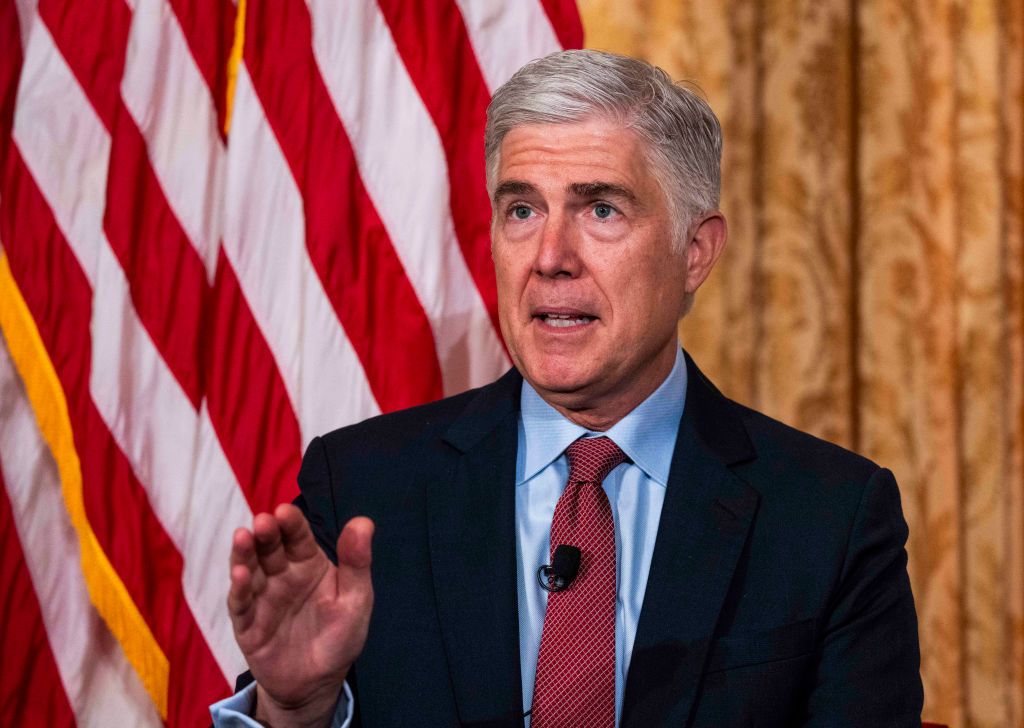
Similarly, a jury of 12 would have been required in all civil cases at common law under the Seventh Amendment. As Justice Neil Gorsuch said in a statement respecting the denial of review in Thomas v. Humboldt County, California:
Justice Gorsuch is correct. The Seventh Amendment should be incorporated to apply against the states through the 14th Amendment. In a properly presented case, the Supreme Court should grant review on this question and, as with regard to juries fewer than 12 persons, correct this historical injustice.
Continue reading...
[ H/T SCOTUSblog ]