









[Newsletter ad — view on SCOTUSblog]
This week may have fallen within the Supreme Court’s summer recess, but it wasn’t exactly restful for the justices – or for the team behind this newsletter. There was a flurry of activity in the ongoing battle over Missouri redistricting, which, on Tuesday, made a third trip to the Supreme Court, as well as in several immigration cases that the Trump administration has appealed. Keep reading to catch up on all the latest SCOTUS news.
At the Court This Week
On Thursday, the Trump administration, for the third time, asked the Supreme Court to intervene in a battle over third-country removals – that is, the removal of noncitizens to countries not identified in their removal orders. For more on the filing, see the On Site section below.
Late on Tuesday, opponents of Missouri’s new congressional map that was drawn to favor Republicans again asked the Supreme Court to prevent the state from using the map in November’s elections. That request is now fully briefed, and the court’s decision could come at any time.
Also on Tuesday, Justice Elena Kagan denied a request to intervene in a high-profile, multistate custody dispute between a California couple and their surrogate. The surrogate, McKenna West, had asked the Supreme Court to pause an order declaring the couple to be the baby’s parents.
On Monday, the Trump administration filed two petitions for review on immigration issues. One addresses whether noncitizens have a due process right to bond hearings amid an extended detention, while the other asks whether a federal district court had the authority to consider Georgetown University scholar Badar Khan Suri’s challenge to his detention.
On Sept. 8, the Trump administration asked the court to clear the way for it to use the Department of Homeland Security’s Systematic Alien Verification for Entitlements database to identify noncitizens on state voter rolls. The dispute has been fully briefed since Sept. 16, but the court has not yet issued its decision.
Looking ahead, the justices on Monday will unofficially kick off the 2026-27 term when they gather for the “long conference” to consider the petitions for review that built up during their summer recess.
Morning Reads
Missouri election officials tell people to hold off voting while SCOTUS deliberates on gerrymander
Casey He, Politico (paywalled)
As the Supreme Court weighs an interim docket dispute on congressional redistricting in Missouri, local election officials in the state “are advising voters to consider delaying casting their ballots” until the court issues its decision, according to Politico. “If they are not in a hurry, and they have time, if they can put it off at all, it would be ideal so they don’t miss out on the opportunity to vote on the correct ballot,” said Jackson County Clerk Diane Thompson. Politico noted that “[a]bsentee voting in Missouri began Tuesday, when counties began accepting in-person voters and mail ballots from those who are not able to vote on Election Day.”
High Court Victor Who Kept Job Presses Rare Retaliation Case
Jennifer Bennett, Bloomberg Law
In June 2025, the Supreme Court unanimously ruled for Marlean Ames, an Ohio woman who contended that her employer, Ohio’s Department of Youth Services, discriminated against her because she was straight. Unlike many other high-profile plaintiffs in discrimination cases, Ames continued to work for DYS as the dispute unfolded and remains there today – but she now claims she is facing unlawful retaliation from her supervisors. “She’s been isolated at work, moved out of her usual office, and had her access restricted, according to a new complaint she filed in July, more than a year after her Supreme Court success.” Employment law attorneys told Bloomberg Law that this type of retaliation case is rare in large part because companies and employees alike tend to prefer separation. “The employer doesn’t want to be accused of retaliation,” said Alan Reinach, president of the Church State Council. “And the employee is wary of going back to suffer retaliation.”
Grassley Opens Judiciary Committee Executive Business Meeting, Calls on Chief Justice Roberts to Address Minnesota Judges’ Potential Ethics Violations
Senate Judiciary Committee
In prepared opening remarks for the Senate Judiciary Committee’s executive business meeting on Thursday, Sen. Chuck Grassley called on Chief Justice John Roberts to address the issue of “judges publicly criticiz[ing] government officials.” Such criticism “undermines public confidence in the courts,” according to Grassley, and “destroys the perception of impartiality upon which the justice system relies.” Grassley’s comments came in response to a recent New York Times article about immigration enforcement in Minnesota, which included quotes from judges who were critical of the Trump administration’s actions. “Federal judges should be issuing opinions and orders in accordance with the law, not giving quotes based on their personal views to the New York Times,” Grassley said.
Trump’s Retribution Campaign May Face Supreme Court Test
Adam Liptak, The New York Times (paywalled)
In his newsletter for The New York Times, Adam Liptak explored the Trump administration’s pursuit of Supreme Court review of its process for installing “United States attorneys, the officials who lead the prosecutors’ offices in the nation’s 94 judicial districts.” “Three federal appeals courts have rejected President Trump’s go-to move,” which involves placing his preferred candidate in the No. 2 spot and then allowing them to serve as acting U.S. attorney indefinitely, and the Trump administration has now appealed two of those decisions to the Supreme Court. Liptak noted that the appeals courts’ rulings against the administration “have complicated Trump’s efforts to investigate and prosecute his political foes.”
Supreme Court Emergency Docket Asked to Protect Right to Use Religious Courts
Dan McLaughlin, National Review
In a column for the National Review, Dan McLaughlin highlighted an interim docket application addressing “a collision between the courts of New York State and an Orthodox Jew’s resort to a rabbinical court known as a beis (or beth) din.” This filing, according to McLaughlin, draws the Supreme Court into a broader conflict between religious tribunals and civil courts that has been going on for centuries. “The federal government nearly went to war with the Latter-day Saints in 1857-58,” he noted, “and one of the major causes was Utah territorial governor and Mormon religious leader Brigham Young routing nearly all civil disputes to religious courts, undermining the authority of the federal courts even over matters such as title to land.”
On Site This Week
Court News
Trump administration again urges justices to allow deportations to third-party countries
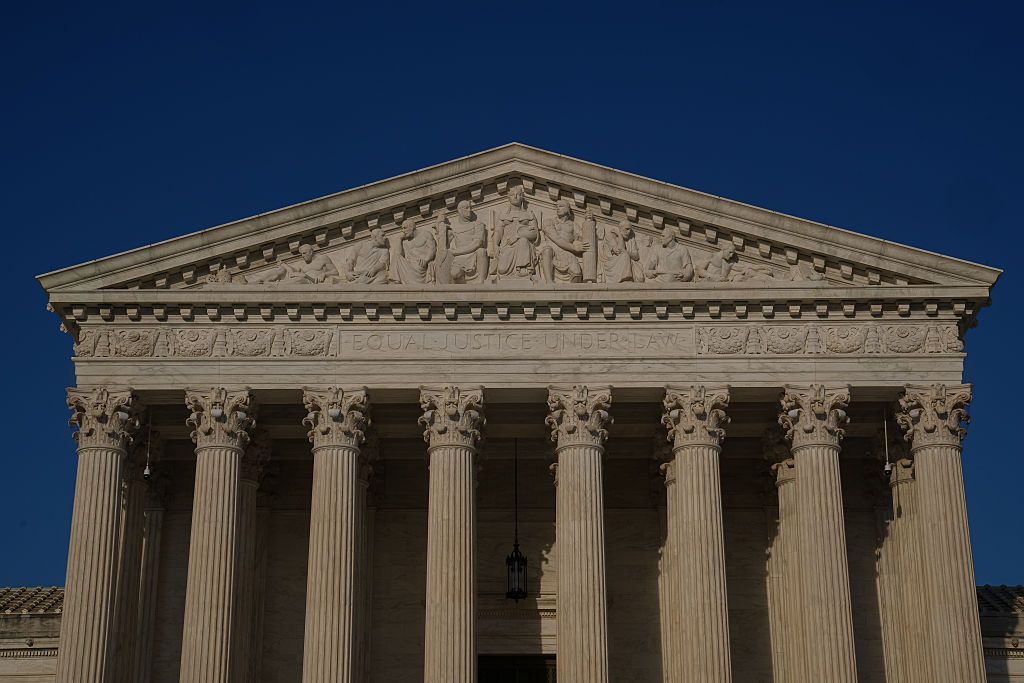
Telling the justices that it had been deprived of “an essential tool to remove certain aliens, including some of the worst criminal aliens,” the Trump administration on Thursday afternoon asked the court, for the third time, to clear the way for the government to deport noncitizens to countries that are not identified in their removal orders – a procedure known as “third-country removals.”
Contributor Corner
The rule of four and role of custom on the Supreme Court
In his Nuts and Bolts column, Stephen Wermiel explored how the Supreme Court goes about “deciding what cases to decide,” highlighting “a 100-year-old custom known as the rule of four.” “Simply put, this rule means that the court will hear a case when four justices vote in favor, even if a majority of justices did not want to do so. This sounds straightforward, but it comes with an interesting history and quite a few wrinkles,” Wermiel wrote.
Contributor Corner
Devolving standards of decency
In his Civil Rights and Wrongs column, Daniel Harawa analyzed the potential pitfalls of allowing ever-changing “standards of decency” to influence Eighth Amendment doctrine. “When the Warren Court gave us the ‘evolving standards of decency’ test, it contemplated a society that would mature toward leniency,” Harawa wrote. “It may be the case that a constitutional doctrine built around society’s capacity to become more decent must also reckon with the possibility that society can become less so.”
Court News
Trump administration takes important immigration question back to the Supreme Court
On Sept. 11, the Supreme Court dismissed Genalo v. Black, an immigration case set to be argued in October. On Monday, the Trump administration filed a new petition for review raising the same questions about due process and extended detention.
Contributor Corner
The decision before the decision
In her In the Interim column on Wednesday, Taraleigh Davis explored how often the Supreme Court deploys administrative stays and what, if anything, the use of such a stay tells us about how the court will ultimately resolve a case.
Contributor Corner
The Supreme Court refuses to become partisan in two fights over the midterms
In his Justice, Democracy, and Law column on Tuesday, Edward Foley reflected on the court’s handling of interim docket disputes over Missouri redistricting and mail-in voting, contending that its approach to these cases proves that it is not a purely partisan institution.
SCOTUS Outside Opinions
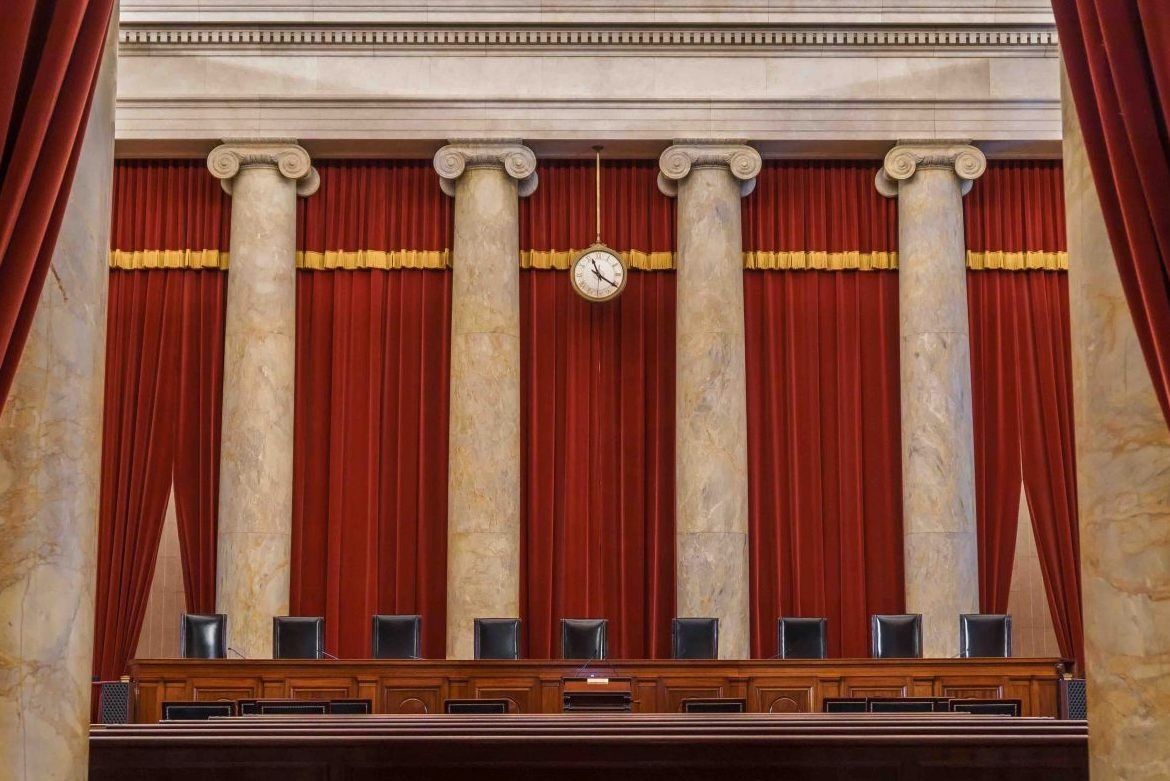
Is it time to rethink the office of the chief justice of the United States?
In a column for SCOTUSblog, Russell Wheeler explained how the role of chief justice took shape and the obstacles that stand in the way of reshaping the chief’s duties.
Podcasts
Advisory Opinions
Third Time’s the Charm?
Sarah Isgur and David French discuss the Missouri redistricting case now that the U.S. Court of Appeals for the 8th Circuit has weighed in. Then, they go through a few listener mailbag questions, including on controversial school murals, marijuana law, and court packing.
A Closer Look
Justice Robert Trimble
Friday’s A Closer Look is typically a judicial biography. This week we cover Justice Robert Trimble, who served on the court from 1826-1828.
Although Justice Robert Trimble served only two years on the Supreme Court before his death in 1828, Chief Justice John Marshall found the loss considerable. “He was distinguished for sound sense, uprightness of intention and legal knowledge,” Marshall wrote privately. “His superior cannot be found. I wish we may find his equal.”
New justices on the court typically had to pay their dues for a few years before Marshall gave them majority opinions (Justice Smith Thompson, who had joined the court in 1823, wrote three in the 1827 term, and Justice Bushrod Washington, the court’s senior associate justice, wrote two). Trimble, on the other hand, wrote nine in his first term, an “unexpectedly large share of opinions” at that time. Trimble was also the second of 11 Kentuckians to have served on the court, assuming the seat of Justice Thomas Todd, the first.
Trimble was born in November 1776 in Virginia. In 1779, his family left for Boonesborough, Kentucky, and amid the arduous journey, his uncle was shot and “at his own request … left to die alone” on the trail. Trimble’s first teacher was his grandfather, James McMillan. Trimble later taught school to pay for his education, and read law under George Nicholas, the “principal author” of the first Kentucky constitution.
Trimble was admitted to the bar in 1803 and built a “profitable” land litigation practice in Paris, Kentucky. He served a single term in the Kentucky House and never again ran for office. Per one early account, “the stormy life of a politician” was not “congenial to his disposition or taste.” He also passed on two chances to become a U.S. senator, which reportedly would have required only his consent.
Trimble was more willing to accept judicial posts, although the salaries were a recurring concern. He joined the Kentucky Court of Appeals in 1807 but resigned in December 1808, citing the financial loss from this job. (Sources disagree on whether he briefly served as the state’s chief justice in 1810 or declined this position.)
In 1817, President James Madison appointed Trimble to the federal district court in Kentucky. There, his nationalist rulings were largely unpopular – after he held in 1821 that a Kentucky debtor-relief law did not bind the federal courts, one newspaper editorial reminded him of what happened to Justice Samuel Chase. (For those not carefully reading our Closer Looks, Chase was impeached).
Before his death in 1826, Todd reportedly wanted Trimble to succeed him. President John Quincy Adams nominated Trimble in April 1826, in what was his only appointment to the court. Kentucky Sen. John Rowan led what Henry Clay described as “a violent opposition” to the nomination (Rowan and Trimble had a “personal feud” and “long standing difference of opinion”), but the Senate still confirmed Trimble – making him the first lower federal court judge to rise to a Supreme Court justice.
Trimble’s debut opinion, Montgomery v. Hernandez, arose from a Louisiana suit over a federal marshal’s bond. The marshal had failed to pay $3,126 from the court-ordered sale of a sailing ship. Trimble wrote that the court’s authority to review state court decisions “is very special and limited in its character,” adding that “t is not every misconstruction of an act of Congress by a state court that will give this Court appellate jurisdiction” – effectively holding that a party had to specifically claim a right under federal law and have the state court rule against it.
What many consider to be his “best” and “ablest” opinion came the same term in Ogden v. Saunders, which asked whether a New York insolvency law could cancel debts from after the law’s passage. Trimble joined Justices Washington, William Johnson, and Thompson in holding that it could, while Marshall and Justices Joseph Story and Gabriel Duvall dissented. Writing separately (the justices issued “seriatim” opinions at the time), Trimble argued that a contract and its “obligation” were distinct. If the two terms meant the same thing, he wrote, the contracts clause would prevent laws hindering “the obligation of obligations,” which he contended would attribute to the framers “a useless and palpably absurd tautology.” In other words, according to Trimble, a contract’s binding force came from the law of the state where it was made, so a state could set the terms for future agreements (in contrast to contracts drawing their force from “universal law”). The decision “clarified state authority” by allowing states to pass their own bankruptcy and insolvency laws. Since Trimble generally sided with Marshall in favor of federal authority over the states, the vote was somewhat unusual for him.
After the 1828 term, Trimble returned to Kentucky, where a “bilious fever” he apparently had as a child recurred. He died in August 1828 at age 51 and was replaced on the bench by Justice John McLean. Story wrote that had Trimble lived another 10 years, “he would have gained a still higher rank.” Trimble County, Kentucky, was established in 1837 and named for him, as was a World War II ship, the SS Robert Trimble. As one historian concluded, Trimble’s two years on the court “produced much and promised even more.”
SCOTUS Quote
Continue reading...
[ H/T SCOTUSblog ]