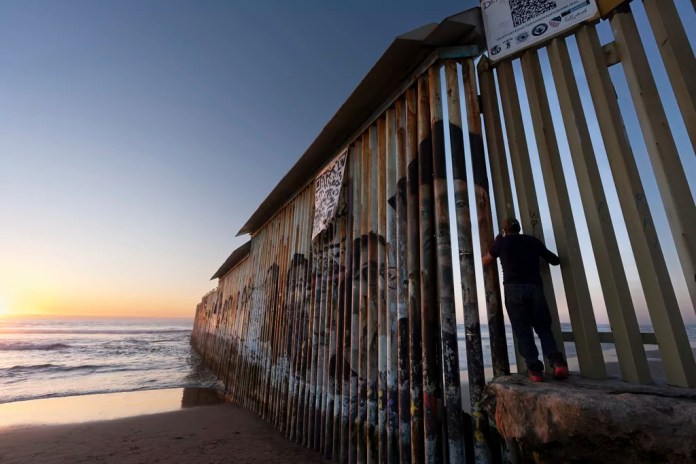
To listen to national talk radio is to believe that the immigration debate is purely an ideological proxy war. But strip away the campaign theatrics, the midnight press conferences, and the highly charged vocabulary, and you are left with a fundamental operational challenge that cuts across every political affiliation: a functional nation must possess enforceable, secure borders and a sensible, orderly mechanism for processing individuals who seek entry.
Today, our system delivers neither safety for our towns nor basic order for those attempting to navigate our laws legally. Data highlighted in the Gallup Historical Trends on Immigration show that while a broad majority of Americans view legal immigration as a positive force, public anxiety fluctuates wildly. Concern spikes into a top-tier national issue whenever enforcement incidents, major administrative shifts, or legislative logjams dominate the news cycle.
The conservative framework treats border control as an absolute, nonnegotiable matter of national security and the rule of law. Under this lens, security is the foundation upon which all other immigration policies must be built — you cannot successfully reform a system while its front door remains compromised. Without deterrence, strict compliance, and rigorous interior enforcement, the integrity of our legal system erodes from the outside in.
This emphasis on structural defense is reflected in major executive actions and federal policy updates. For instance, recent executive directives, such as the White House Presidential Action on Securing Our Borders, dictate complete operational control at the southern perimeter, including ending catch-and-release practices, terminating specific categorical parole programs, and requiring mandated detention for apprehended individuals pending their removal proceedings. Furthermore, hard enforcement infrastructure continues to expand through legislative vehicles such as the One Big Beautiful Bill Act, a reconciliation bill tracking billions in funding used by U.S. Customs and Border Protection to construct hundreds of miles of physical barriers and deploy advanced nonintrusive inspection technology. Additionally, legislative proposals like the Border Safety and Security Act (H.R. 318) seek to codify mandatory suspensions on entry when federal authorities lack the capacity to fully detain or return non-citizens, reinforcing the principle that physical boundaries must be accompanied by airtight statutory compliance.
STOP SQUEEZING MAIN STREET: WASHINGTON SPENT THE MONEY, BUT THE FED IS MAKING SMALL BUSINESSES PAY THE TAB
Conversely, the progressive platform shifts the analytical lens to humanitarian logistics, institutional funding, and domestic labor demands. Proponents of this view argue that the nation’s processing infrastructure is intentionally underfunded and suffocated by decades-old procedural backlogs. They advocate for a massive expansion of the immigration judiciary to clear out multi-year trial delays, modernized visa quotas that align with actual economic realities, and transparent, legal paths for long-term undocumented workers who are already driving local agricultural and construction industries. Data from the Pew Research Center Immigration Policy Archive highlight the profound partisan divides concerning whether the federal government should prioritize robust enforcement or overhaul systemic legal pathways. While public support for strict border security remains high, deep divisions persist regarding the execution of domestic enforcement actions and the long-term status of millions of undocumented residents living within the interior.
If we stand back and view this objectively, we see that security and administrative competence are not mutually exclusive values. A sovereign state can secure its perimeter, strictly vet who enters, and fiercely uphold its laws while simultaneously creating a rapid, humane, and transparent processing system [civics]. Achieving this balance requires moving past political posturing and treating the border as a critical administrative challenge rather than a perennial fundraising tool for political campaigns.
Eric Wargotz is a physician, businessman, former U.S. Senate nominee, and the former elected president of the Queen Anne’s County Board of County Commissioners who has spent years studying institutional governance, advocating for transparent borders and structural administrative integrity. Views are his own.
Continue reading...
[ H/T Washington Examiner ]