





ABC News Australia’s new documentary, Ukraine’s Stolen Children, released this week, brought me to an image I couldn’t shake: a young child holding a rifle, smiling proudly. The image was jarring for another reason. I had seen it before.
Not in Ukraine. In Gaza.
The countries are different, the wars are different, and the actors are certainly different. Russia is a state. Hamas is a terrorist organization. Their histories, ideologies, and objectives are not interchangeable. What was impossible to ignore, however, was the similarity in what children were being taught and the methods being used to teach them.
The documentary examines Russia’s removal of Ukrainian children, including children taken from orphanages, care facilities, and camps. More than 20,000 have been identified by Ukrainian authorities as deported or forcibly displaced, although the true number may be considerably higher. Yet it was what happens to some of these children afterward that caught my attention.
International investigators have documented efforts to absorb Ukrainian children into Russian society through citizenship, adoption, and what authorities call “patriotic education.” That education is not confined to flags, songs, and lessons about national history. The United Nations has documented military drills and practical weapons training for older children, alongside programs intended to reinforce Russian national identity and loyalty.
That context makes the rifle in the documentary more than a disturbing image. It places the weapon inside a larger system concerned not only with training a child to handle it, but with conditioning a developing mind to understand what that weapon represents, where loyalty belongs, and who has been designated the enemy.
That is also why the footage immediately made me think about Gaza.
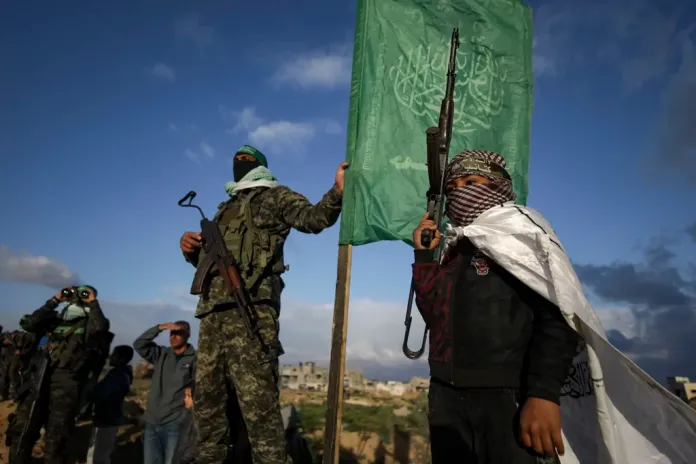
For years, Hamas has exposed children to its own version of ideological and military preparation. The U.N. has documented Hamas’s al-Qassam Brigades and Palestinian Islamic Jihad’s al-Quds Brigades organizing summer camps where children were exposed to military content and activities. Previous U.N. reporting described weeklong camps involving children as young as 14, while earlier reporting said Hamas’s military wing had reportedly operated a military camp involving 25,000 children and young people between the ages of 15 and 21.
The numbers matter, but the pattern matters more. Children are placed in military settings and exposed to rifles, drills, and ideological instruction. Weapons are introduced not simply as instruments of violence, but alongside messages about identity, loyalty, and struggle.
This is where the psychological component becomes as important as the military one. Teaching a child how to hold a rifle is one thing. Teaching him from a young age what that rifle represents, who his enemy is, and why violence against that enemy should be associated with loyalty, duty, or pride goes considerably further. The physical training is visible. The ideological conditioning taking place alongside it may ultimately be more consequential.
That was the connection I could not shake while watching the documentary.
Russia and Hamas are not the same, nor do they need to be for the comparison to matter. What is recognizable is the method: reach children young, surround them with an ideology, define the enemy, and make military preparation part of how they understand their place in that struggle.
The younger the child, the more disturbing that process becomes. This is not simply preparation for physical warfare later in life. It is an effort to shape how a developing mind understands history, identity, allegiance, and the people it has been taught to regard as enemies before that child has the maturity or independence to interrogate those lessons for himself.
Russia’s treatment of Ukrainian children adds another dimension. Some have been removed from the country and communities that formed their identities in the first place. They can then encounter a different version of history, a new national identity, and, increasingly, military preparation. Calling this “patriotic education” does not make the implications any less disturbing.
It also raises a question I cannot understand why we are not asking more loudly: Where is the outrage?
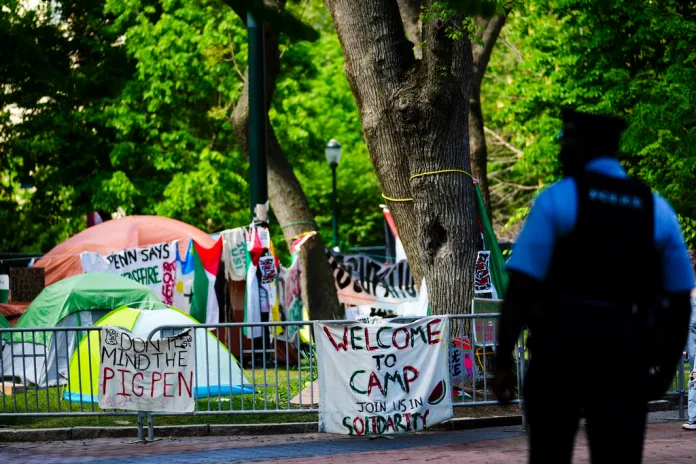
People have filled streets, university campuses, and public squares around the world over causes they believe demand moral attention. Surely deliberately preparing children for warfare should produce outrage, too.
Where are the demonstrations over military camps for teenagers? Where is the international movement against putting rifles into children’s hands? Why does the world become so loud when discussing what war does to children, yet seem comparatively quiet about those deliberately preparing children for war?
People should, no pun intended, be up in arms about it.
Because this is not simply about a photograph of a child carrying a rifle. The weapon is what we can see. The ideological conditioning taking place alongside it may ultimately be more consequential. What matters is everything outside the frame: who created the program, who provided the weapon, what lessons accompanied it, and what those responsible hope will happen after that child grows up.
That is why the image in Ukraine’s Stolen Children stayed with me. What initially appeared to be another disturbing image from a war became something else as I watched: a method of combining ideology, identity, and military preparation at an age when those ideas can help shape the person a child becomes.
PUTIN IS DESPERATE, CORNERED — AND HITTING WESTERN LEADERS NEXT
And that was the most jarring realization of all.
I was looking at a playbook I had seen before.
Ariella Noveck is a journalist specializing in antisemitism and Middle East affairs, with extensive experience covering Jewish communities worldwide. She can be followed on X and Instagram @AriellaNoveck
Continue reading...
[ H/T Washington Examiner ]