





A Santa Fe jury just sent a shockwave through Silicon Valley. On Sept. 25, 2026, First Judicial District Judge Francis Mathew presided over a landmark verdict finding Meta Platforms liable for nearly 44 million violations of consumer law. The case, brought by New Mexico Attorney General Raúl Torrez, targets a decade of corporate deception stemming from the Cambridge Analytica data breach.
Meta faces a maximum penalty of up to $219.5 billion. The final judicial payout will likely be lower. Still, the verdict is a major watershed moment. As a physician, I view corporate overreach through a lens of public health. As a jurist, I respect local courts. This ruling proves that state actors can extract heavy accountability despite federal gridlock.
Meta’s defense rests on a familiar corporate calculus. The giant claims it paid its dues via a historic $5 billion settlement with the Federal Trade Commission in 2019. It also points to recent multistate settlements targeting youth safety. The tech industry argues that piecemeal state litigation creates an unpredictable regulatory patchwork. They claim a single federal framework is the only logical path forward.
New Mexico’s win exposes the fallacy of that argument. The state opted out of national deals. Federal agencies often accept settlements that tech monopolies treat as a mere cost of doing business. By fighting in local court, New Mexico showed that decentralized enforcement works. The jury found that CEO Mark Zuckerberg and other executives willfully misled the public regarding data safety during the 2016 campaign.
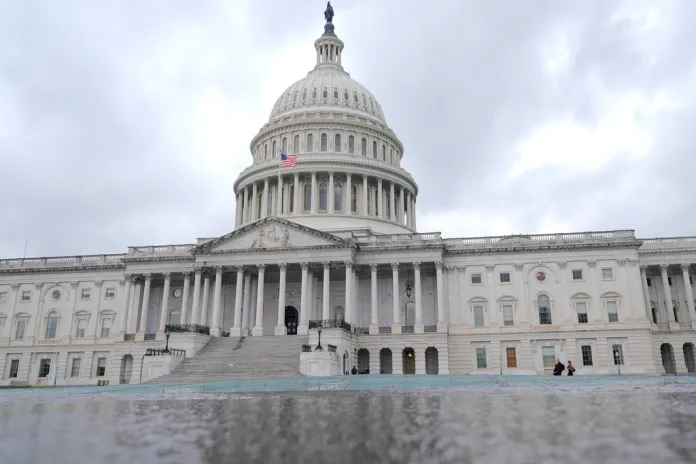
This connects to a fierce debate in Congress over federal privacy frameworks. Tech lobbyists aggressively push for federal preemption. They want a federal bill to wipe out tougher state privacy laws. They claim it ensures national uniformity.
YOU’RE PAYING THE INTEREST ON TRUMP’S $166 BILLION TARIFF REFUND
The New Mexico verdict must kill the preemption argument. A weak federal preemption law would have blocked New Mexico from holding Meta accountable for harvesting data from 87 million profiles. State attorneys general are the ultimate laboratories of democracy. They are agile and insulated from congressional paralysis. They enforce existing Unfair or Deceptive Acts or Practices laws when federal regulators blink.
Corporate convenience cannot come at the expense of justice. Meta relied on systemic deception to fuel its growth. Washington failed to deter them. By standing alone, New Mexico proved that states must protect consumers when the federal government abdicates its duty. Congress must take note. Any future federal privacy framework must supplement state enforcement power, never supplant it.
Eric Wargotz, MD, is a physician, professor, and jurist who writes extensively on public health, corporate accountability, and constitutional state power. Views are his own.
Continue reading...
[ H/T Washington Examiner ]