

[Newsletter ad — view on SCOTUSblog]
Forty-five years ago today, the Senate unanimously confirmed Sandra Day O’Connor’s appointment to the Supreme Court.
At the Court
The Trump administration has asked the Supreme Court to clear the way for it to use the Department of Homeland Security’s Systematic Alien Verification for Entitlements database to identify noncitizens on state voter rolls. The dispute is now fully briefed, and the court’s decision could come at any time.
We’re now just one week away from the “long conference” on Monday, Sept. 28, where the justices will discuss the petitions for review that built up during their summer recess.
Morning Reads
Senate Republicans rebuff Trump’s attacks on Supreme Court, Federal Reserve
Alexander Bolton, The Hill
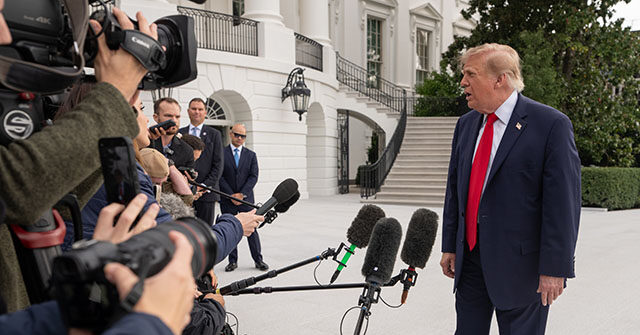
After the Supreme Court declined to allow the Trump administration to implement parts of President Donald Trump’s “plan to have the U.S. Postal Service screen mail-in ballots,” the president criticized the justices he appointed – Neil Gorsuch, Brett Kavanaugh, and Amy Coney Barrett – for failing to support him, writing on Truth Social (among other things) that they “are merely a shell of their original selves.” In the face of these comments, “Republican senators are siding with” the justices and arguing that “the Supreme Court made the right decision to reject the plan to rework mail-in balloting processes across the United States only a few weeks before Election Day,” according to The Hill. “I know every one of the justices. I think they do their very best to call it like they see it and that’s their job,” said Sen. John Kennedy, a Republican from Louisiana who is a member of the Senate Judiciary Committee. Sen. John Cornyn, a Texas Republican who is also part of the Judiciary Committee, similarly rejected Trump’s assessment of the justices, saying that “[a]n independent judiciary is really the most important institution in our government.”
Barrett Sidesteps Question About Trump Attacks on Supreme Court
Holly Barker and Jordan Fischer, Bloomberg Law
In recent months, President Donald Trump has repeatedly criticized Justice Amy Coney Barrett and other justices for ruling against some of his signature policies. On Thursday, Barrett was asked about Trump’s comments during an appearance at the University of Virginia, but she sidestepped the question, according to Bloomberg Law. “I don’t want to talk about anything that the president has said in particular,” Barrett said. “Asked whether disparaging comments made over the past year against the court by Trump and White House Deputy Chief of Staff Stephen Miller had increased threats to the judiciary,” she did address the broader surge in attacks on the judiciary and “everyone in Washington.” “We certainly live in a time and in a climate where people are quick to say things that I certainly wish – you know – that they wouldn’t.” Barrett also reflected on how her career has affected her personal life, noting that “her ascent to the Supreme Court has left her feeling isolated at times.” She noted that “it’s a ‘lonely job’ in many ways, adding she finds it harder to make new friends as a justice.”
Trump Blasts Supreme Court Over Tariff, Birthright Citizenship Rulings
Steve Mollman, Newsweek
On Saturday, President Donald Trump again posted about the Supreme Court on Truth Social. He “accus[ed] the justices of issuing ‘faulty, political, and ridiculous decisions’ on tariffs and birthright citizenship that he claimed have cost the United States ‘trillions of dollars.’” “Unfortunately, the United States Supreme Court has lacked the Courage to MAKE AMERICA GREAT AGAIN,” the president wrote. “It has been a sad chapter in the life and times of America, but we will prevail!”
DOJ says recent Supreme Court ruling shields Maurene Comey firing
Erica Orden, Politico
In a June ruling focused on former FTC commissioner Rebecca Slaughter, the Supreme Court overturned a major restraint on presidential authority, giving President Donald Trump more power to remove the heads of executive agencies. But the court “left open the question of the president’s ability to terminate so-called ‘inferior officers,’” and that question that is now working its way through lower courts. On Friday, the Justice Department argued that the Slaughter ruling “also extends to more junior employees” in a case on Trump’s removal of “former federal prosecutor Maurene Comey,” who is “the daughter of former FBI Director James Comey,” according to Politico. “Justice Department lawyer Tyler Becker told U.S. District Judge Jesse Furman that ‘employees or inferior officers who exercise conclusive and preclusive executive power must be removable at will.’”
Appeals Court Restricts Trump Administration Deportation Effort
Mattathias Schwartz, The New York Times (paywalled)
On Friday, the U.S. Court of Appeals for the 1st Circuit held “that immigrants facing deportation to so-called third countries [must] be given more due process beforehand,” including “‘a meaningful opportunity’ to raise fears of persecution or torture,” according to The New York Times. “In a 55-page opinion with no dissent, a three-judge panel from the court rejected arguments from the Trump administration that it receives ‘assurances’ from foreign governments that deportees will not be persecuted or tortured and that such communications should be sufficient.” “The administration can now appeal the ruling to a larger First Circuit panel or to the Supreme Court,” which, at an earlier stage in the case, “agreed to allow eight men who had been sent to Djibouti in violation” of a district court order “to be sent onward to South Sudan.”
DOJ says ban on selling handguns to young adults under 21 is unconstitutional
Sarah N. Lynch and Joe Walsh, CBS News
On Friday, the Justice Department issued a memorandum opinion stating that “a federal gun law prohibiting firearms dealers from selling handguns or handgun ammunition to young adults between the ages of 18 and 20 is unconstitutional,” according to CBS News. The guidance, which “is not legally binding,” comes amid a growing debate over whether age limits on certain gun purchases violate the Second Amendment. “The 5th Circuit Court of Appeals ruled last year that the federal ban on handgun sales to adults under 21 is unconstitutional, and the 3rd and 8th circuits have ruled against similar state-level rules. But the 4th Circuit upheld the federal age restrictions last year, and the 10th and 11th circuits have upheld age limits at the state level.” CBS News noted that the Supreme Court “declined to take up the issue last year.”
On Site
From the SCOTUSblog Team
What AI misunderstands about the Supreme Court
(SCOTUSblog Plus) Supreme Court justices are not (yet) using artificial intelligence in their work, apparently due to security concerns, but some justices have noted that the court is at least exploring various forms of AI assistance. And as the court studies AI, such systems will continue studying the court to improve their predictive powers.
Contributor Corner
The fundamental confusions of federal Indian law
In his first Indigenous Docket column, Matthew L.M. Fletcher explored what he described as “some fundamentals (and fundamental confusions) of federal Indian law,” reflecting on why “Supreme Court justices regularly complain that federal Indian law precedents are difficult and even incompatible with the Constitution.”
A Closer Look
Justice Kavanaugh and 9/11
On the anniversary of 9/11, Justice Brett Kavanaugh appeared on a Notre Dame panel marking 25 years since that day’s horrific terrorist attacks. In remarks that have since been extensively covered, Kavanaugh reflected alongside other panelists on his experience the morning of Sept. 11, 2001, and how the nation changed in its aftermath.
As then-associate counsel to President George W. Bush, Kavanaugh described gathering in the counsel’s office after the first plane hit in a meeting that seemed (as he put it) “sufficiently unusual.” After the second plane hit, he and others from the counsel’s office were told to go down to the basement, before quickly being told to leave the building by Secret Service. “Seared in my memory is the Secret Service agent saying, ‘Run, sprint, ladies, take off your heels and sprint,’ and we were all sprinting out the gate toward Lafayette Park,” Kavanaugh said. “We didn’t have anywhere to go, and so we gathered ... a group of us kept walking up Connecticut Avenue. The Mayflower Hotel had TVs on, and we were watching there. ... as we watched the tower fall, and just imagining and trying to comprehend the tragedy and the loss of life.”
Kavanaugh then detailed assembling in an office building with other White House staff and looking at the administration’s immediate response. Among other things, he recalled White House counsel Alberto Gonzales calling to tell the team to research emergency powers of the president. In an interview with USA Today, Kavanaugh called 9/11 “the most memorable, searing, important day in my life for the country and for me.”
At Notre Dame, Kavanaugh also spoke of Sept. 12, 2001, when “Bush made clear to everyone in the country that this will never happen again in the United States,” and Sept. 14, when Bush gave an address at the National Cathedral. Kavanaugh said he had watched the video that morning and encouraged students who were born after 9/11 to do the same. He then detailed Bush going up to New York and meeting with rescue workers at Ground Zero before speaking at a mosque in the capital.
Toward the end of the panel, Kavanaugh said to not let the ensuing controversy over the Iraq war “detract from your understanding of the potential for unity and the shared values.” “[T]he reason they attacked us is because they hate our Constitution, which I carry with me all the time. They hate our values. They hate our freedom of religion. They hate our freedom of speech, and we have preserved that in the 25 years since. We’ve preserved a lot as a country and thrived as a country, notwithstanding what happened.”
The aftermath of 9/11, of course, continues to this day – including at the Supreme Court. As Kelsey noted in her article about 9/11-related cases that have come before the court, the justices will review two new petitions on the topic – concerning plea agreements men who allegedly participated in the attacks reached with prosecutors – during their “long conference” a week from today.
SCOTUS Quote
Continue reading...
[ H/T SCOTUSblog ]