

America’s most powerful technology companies compete for engineers, customers, chips, data and the right to shape the future.
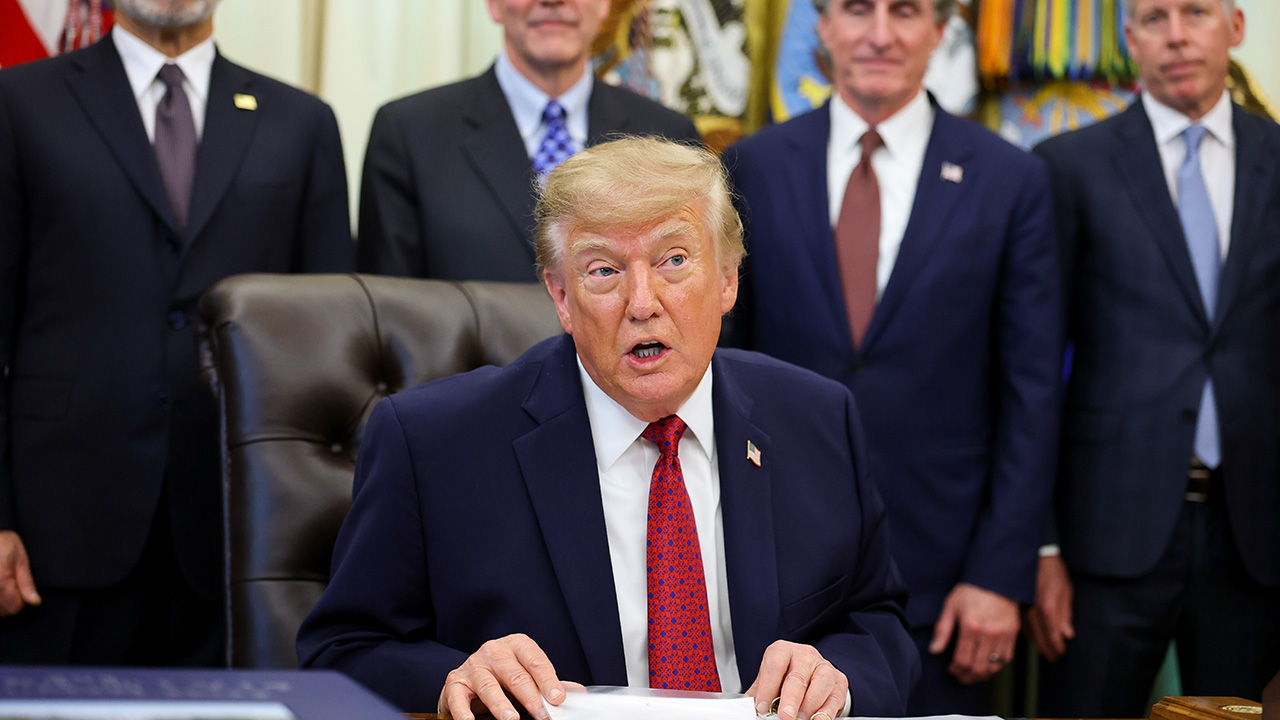
President Trump just put their leaders at the same White House table and asked them to sign the same rules of the road.
The result is the White House Accord on Super Intelligence, a voluntary agreement intended to create accountability around systems that may soon exceed human capability across broad areas of knowledge and decision-making.
The signatories read like a roster of the modern American economy: Anthropic CEO Dario Amodei, Google CEO Sundar Pichai, Meta CEO Mark Zuckerberg, OpenAI President Greg Brockman, Nvidia CEO Jensen Huang and Elon Musk of xAI.
These men do not agree on everything, and some of their companies are locked in brutal competition. Yet they agreed that the next technological frontier cannot be governed by slogans and good intentions alone.
The executive order President Trump signed alongside the summit does something more important than rename artificial intelligence. It directs the executive branch to replace “Artificial Intelligence” and “AI” with “Super Intelligence” and “SI” in official materials.
The order frames the technology as a national project tied to American leadership, security and prosperity. It directs administration officials to advance the new policy across executive departments instead of leaving the language confined to one White House event.
The accompanying White House fact sheet presents the summit and accord as the opening move in that strategy. The administration wants the United States—not China or an unaccountable international body—to set the pace and the standards.
That language is deliberate. “Artificial intelligence” can sound like another software category.
Super Intelligence makes the stakes impossible to miss: the country that leads this technology could define the military, economic and cultural balance of the century.
According to the Associated Press, the accord establishes four layers of responsibility for participating companies: strong internal controls, a dedicated internal oversight team, independent outside evaluation and an independent committee at the board level.
That structure matters because no chief executive should be able to wave away a catastrophic warning, and no company should be allowed to grade its own homework behind closed doors.
Critics will point out that the accord is voluntary. A signature by itself cannot compel a company to keep every promise.
But the companies have now attached their names publicly to specific oversight commitments, and President Trump called the agreement morally binding. A serious failure will carry a public record of promises made and ignored.
The agreement functions like a constitution for the industry. Congress and federal regulators can now use its specific commitments as the starting point for future law and enforceable rules.
The timing is critical because Washington is notoriously slow and technology is not. If government waits until every legal question is settled, the most consequential systems may already be deployed at enormous scale.
If it regulates blindly and too early, it risks driving American leadership overseas.
The Trump approach attempts a third path: move fast, keep American companies in the lead and force the people building the technology to accept visible responsibility for controlling it.
Google’s Sundar Pichai emphasized the scale of private investment already underway. Nvidia supplies the advanced chips powering the race.
OpenAI, Anthropic, Meta and xAI are pushing competing models toward capabilities that would have sounded like science fiction only a few years ago.
Bringing them together was not a photo opportunity. It was a declaration that America intends to lead—and that leadership carries obligations.
The hardest work comes next. Independent evaluators must be genuinely independent, and board committees must have real authority.
Safety controls must be tested against determined adversaries, not polished for public-relations presentations. National-security officials must protect the country without turning oversight into a back door for political censorship.
If those lines hold, this accord could become the opening framework for an American technological century: innovation without surrender, speed without recklessness and power tied to accountability.
Six rival companies signed one agreement under one President. In an industry famous for moving alone and asking permission later, that is no small achievement.
This is a Guest Post from our friends over at 100 Percent Fed Up. View the original article here.
Continue reading...
[ H/T WLT Report ]