






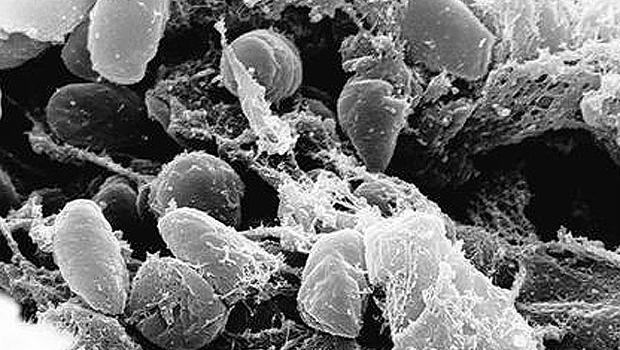
How worried should we be about an epidemic of plague?
Details reported by Russia are sparse, but we do know this: A 28-year-old lab technician at the Irkutsk Anti-Plague Research Institute experienced a laboratory exposure on September 25, was admitted to the hospital on September 29, and died of pneumonia on October 1. The dangerous organisms she was working with included varieties of plague bacteria (Yersinia pestis). About 200 people were initially quarantined and have been released. Five hospitals were placed under quarantine or access restrictions. The causative organism has not been isolated. There are reports of a second employee of the institute with pneumonia of undetermined cause.
Y. pestis persists in rodent populations, prominently in the Irkutsk region. Most human plague is bubonic (involving lymph nodes), acquired via flea bite. Pneumonic plague arises from inhalation of infectious droplets from close contact with infected mammals/humans. Most patients transmit to no one, but historic superspreading events have occurred with poor ventilation and crowding.
Y. pestis is a category A bioterrorism agent because of its aerosol infectivity and lethality; a deliberate aerosol release would produce primary pneumonic plague on a large scale.
It is characterized by sudden onset after a very short incubation (hours to 2–3 days) of high fever, chills, headache, malaise, dyspnea, pleuritic chest pain, and cough productive of purulent or bloody sputum (hemoptysis). Rapid progression to respiratory failure, sepsis, and death occurs far more frequently than in ordinary pneumonia. The early presentation is nonspecific and difficult to distinguish from ordinary community-acquired pneumonia; hemoptysis and rapid deterioration are clues.
A CDC review found that aminoglycosides (streptomycin, gentamicin), fluoroquinolones (such as ciprofloxacin), and tetracyclines (doxycycline), alone or in combination) were associated with the highest survival. Chloramphenicol is an option (favored historically for meningeal involvement); sulfonamides are associated with the lowest survival; and penicillin is ineffective.
Because the case-fatality rate approaches 100% if untreated and over 50% even with treatment, empiric antimicrobial therapy must begin on clinical suspicion.
For postexposure prophylaxis, give for 7 days to people with close, sustained unprotected contact with a pneumonic plague patient.
No licensed plague vaccine is currently available in the U.S., although several vaccines have been developed.
Since the patient died so quickly, it is likely that the organism was drug-resistant. She was reportedly vaccinated for the organisms she was working with; these vaccines were evidently ineffective.
The Soviets worked on weaponizing plague for years. About 25 years ago the Cooperative Threat Reduction people brought their retired top plague expert to the U.S. to give briefings. He stated that they had engineered it to be resistant to virtually all the major classes of antibiotics, even ciprofloxacin. They learned how to grow it up in large quantities without it losing its large plasmid with the virulent factors. The vaccines they developed had to be given via the airway. The injected vaccine was good to stop cutaneous transmission, but it did not stop aerosol transmission.
The Russians have not dismantled their biowarfare program, nor are they likely to do so, considering their long border with a billion Chinese.
There is no justification for fearmongering or panic about this event.
Additional information:
- ‘Antimicrobial Treatment and Prophylaxis of Plague: Recommendations for Naturally Acquired Infections and Bioterrorism Response.’ MMWR Jul 16, 2021.
- ‘Clinical Management of Potential Bioterrorism-Related Conditions,’ NEJM Mar 15, 2015.
- ‘Plague as a Biological Weapon: Medical and Public Health Management.’ JAMA May 3, 2000.
- Ronald Kostoff. ‘Plague: Contributing Factors.’ Trial Site News, Oct 12, 2026.
Continue reading...
[ H/T WorldNetDaily ]