








Oil Hits Session High After DOE Shows Lowest Midwest Gasoline Stocks On Record
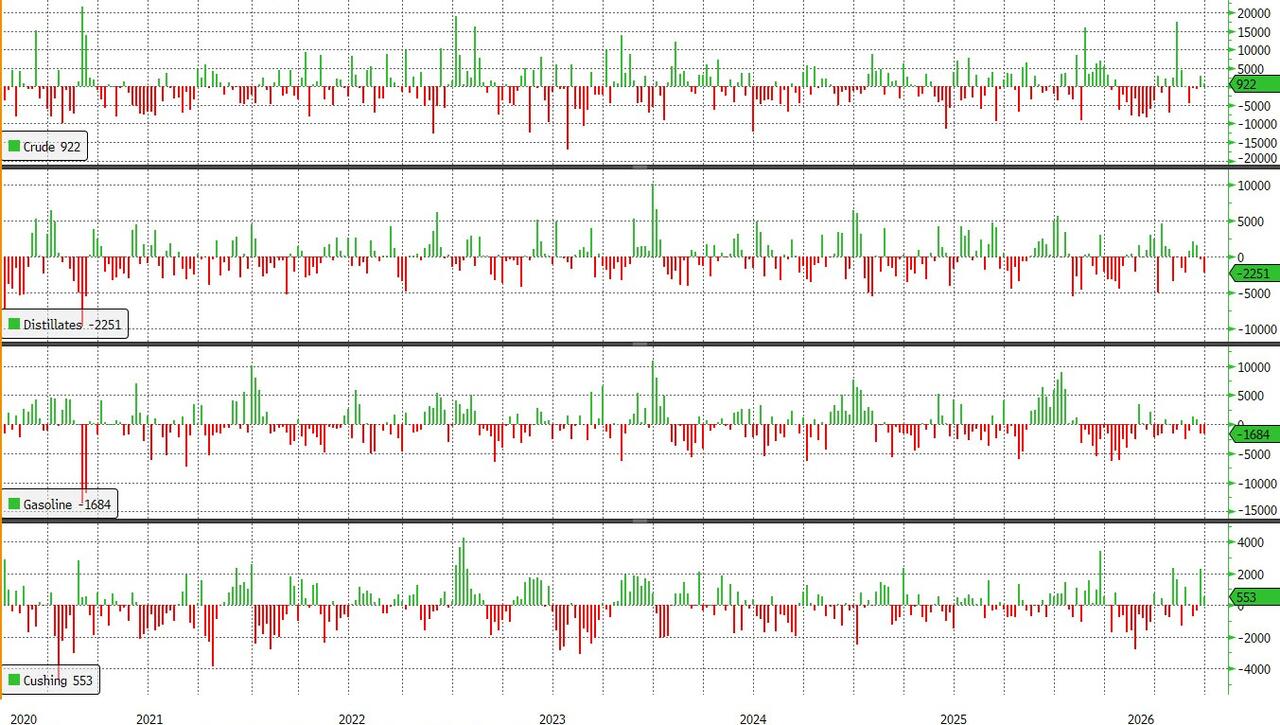
Oil prices rose to session highs after today's DOE inventory data refuted the latest cheerful API prints from Tuesday afternoon. Instead of the API-reported builds in distillates and gasoline, the DOE said that in the last week both products drew, with a modest increase in Cushing inventories, while crude inventories rose by 922K
API
DOE
As Bloomberg notes, that’s a large draw of distillate fuels at 2.25 million barrels, well below the 300,000 barrels increase API saw. The October diesel contract is expiring today, so price action is a little murky, but the most-active contract is holding pretty strong gains near $4.75 a gallon.
Cushing stocks saw another bounce off 'tank bottoms' even as crude inventories saw a modest increase, while product stocks both saw modest draws...
Here' a look at some more of the data:
The 922,000 barrel build in commercial crude stockpiles was close to the 1 million barrel increase seen by the API on Tuesday. It compares with a Bloomberg survey of analysts that saw the stockpile shrinking by 710,000 barrels and Bloomberg users’ expectations just before the data were released of a 1 million barrel build.
Stockpiles at Cushing, Oklahoma, rose to the highest since May. At 24 million barrels, inventories are inching further away from the 20-million mark generally seen as the minimum operating level for the storage hub. It’s the second straight week of builds at Cushing.
Meanwhile, the US Strategic Petroleum Reserve declined by another 785K barrels; SPR stockpiles will continue to draw further throughout the end of the year after the energy department re-offered 40 million barrels of sour oil in a tender. The oil was offered as part of the exchange program, and must be returned in kind between 2027 and 2029. It’s to be seen if the government will be able to attract interest from traders and refiners. The minimum premium has fallen to 7% to 9.5%, compared with as much as 22% earlier this year. A total of 132 million barrels of crude has been taken out of the SPR since late March under a program to release 172 million barrels as part of a relief plan coordinated by the International Energy Agency aimed at lowering energy costs.
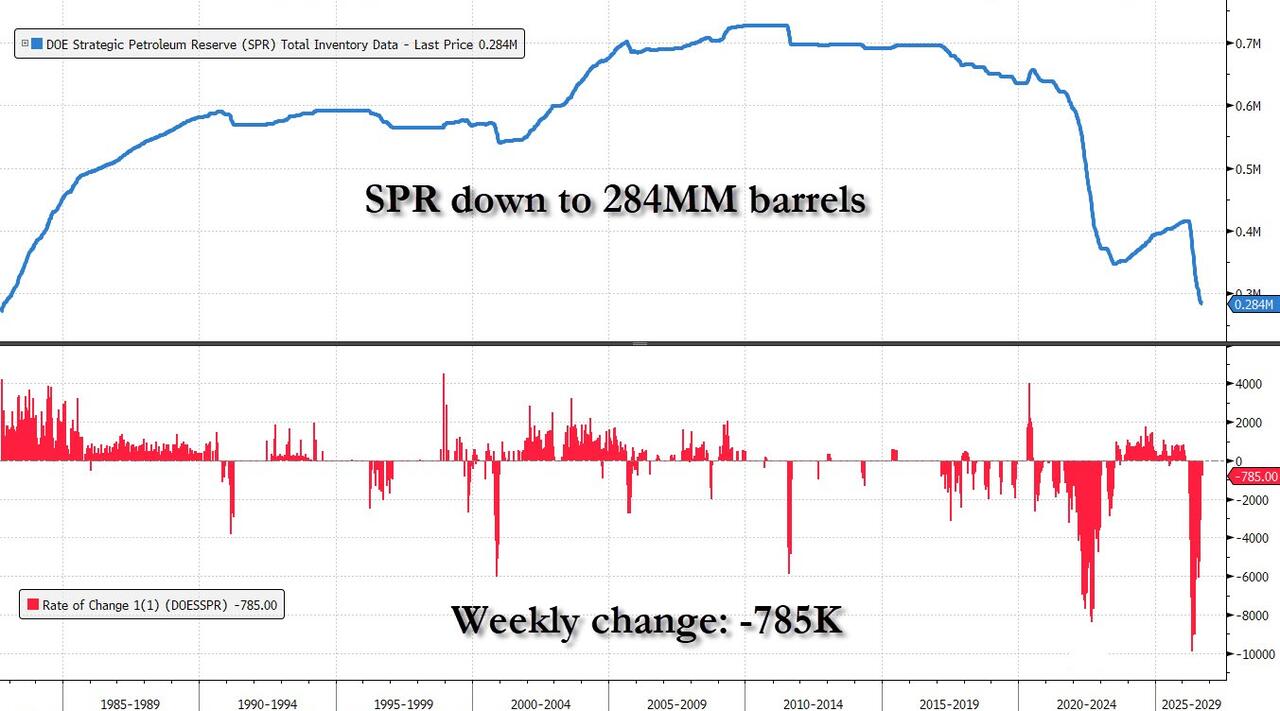
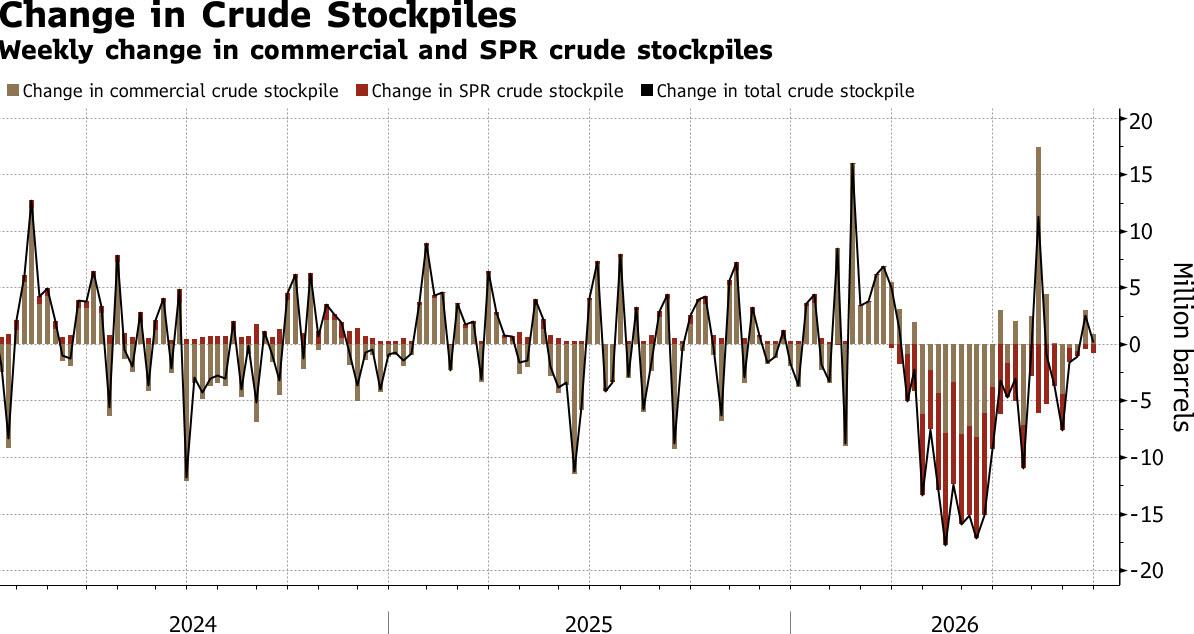
That means that the build in commercial crude stockpiles was mostly offset by another 785,000 barrels withdrawn from the SPR. That reduced the overall nationwide crude build to just 137,000 barrels in the week to Sep 25.
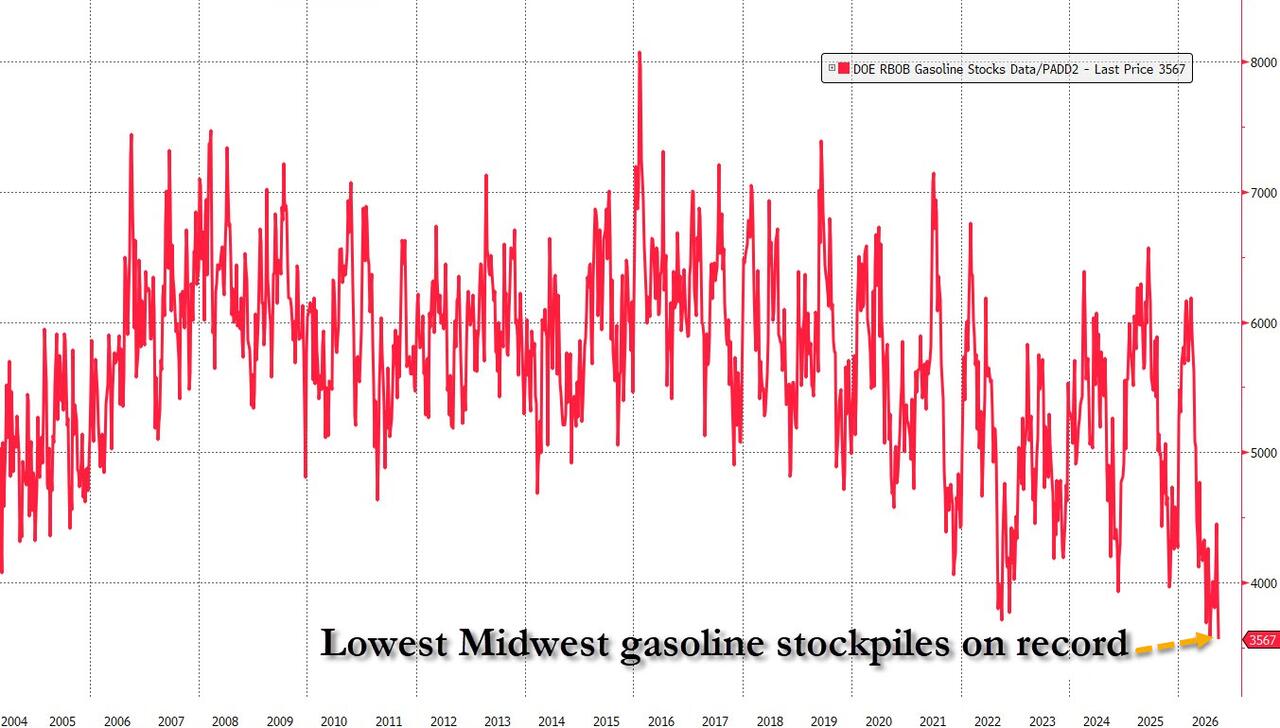
Taking a closer look, we find that gasoline stocks in the US Midwest are at the lowest level on record. Overall, the US has the least gasoline on hand since November 2014, with stockpiles falling by 1.68 million barrels.
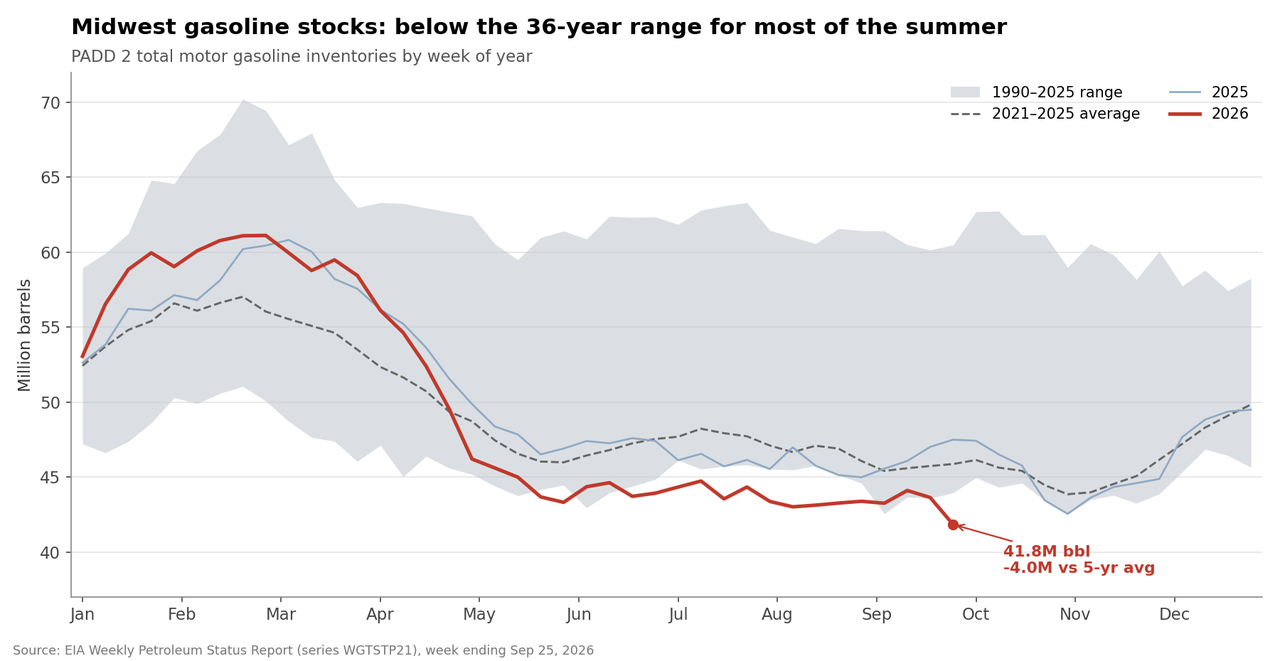
On a seasonal basis, PADD2 (Midwest) gasoline has also never been lower.
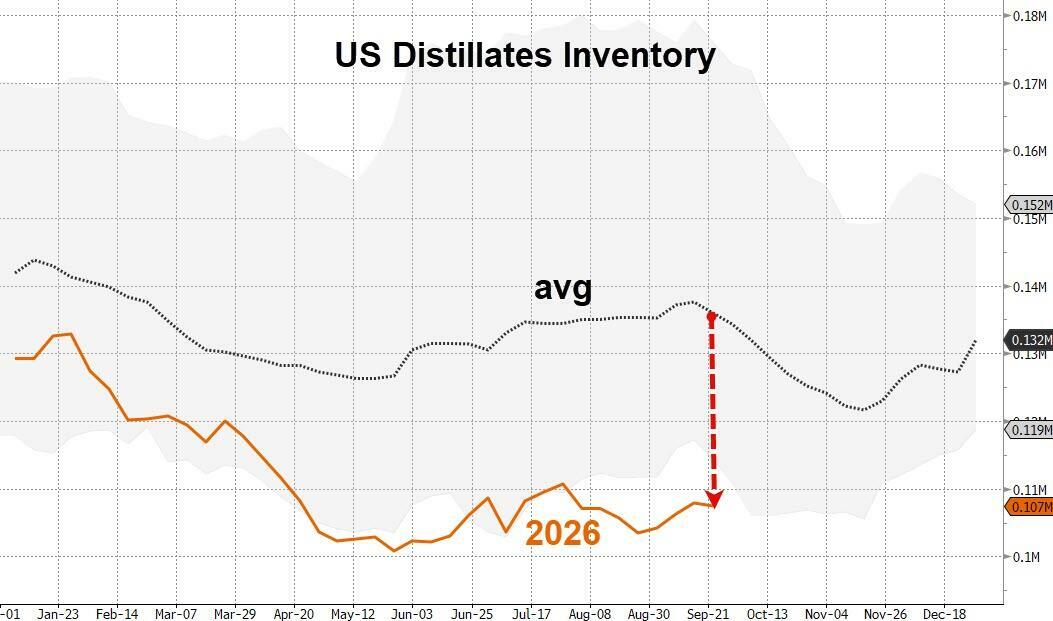
Distillate fuel stockpiles in the US also remain at their lowest seasonal levels on record. Stockpiles fell in every single region. Exports, meanwhile, rebounded to 1.5 million barrels a day. While discussion of a US diesel export ban has died down a bit, it hasn’t faded entirely, and a number like this might revitalize some of those conversations.
Linked to that, there was another big drop is US crude processing by refineries. Over the past three weeks, crude consumptions fell by 1.3 million barrels a day. That’s the lowest since May. Rates fell in all regions, with the exception of the Rockies
Imports of Brazilian oil rose to the highest level since November 2024 and the highest level ever for this time of year, with the US importing nearly 500,000 barrels each day last week. While it’s unclear what’s driving the move, one explanation could be that strong American refinery runs are supporting demand for nearby foreign crudes while, at the same time, less Brazilian oil heads to Asia.
At the same time, imports from Canada rose for the second time in three weeks. Shipments from the country remain fairly low at 3.4 million barrels a day, but there was an uptick nonetheless. PADD 2 takes the most Canadian crude out of any region, so the build in Cushing was likely at least partially due to shipments from the North.
Bloomberg offers another take on falling refining crude processing: Canadian crude delivered via pipeline to both the US Gulf Coast and the Patoka hub are at a contango, a sign of weak demand. On the flip side, WTI at Houston is still in a backwardated structure. That can be partly explained by the light-heavy differential, that currently favors the use of light crude over heavy crudes from places like Canada and Venezuela.
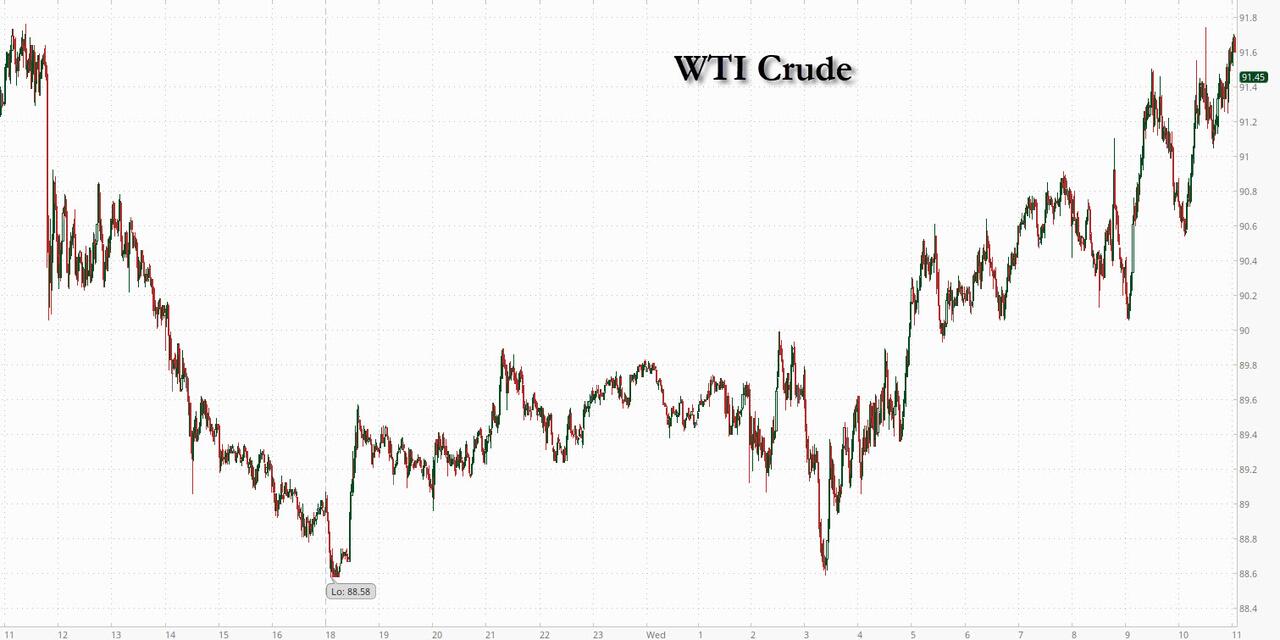
WTI futures jumped a few cents higher to session high in a knee-jerk reaction to the report. EIA data showed a relatively unexciting US crude stockpile build of roughly 900,000 barrels, but the markets focus is elsewhere this week - namely, diesel.
Tyler Durden Wed, 09/30/2026 - 11:21
Continue reading...
[ H/T ZeroHedge ]
Oil prices rose to session highs after today's DOE inventory data refuted the latest cheerful API prints from Tuesday afternoon. Instead of the API-reported builds in distillates and gasoline, the DOE said that in the last week both products drew, with a modest increase in Cushing inventories, while crude inventories rose by 922K
API
- Crude +1.0mm
- Gasoline +3.0mm
- Distillates +0.3mm
- Cushing +0.2mm
DOE
- Crude +0.922mm
- Gasoline -1.684mm
- Distillates -2.251k
- Cushing +553mm
As Bloomberg notes, that’s a large draw of distillate fuels at 2.25 million barrels, well below the 300,000 barrels increase API saw. The October diesel contract is expiring today, so price action is a little murky, but the most-active contract is holding pretty strong gains near $4.75 a gallon.
Cushing stocks saw another bounce off 'tank bottoms' even as crude inventories saw a modest increase, while product stocks both saw modest draws...
Here' a look at some more of the data:
- PADD 1B gasoline -1,422k
- PADD 1 Distillates -254k
- PADD 3 crude +3,417k
- Refinery utilization -1.5ppt vs est. -0.3ppt
- Refinery crude inputs -554k b/d
- Crude imports -179k b/d
- Crude production +16k b/d
The 922,000 barrel build in commercial crude stockpiles was close to the 1 million barrel increase seen by the API on Tuesday. It compares with a Bloomberg survey of analysts that saw the stockpile shrinking by 710,000 barrels and Bloomberg users’ expectations just before the data were released of a 1 million barrel build.
Stockpiles at Cushing, Oklahoma, rose to the highest since May. At 24 million barrels, inventories are inching further away from the 20-million mark generally seen as the minimum operating level for the storage hub. It’s the second straight week of builds at Cushing.
Meanwhile, the US Strategic Petroleum Reserve declined by another 785K barrels; SPR stockpiles will continue to draw further throughout the end of the year after the energy department re-offered 40 million barrels of sour oil in a tender. The oil was offered as part of the exchange program, and must be returned in kind between 2027 and 2029. It’s to be seen if the government will be able to attract interest from traders and refiners. The minimum premium has fallen to 7% to 9.5%, compared with as much as 22% earlier this year. A total of 132 million barrels of crude has been taken out of the SPR since late March under a program to release 172 million barrels as part of a relief plan coordinated by the International Energy Agency aimed at lowering energy costs.
That means that the build in commercial crude stockpiles was mostly offset by another 785,000 barrels withdrawn from the SPR. That reduced the overall nationwide crude build to just 137,000 barrels in the week to Sep 25.
Taking a closer look, we find that gasoline stocks in the US Midwest are at the lowest level on record. Overall, the US has the least gasoline on hand since November 2014, with stockpiles falling by 1.68 million barrels.
On a seasonal basis, PADD2 (Midwest) gasoline has also never been lower.
Distillate fuel stockpiles in the US also remain at their lowest seasonal levels on record. Stockpiles fell in every single region. Exports, meanwhile, rebounded to 1.5 million barrels a day. While discussion of a US diesel export ban has died down a bit, it hasn’t faded entirely, and a number like this might revitalize some of those conversations.
Linked to that, there was another big drop is US crude processing by refineries. Over the past three weeks, crude consumptions fell by 1.3 million barrels a day. That’s the lowest since May. Rates fell in all regions, with the exception of the Rockies
Imports of Brazilian oil rose to the highest level since November 2024 and the highest level ever for this time of year, with the US importing nearly 500,000 barrels each day last week. While it’s unclear what’s driving the move, one explanation could be that strong American refinery runs are supporting demand for nearby foreign crudes while, at the same time, less Brazilian oil heads to Asia.
At the same time, imports from Canada rose for the second time in three weeks. Shipments from the country remain fairly low at 3.4 million barrels a day, but there was an uptick nonetheless. PADD 2 takes the most Canadian crude out of any region, so the build in Cushing was likely at least partially due to shipments from the North.
Bloomberg offers another take on falling refining crude processing: Canadian crude delivered via pipeline to both the US Gulf Coast and the Patoka hub are at a contango, a sign of weak demand. On the flip side, WTI at Houston is still in a backwardated structure. That can be partly explained by the light-heavy differential, that currently favors the use of light crude over heavy crudes from places like Canada and Venezuela.
WTI futures jumped a few cents higher to session high in a knee-jerk reaction to the report. EIA data showed a relatively unexciting US crude stockpile build of roughly 900,000 barrels, but the markets focus is elsewhere this week - namely, diesel.
Tyler Durden Wed, 09/30/2026 - 11:21
Continue reading...
[ H/T ZeroHedge ]