




Nintendo Switch 2 Sales Plunge Amid Memory Crisis; Bernstein Calls It "Not A Good Result"
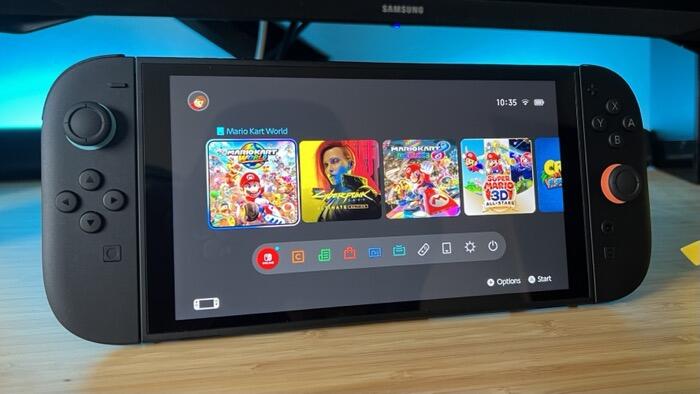
Nintendo Switch 2 sales came in materially below Wall Street expectations. Second quarter earnings showed a 41% decline in sales as price increases, shortages, and the memory crisis weighed on demand
The Kyoto-based gaming company sold 2.67 million consoles in the three months ended Sept. 30, down from 3.82 million in the previous quarter. Nintendo hiked prices in the US, Canada, and Japan as a global memory chip shortage drove up component costs.
Revenue for the quarter totaled $2.8 billion, below the $3.04 billion average analyst estimate compiled by LSEG. Net income of $464.4 million missed expectations of $519.2 million
Morningstar equity director Kazunori Ito wrote earlier, "The slowdown has arrived earlier than anticipated," adding, "It's clear that investors have cooled on the Switch 2 platform."
Nintendo maintained its forecast of 16.5 million Switch 2 consoles for the fiscal year ending March 2027.
Kantan Games CEO Serkan Toto told CNBC that Nintendo needs more blockbuster games to sustain momentum and win over consumers. This comes as Grand Theft Auto VI is set to debut in the coming weeks.
Bernstein gaming analyst Robin Zhu offered his first take on the earnings:
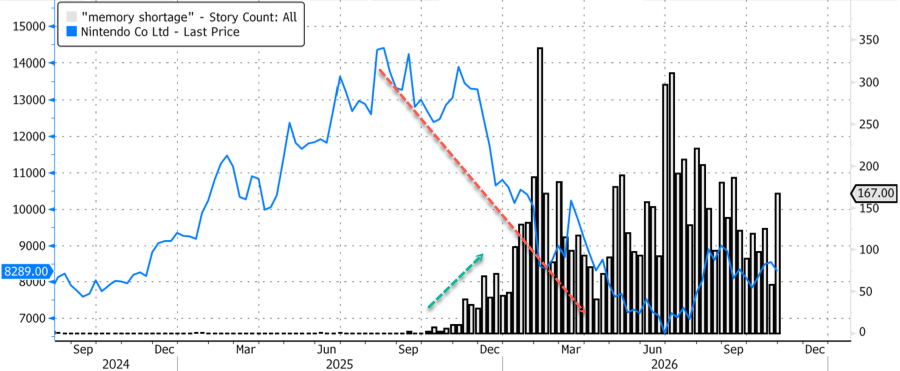
Nintendo shares in Tokyo have been halved since late 2025 as rising chip costs have pressured hardware margins and forced Switch 2 price increases. The following sales slowdown suggests that some consumers may be at the upper limits of what they're willing to pay not just for the handheld console but games too.
An overlay of "memory shortage" headlines tracked through Bloomberg's NT function and Nintendo's share price shows the stock's bear market coinciding with increased coverage of the shortage.
Unless Democrats pop the AI bubble with nationwide moratoriums, the memory shortage will linger well into next year.
Tyler Durden Thu, 11/05/2026 - 11:05
Continue reading...
[ H/T ZeroHedge ]
Nintendo Switch 2 sales came in materially below Wall Street expectations. Second quarter earnings showed a 41% decline in sales as price increases, shortages, and the memory crisis weighed on demand
The Kyoto-based gaming company sold 2.67 million consoles in the three months ended Sept. 30, down from 3.82 million in the previous quarter. Nintendo hiked prices in the US, Canada, and Japan as a global memory chip shortage drove up component costs.
Revenue for the quarter totaled $2.8 billion, below the $3.04 billion average analyst estimate compiled by LSEG. Net income of $464.4 million missed expectations of $519.2 million
Morningstar equity director Kazunori Ito wrote earlier, "The slowdown has arrived earlier than anticipated," adding, "It's clear that investors have cooled on the Switch 2 platform."
Nintendo maintained its forecast of 16.5 million Switch 2 consoles for the fiscal year ending March 2027.
Kantan Games CEO Serkan Toto told CNBC that Nintendo needs more blockbuster games to sustain momentum and win over consumers. This comes as Grand Theft Auto VI is set to debut in the coming weeks.
Bernstein gaming analyst Robin Zhu offered his first take on the earnings:
Nintendo shares in Tokyo have been halved since late 2025 as rising chip costs have pressured hardware margins and forced Switch 2 price increases. The following sales slowdown suggests that some consumers may be at the upper limits of what they're willing to pay not just for the handheld console but games too.
An overlay of "memory shortage" headlines tracked through Bloomberg's NT function and Nintendo's share price shows the stock's bear market coinciding with increased coverage of the shortage.
Unless Democrats pop the AI bubble with nationwide moratoriums, the memory shortage will linger well into next year.
Tyler Durden Thu, 11/05/2026 - 11:05
Continue reading...
[ H/T ZeroHedge ]