





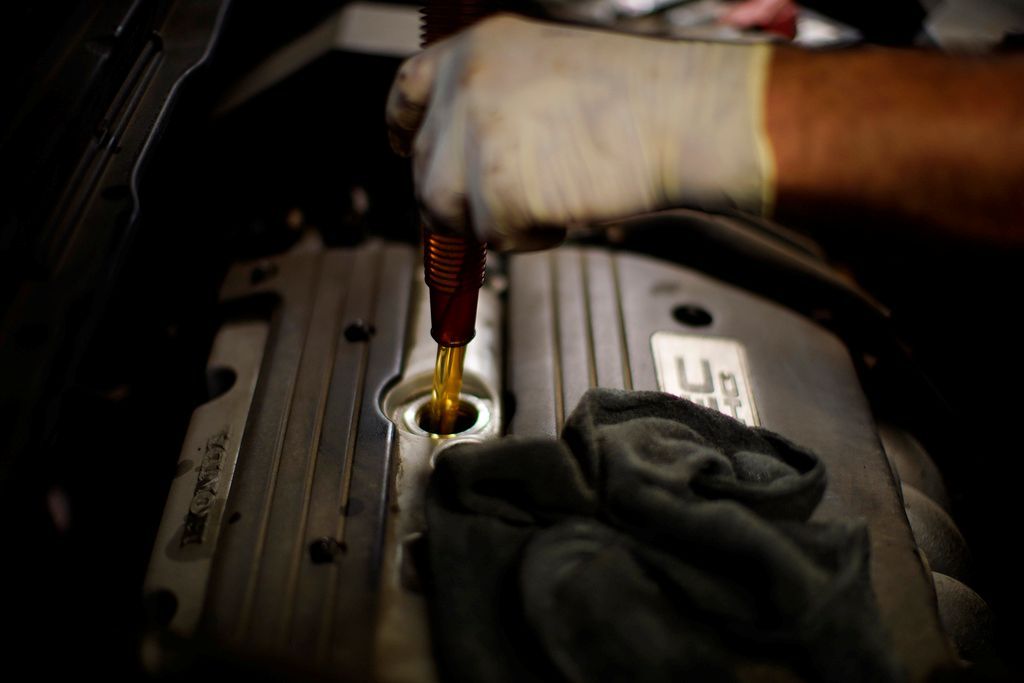
For decades, basic repairs were an ordinary part of owning a car or household appliance. People changed their own oil, replaced their brake pads, and fixed broken appliances without having to take their products back to the manufacturer.
Today, however, manufacturers increasingly restrict access to the parts, tools, and technical information needed to make those same repairs. Even when a repair is relatively straightforward, consumers often find themselves forced to rely on authorized service providers simply because the manufacturer has made other options difficult or outright impossible.
The problem is, these restrictions do more than just make repairs more difficult; they also make it harder for small businesses to compete. An independent mechanic might have the skills and equipment to repair a vehicle, but if the manufacturer won’t provide the necessary software or technical information, there is only so much they can do. When manufacturers control who can repair their products and how those repairs are carried out, they limit independent businesses’ ability to compete at all. And with fewer opportunities to compete, businesses are prevented from developing new ways to make repairs cheaper, easier, or more accessible.
This is already a problem in the automotive industry. A mechanic might know exactly how to fix a car but still be unable to diagnose the problem without access to the vehicle’s data. In Massachusetts, this issue prompted a 2020 ballot initiative that expanded independent repair shops’ access to vehicle data. Voters approved the measure by a nearly three-to-one margin. That overwhelming support speaks to the public’s frustration with automakers’ attempts to shut independent repair shops out of the market.
Similarly, in consumer electronics, manufacturers have used software to exert more control over repairs.
Apple, for example, has used a process known as “parts pairing” to link components such as iPhone displays to individual devices. Without the manufacturer’s approval, replacement parts can lose functionality even when they work perfectly well. Putting independent repair shops at a disadvantage, Apple gives itself the authority to dictate who can repair its products and how. A part that works perfectly well can become unusable simply because Apple says so.
Apple is hardly alone in its efforts, however. Other companies have adopted an even more blatant approach: withholding replacement parts, discouraging repairs, and telling customers to throw away products that break.
A 2026 investigation by the U.S. Public Interest Research Group found that 62% of the 58 blenders, coffee makers, and vacuums it examined offered no first-party repair option. KitchenAid warned that self-repair would void a blender’s warranty (a blanket restriction of this kind violates federal law), while Nutribullet told investigators that a broken blender should be thrown away. Zwilling was even more explicit: its blender was made “with the intention of never being repaired,” admitted a customer service representative.
This pattern even extends into agriculture, where equipment failures can threaten a farmer’s livelihood. For farmers, a broken machine can mean lost hours during planting or harvest, when delays can put an entire crop at risk. Yet John Deere has restricted access to the software needed to diagnose problems and complete certain repairs, leaving farmers dependent on dealerships to get their own equipment running again.
In 2023, Michigan farmer Clint Stoutenberg was planting sugar beets when a transmission code locked his John Deere planter at a fixed speed. It was 2 a.m., rain was expected in an hour, and the dealership was closed. Unable to resolve the software problem himself, Stoutenberg couldn’t operate his planter as needed. As he told KCUR, “It’s holding us back. I mean, I bought the machine. I paid for the technology.”
Deere had already promised better repair access through a voluntary 2023 agreement with the American Farm Bureau Federation. Yet a U.S. Public Interest Research Group investigation found that farmers’ diagnostic software still lacked functions available to dealership technicians, like the ability to authorize certain repairs electronically. Deere gave farmers just enough access to claim it supported the right to repair while keeping the most important repair capabilities in the hands of its own dealerships.
TRUMP SIGNS MEMORANDUM AIMED AT BREAKING UP AFTERMARKET AUTO PARTS ‘MONOPOLY’
When you buy a product, you should have full autonomy over where and how it gets repaired. A purchase should not give manufacturers a permanent say over what owners can do with their own property, nor should they be rewarded for making their products harder to repair.
If a company can drive out competitors simply by withholding the tools needed to do the job, that’s a market rigged in the manufacturer’s favor.
Continue reading...
[ H/T Washington Examiner ]