



As investigators delve into last week’s failed terrorist attack on FlyDubai Flight 1073, two main threads emerge: The first is a celebration of the heroism of the Indian pilot and Israeli passengers and the service of Saudi medical staff when the plane eventually landed. The second are the conspiracy theories that reflect both the mainstreaming of antisemitism and anti-Zionism. A third reaction flies under the radar but should wake up the State Department.
On Saturday, Sadiq al Gharyani, the grand mufti of Libya, called on Muslim pilots to emulate Omani pilot Hamam al Hammami and hijack aircraft to attack Israel.
“If three or four pilots had gone out and crashed their planes, they would have won and been honored,” he said on state-funded Libyan television from Tripoli.
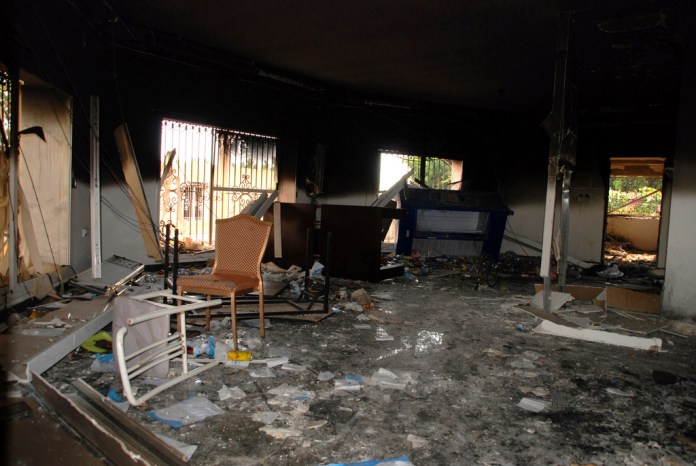
Gharyani is a product of both Turkey and its puppet government in Tripoli. Turkish-backed Libyan Prime Minister Abdul Hamid Dbeibeh not only upholds Gharyani but also gives safe haven to the remnants of Ansar al Sharia, the same militia that, in 2012, killed U.S. Ambassador to Libya Chris Stevens in Benghazi. Every week, Gharyani uses his influence over a network of Turkish- and Qatari-funded Libyan mosques to recruit terrorists for the so-called jihad in the Sahel.
Anyone who gives religious blessing to hijack commercial aircraft and crash them into civilian targets should raise alarm bells in the White House and State Department, not to mention the United Nations and European foreign ministries. Yet, a quarter-century after 9/11, the State Department appears asleep at the switch, while President Donald Trump’s special envoy, Massad Boulos, seeks to force the more Arab nationalist and pro-security administration in eastern Libya into a compact with Dbeibeh and Gharyani.
Constitutionally, Gharyani is illegitimate, and electorally, Dbeibeh never had a mandate. Dbeibeh was selected rather than popularly elected, and his position was always meant to be temporary. Given his antics and inarticulateness, most Libyans in both east and west find Dbeibeh an embarrassment. While Boulos hoped he could compel Boulos and field marshal Khalifa Haftar’s administration into a unified administration, with Dbeibeh as prime minister and Haftar’s son Saddam as the likely president, Dbeibeh burned Boulos because of his inability to keep promises and fulfill commitments. Any international worry about the secession of eastern Libya is misguided. The original Libyan constitution calls for two coequal capitals in Tripoli and Benghazi — late dictator Moammar Gadhafi’s centralization always backfired. If centralization is the goal, however, the natural solution would be to move the capital to Sirte, located halfway between the two and symbolically important as both the site of Gadhafi’s death and later the defeat of Libya’s own Islamic State caliphate.
The State Department’s monomaniacal obsession with recognizing Tripoli’s legitimacy exclusively now risks empowering an illegitimate and arbitrary regime that pays and protects Gharyani, a man who hopes to become the next Osama bin Laden.
The antidote is simple: If Trump and Secretary of State Marco Rubio wish to place American security above State Department diplomacy-by-algorithm, it is time to reverse course on Libya. In the short term, the international community should recognize whoever in Libya best ensures Libyan security, counters terrorism, protects Libyan sovereignty, and takes a no-nonsense approach to counter extremism. A big tent and stability are mutually exclusive when one party shelters militias and terrorism inciters such as the mufti.
2026 MIDTERM ELECTIONS LIVE UPDATES: LATEST NEWS, RESULTS, AND ANALYSIS
If Dbeibeh wants a seat at the table, the demands on him should be a no-brainer: expel Gharyani, extradite all those involved in the Benghazi terrorist attacks to the United States, and disarm and disband all militias. If Dbeibeh is unable to fulfill these prerequisites, he is not worth negotiating with in the first place.
Libya should have elections and a unified government. It should be a partner contributing to stability in the Middle East, Africa, and the Eastern Mediterranean. Instead, Dbeibeh subordinates it to Turkey and allows it to be a likely engine for the next 9/11. Trump and Rubio have the power to change that. The mufti’s call to weaponize aircraft should be the last straw.
Michael Rubin is the director of policy analysis at the Middle East Forum, a distinguished fellow at India’s Usanas Foundation, and a contributor to Beltway Confidential.
Continue reading...
[ H/T Washington Examiner ]