







Guest Post by QTR
When I first got involved with investigative forensic equity research about 15 years ago, I remember being genuinely stunned by what I was finding. I was drawn into the world of skeptical inquiry after reading GeoInvesting’s exposé of Longwei Petroleum back in 2012 where they concluded the U.S. listed company, trading on a major exchange with exposure to U.S. retiree money, was nothing more than a “brazen fraud” by simply going to their factory and watching the activity (or lack of) there.
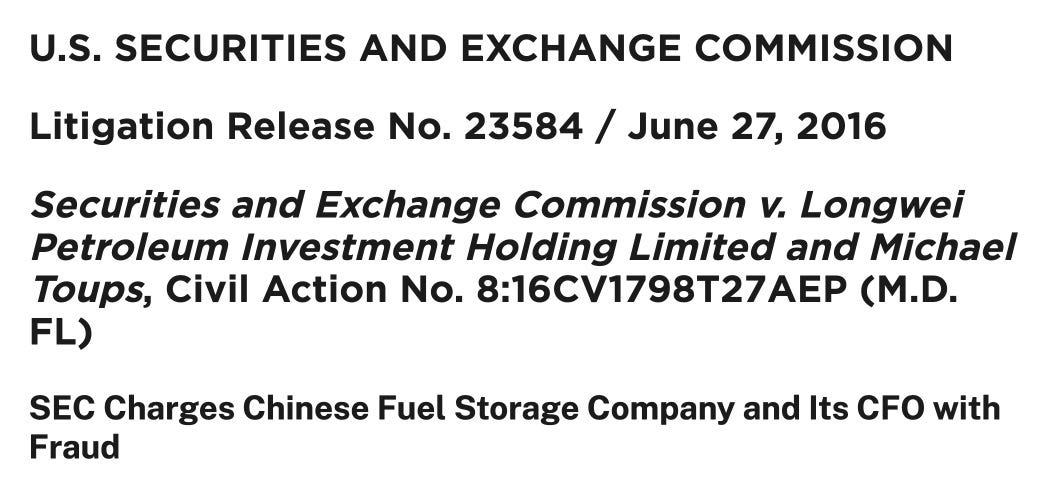
The SEC stepped in and eventually charged the company with fraud, alleging it was “built on fraudulent statements” and alleging its CFO was using company funds to buy his company’s stock to prove to investors that he believed in the company.
From that point on, looking at companies from the perspective of someone trying to fact check their claims instead of taking them at face value made market research a stunning experience.
It arrives like a deluge for anyone willing to simply crack open a 10-K and do another layer of research on a company’s claims: questionable accounting, misleading disclosures, related-party transactions, and, in some cases, what I believed was outright fraud hiding in plain sight. It was everywhere. In the case of U.S. listed China based companies, there was even a movie made highlighting the billions being siphoned from U.S. investors, out in the open.
What shocked me back then, and still does now, is how little anybody seemed to care. And in some cases, how it feels to me that reporters and media who are supposed to be digging for truth feel complicit in many of these schemes.
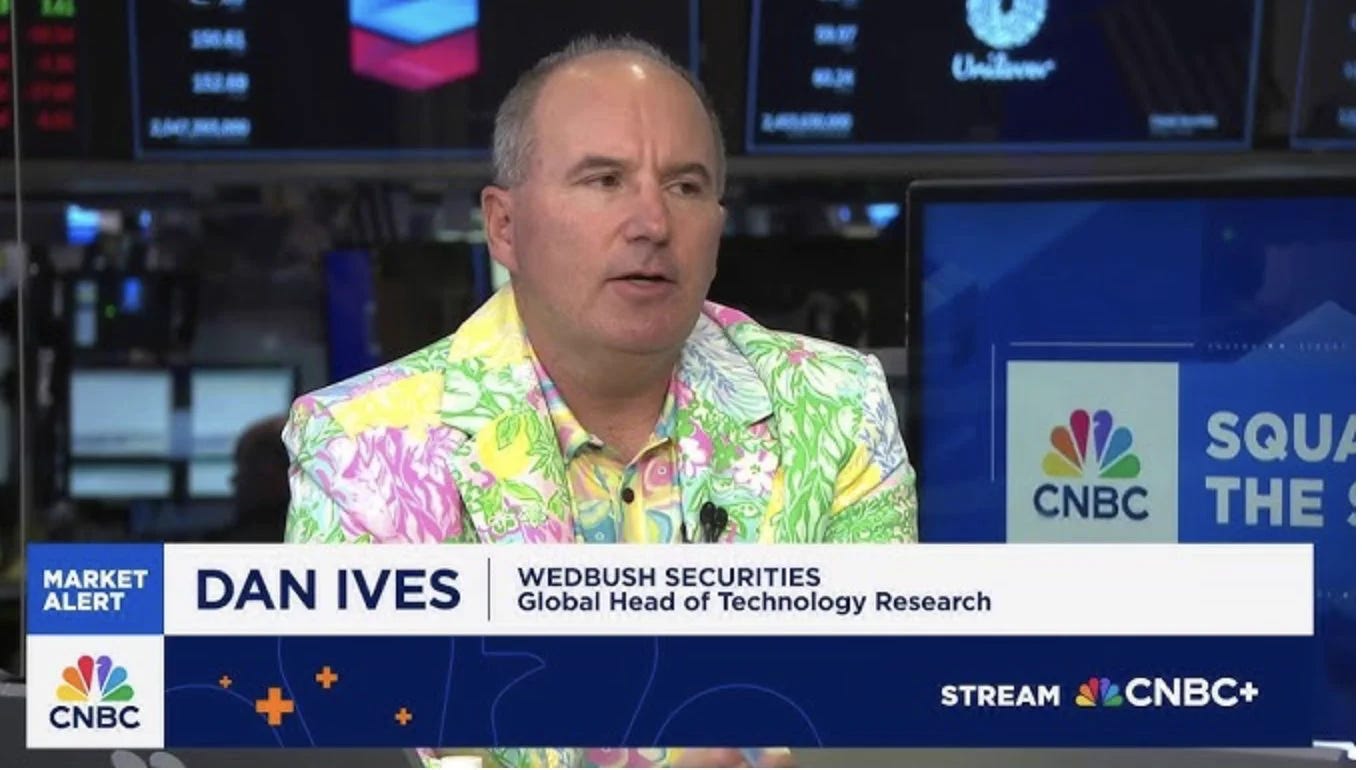
I had so many questions back then. Where were the auditors? The exchanges? And where were the sell-side analysts whose actual jobs were supposed to involve scrutinizing these companies? You know, the guys that don’t write a 6AM blog piece every day in their pajamas like I do. The guys who put on a suit and go on national television to talk about their equity research, DCF models and price targets.
Where were their warnings?
Every day, millions of ordinary investors buy and sell shares in businesses they know almost nothing about, relying on the assumption that somebody, somewhere, has done the necessary homework. They assume that because a company is publicly traded, has an auditor, and is covered by major Wall Street institutions, there must be some reasonable assurance that the whole thing isn’t a flaming bag of dogshit.
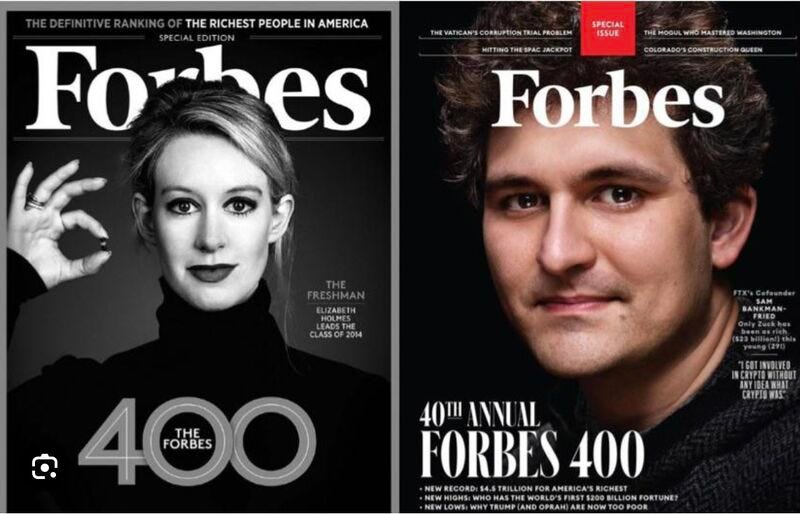
And of course, history tells us otherwise. Eventually, there’s an Enron. Or a Wirecard. Or a Theranos, which managed to fool an extraordinary number of sophisticated investors without ever becoming publicly traded. The illusion collapses, billions of dollars disappear, and the same people who spent years applauding the emperor’s beautiful new clothes suddenly want to know how something like this could possibly have happened. Who could have seen it coming?
Well, in many cases, somebody did. And very often, that somebody was a short seller. Occasionally, it was an award winning Financial Times journalist like Dan McCrum, whose tenacity and courage in exposing Wirecard have turned him into a Harvard Business School case study.

McCrum
Early in my career, I came to believe something I still believe today: some of the best actual research on Wall Street is done by people looking for reasons not to own stocks.
That might sound counterintuitive in an industry where pessimism is treated like a personality disorder, but it makes perfect sense when you understand the incentives. Much of the traditional sell-side research business exists inside an ecosystem that rewards optimism. Investment banks want underwriting fees, advisory mandates, access to management teams, institutional relationships, and opportunities to participate in the next capital raise. Even with formal research independence rules, the broader industry’s commercial incentives favor keeping the machinery running.
And nothing keeps the machinery running quite like a steady supply of buy ratings and price targets that assume every company is just a few quarters away from achieving its wildest dreams. There’s a reason Wall Street has historically produced far more buy ratings than sell ratings. Nobody gets invited to investor day for calling the CEO a carnival barker. So instead, we get things like this:
And that’s just a small sampling. The historical record is littered with scores of examples of analysts remaining optimistic about businesses heading directly into a wood chipper.
More recently, look at CoreWeave, a company I’ve spent plenty of time discussing here. As its price has suffered a brutal decline, and as insiders sell metric **** tons of stock and questions about its financing structure, capital intensity, and dependence on the broader AI ecosystem become harder to ignore, bullish analyst recommendations are everywhere.
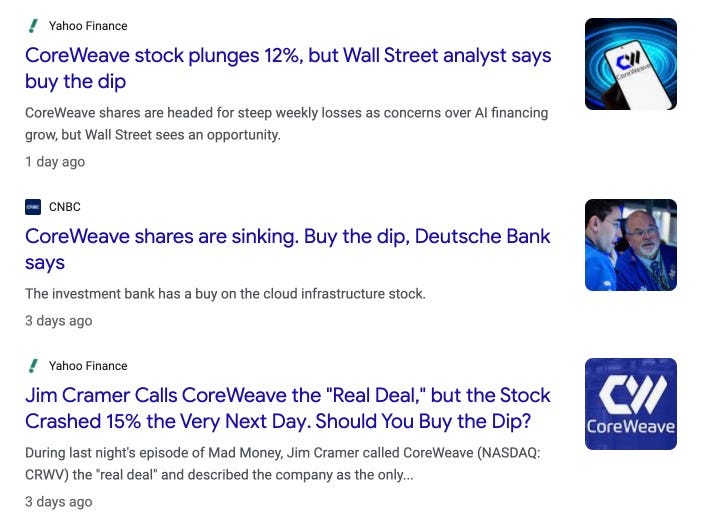
Meanwhile, the people willing to ask the uncomfortable questions about the company (that needed a backstop from Nvidia to even IPO) are routinely treated like criminals.
The entire playing field is tilted so heavily in favor of bulls that trying to fight it has become an increasingly miserable proposition. I recently came across an article raising the question of whether short selling should be illegal.
We’re sitting in a market that has spent years rewarding speculation, leverage, financial engineering, and increasingly preposterous valuations. We’ve watched cryptocurrency produce an almost endless parade of dubious tokens, questionable promoters, and schemes that seem to exist for no other purpose than transferring money from gullible people to the people selling them a story. We’ve watched the AI boom create financing arrangements and valuation assumptions that, in my opinion, deserve considerably more scrutiny than they’re receiving.
And in the middle of all this, somebody wants to know whether the people betting against stocks should be outlawed.
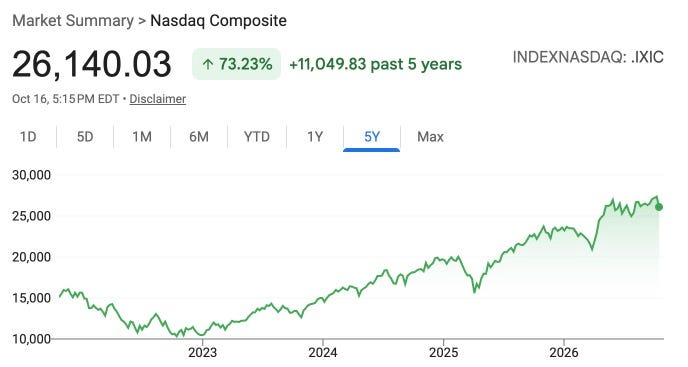
It’s like a casino complaining that slot players are taking advantage of them by playing a game that is mathematically guaranteed to benefit the house.
And casinos, like everyone on Wall Street, hate losing so much, they actually do **** like this. One man in 2007 who was told by a slot machine he won $1.6 million was instead offered $385 and a free dinner by the casino. Another woman thought she won a million dollars at Bally’s in Atlantic City in 2024 only to be told her machine was “tampered” with. “Lady, get it in your head, you won nothing,” she was told.
You almost have to admire the brazenness of it all. The house always wins.
And so the more time I’ve spent in this business, the more I’ve realized that the actual research is only half the battle. Sometimes it’s the easy half. Because the personal toll of publicly challenging a company, particularly one with a promotional management team, enthusiastic shareholders, and plenty of money to spend defending itself, can be enormous.
FT’s Dan McCrum endured years of surveillance, hacking, intimidation, smear campaigns, legal threats, accusations of market manipulation, criminal investigations, and threats to his personal safety, all while exposing one of the largest corporate frauds in European history.
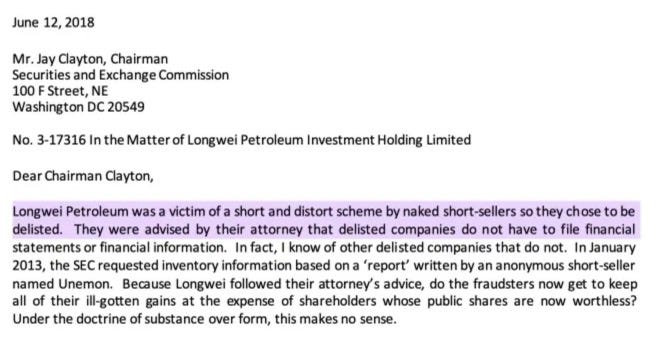
Which is to say nothing of ignorant shareholders, many who take to even writing to the SEC informing them they are being stripped of their rights to be victimized while making excuses for the same people bilking them out of their money.
There’s an extraordinary double standard embedded in the arrangement. A bullish analyst can publish a ridiculous price target based on fantastical assumptions, watch the stock collapse 80%, quietly revise the target downward, and go right back to work the following Monday. Nobody asks whether somebody should investigate his personal life.
But publish a bearish report questioning a company’s accounting, business model, or disclosures, and suddenly you’re expected to defend not just every footnote of your research but your entire moral character. Your motives are questioned, your financial incentives are portrayed as inherently sinister, and your conclusions are scrutinized with a level of hostility that would be perfectly appropriate if it were applied equally to the other side of the trade.
Never mind that bullish analysts also have financial incentives, or that management teams can make fortunes selling stock into inflated valuations. Apparently, making money by telling people a stock will go up is capitalism. Making money by telling them it might go down is a conspiracy.
And even when you’re eventually vindicated, what exactly have you won? Look at Wirecard. For years, people who raised legitimate concerns about the company’s accounting were dismissed, attacked, and subjected to extraordinary pressure. Eventually, the company collapsed after admitting that nearly €2 billion in supposedly existing cash couldn’t be accounted for.
The skeptics were right. Congratulations. Here’s your trophy. It’s a decade of aggravation, legal bills, sleepless nights, and a permanent reminder that being correct doesn’t necessarily mean anybody will thank you.
I’ve spent enough time around short sellers to know that many of them aren’t the cartoon villains they’re made out to be. They’re obsessive researchers who read the footnotes, examine subsidiaries, track down counterparties, interview former employees, and ask questions that everybody else has a financial incentive to avoid. The idea that markets would somehow be healthier without people aggressively challenging corporate narratives is one of the dumbest things I’ve heard in an industry that produces an almost unlimited supply of dumb ****.
For years, I felt something resembling a personal obligation to participate in that fight. When I saw something that looked wrong, I wanted to expose it. When I saw a company trading at a valuation that made absolutely no sense, I wanted to short it. When I saw investors lining up to buy into what looked to me like an obvious disaster, I felt compelled to explain why they were making a mistake.
Part of it was intellectual curiosity. Part of it was the satisfaction of doing the work and being right. And part of it was a genuine belief that somebody needed to warn people before they lost their money. But after more than two decades in markets, and more than a decade spent doing and working around forensic research, I’ve finally come to an important conclusion: I don’t have to save everybody. And, more importantly, I don’t want to anymore.
I’m done shorting stocks.
I’ll continue writing skeptically about companies here. I’ll continue questioning valuations, financing arrangements, management claims, accounting assumptions, and whatever else deserves scrutiny. As readers have seen recently with my commentary on CoreWeave, I haven’t developed a sudden aversion to calling out what I believe are glaring problems. But there’s a difference between identifying a problem and feeling obligated to put your own capital, time, and sanity on the line trying to force the market to recognize it.
If I want downside exposure, I may express it through broad market indexes. That’s a different proposition from spending months investigating an individual company while trying to survive the promotional circus surrounding its stock. Because the other lesson I’ve learned is that the market can remain irrational for far longer than any reasonable person should be willing to fight it.
A stock can be absurdly valued and double. A company can have serious accounting questions and raise another billion dollars. A management team can make promises completely detached from economic reality and be rewarded with an even higher valuation. And when you point this out, the response from the peanut gallery is almost always the same: “Scoreboard.”
The stock is up, therefore you’re wrong. The stock is making new highs, therefore the business must be legitimate. Somebody made a fortune buying it last Tuesday, therefore your analysis is irrelevant. Fine. Scoreboard it is.
I’ve come to embrace a much simpler philosophy, one that I wish I’d adopted years ago. It’s called “let the morons eat cake”.
Let them buy whatever they want. Let them celebrate every ridiculous price target. Let them mock the short sellers, dismiss the skeptics, and convince themselves that every new financial mania is somehow different from the dozens that came before it. Let them tell me that I don’t understand the technology, the business model, the new paradigm, or whatever buzzword happens to be fashionable this quarter. Let them believe that gravity has been permanently repealed.
I’m not going to spend the next decade standing in the middle of the road waving my arms, trying to stop a parade of people who are perfectly happy marching off a cliff. There are too many of them, and frankly, I’m tired.
I had to learn some of my most valuable lessons in markets by getting my own ass kicked. I’ve owned things I shouldn’t have owned, believed stories I shouldn’t have believed, and paid real money for the privilege of discovering that the market doesn’t give a damn what I think. Those experiences made me a better investor. Maybe other people need to have them, too.
Because here’s the beautiful thing about financial markets: eventually, reality has a way of showing up whether anybody wants it to or not. You can suspend disbelief, refinance bad decisions, manufacture earnings adjustments, invent new valuation metrics, and convince an entire generation of investors that profits and cash flow are outdated concepts. You can spend years rewarding the people who tell the biggest stories while ridiculing the people who ask the most basic questions. But you can’t do it forever.
So that’s where I am now. I’ll continue sharing what I see here, drawing on years of experience examining companies, balance sheets, management teams, and the assorted financial circus acts that populate our markets. If I think something stinks, readers will hear about it. That part of my personality isn’t going anywhere. What is going away is the burning desire to convince people who have already decided they don’t want to listen.
Instead, I’ll be sitting back, watching, and checking in occasionally to see whether reality has arrived. If it hasn’t, congratulations. You win. Scoreboard.
Tweet
Continue reading...
[ H/T The Burning Platform ]
You can’t save people who don’t want to be saved.
When I first got involved with investigative forensic equity research about 15 years ago, I remember being genuinely stunned by what I was finding. I was drawn into the world of skeptical inquiry after reading GeoInvesting’s exposé of Longwei Petroleum back in 2012 where they concluded the U.S. listed company, trading on a major exchange with exposure to U.S. retiree money, was nothing more than a “brazen fraud” by simply going to their factory and watching the activity (or lack of) there.
The SEC stepped in and eventually charged the company with fraud, alleging it was “built on fraudulent statements” and alleging its CFO was using company funds to buy his company’s stock to prove to investors that he believed in the company.
From that point on, looking at companies from the perspective of someone trying to fact check their claims instead of taking them at face value made market research a stunning experience.
It arrives like a deluge for anyone willing to simply crack open a 10-K and do another layer of research on a company’s claims: questionable accounting, misleading disclosures, related-party transactions, and, in some cases, what I believed was outright fraud hiding in plain sight. It was everywhere. In the case of U.S. listed China based companies, there was even a movie made highlighting the billions being siphoned from U.S. investors, out in the open.
What shocked me back then, and still does now, is how little anybody seemed to care. And in some cases, how it feels to me that reporters and media who are supposed to be digging for truth feel complicit in many of these schemes.
I had so many questions back then. Where were the auditors? The exchanges? And where were the sell-side analysts whose actual jobs were supposed to involve scrutinizing these companies? You know, the guys that don’t write a 6AM blog piece every day in their pajamas like I do. The guys who put on a suit and go on national television to talk about their equity research, DCF models and price targets.
Where were their warnings?
Every day, millions of ordinary investors buy and sell shares in businesses they know almost nothing about, relying on the assumption that somebody, somewhere, has done the necessary homework. They assume that because a company is publicly traded, has an auditor, and is covered by major Wall Street institutions, there must be some reasonable assurance that the whole thing isn’t a flaming bag of dogshit.
And of course, history tells us otherwise. Eventually, there’s an Enron. Or a Wirecard. Or a Theranos, which managed to fool an extraordinary number of sophisticated investors without ever becoming publicly traded. The illusion collapses, billions of dollars disappear, and the same people who spent years applauding the emperor’s beautiful new clothes suddenly want to know how something like this could possibly have happened. Who could have seen it coming?
Well, in many cases, somebody did. And very often, that somebody was a short seller. Occasionally, it was an award winning Financial Times journalist like Dan McCrum, whose tenacity and courage in exposing Wirecard have turned him into a Harvard Business School case study.
McCrum
Early in my career, I came to believe something I still believe today: some of the best actual research on Wall Street is done by people looking for reasons not to own stocks.
That might sound counterintuitive in an industry where pessimism is treated like a personality disorder, but it makes perfect sense when you understand the incentives. Much of the traditional sell-side research business exists inside an ecosystem that rewards optimism. Investment banks want underwriting fees, advisory mandates, access to management teams, institutional relationships, and opportunities to participate in the next capital raise. Even with formal research independence rules, the broader industry’s commercial incentives favor keeping the machinery running.
And nothing keeps the machinery running quite like a steady supply of buy ratings and price targets that assume every company is just a few quarters away from achieving its wildest dreams. There’s a reason Wall Street has historically produced far more buy ratings than sell ratings. Nobody gets invited to investor day for calling the CEO a carnival barker. So instead, we get things like this:
- Enron (2001): Lehman Brothers analyst Richard Gross urged investors to “aggressively buy the stock” on October 16, 2001, despite mounting accounting concerns. He maintained his Strong Buy rating through October 24. Enron filed for bankruptcy December 2, less than seven weeks after his recommendation.
- Global Crossing (2002): Salomon Smith Barney’s Jack Grubman maintained his Buy rating as the telecom company’s shares collapsed, saying he was “still bullish.” Global Crossing filed for bankruptcy January 28, 2002, burdened by approximately $12 billion in debt.
- WorldCom (2002): Salomon Smith Barney’s Jack Grubman maintained a Buy rating and $12 price target as late as March 18, 2002. He downgraded the stock in April, but WorldCom filed for bankruptcy July 21, roughly four months after his bullish recommendation.
- New Century Financial (2007): UBS upgraded the subprime mortgage lender from Neutral to Buy on February 23, 2007, as the mortgage market deteriorated. New Century filed for bankruptcy April 2, just 38 days later.
- Bear Stearns (2008): As late as March 12, 2008, Wall Street analysts carried an average price target of approximately $99, despite the firm’s mounting liquidity crisis. Just four days later, JPMorgan agreed to acquire Bear Stearns for an initial $2 per share.
- Lehman Brothers (2008): Ladenburg Thalmann analyst Richard Bove maintained a Buy rating on September 11, 2008, arguing Lehman had value “well beyond its current stock price.” The investment bank declared bankruptcy just four days later.
- Luckin Coffee (2020): KeyBanc raised its price target to $56 in January 2020, citing “strong core business momentum.” The firm maintained its bullish outlook into February. On April 2, Luckin disclosed fabricated sales, sending shares plunging more than 75% in a single session.
- Wirecard (2020): UBS maintained a €129 price target on June 8, 2020, despite years of accounting allegations. Wirecard disclosed €1.9 billion in missing cash on June 18 and filed for insolvency June 25, just 17 days after the target was published.
- Silicon Valley Bank (2023): Goldman Sachs analyst Ryan Nash raised his price target from $280 to $312 on March 3, 2023, maintaining a Buy rating. Regulators shut down Silicon Valley Bank exactly seven days later.
- First Republic Bank (2023): Bank of America maintained its Buy rating on March 13, 2023, cutting its price target from $140 to $90 amid the regional banking panic. Regulators seized First Republic on May 1, just 49 days later.
And that’s just a small sampling. The historical record is littered with scores of examples of analysts remaining optimistic about businesses heading directly into a wood chipper.
More recently, look at CoreWeave, a company I’ve spent plenty of time discussing here. As its price has suffered a brutal decline, and as insiders sell metric **** tons of stock and questions about its financing structure, capital intensity, and dependence on the broader AI ecosystem become harder to ignore, bullish analyst recommendations are everywhere.
Meanwhile, the people willing to ask the uncomfortable questions about the company (that needed a backstop from Nvidia to even IPO) are routinely treated like criminals.
The entire playing field is tilted so heavily in favor of bulls that trying to fight it has become an increasingly miserable proposition. I recently came across an article raising the question of whether short selling should be illegal.
We’re sitting in a market that has spent years rewarding speculation, leverage, financial engineering, and increasingly preposterous valuations. We’ve watched cryptocurrency produce an almost endless parade of dubious tokens, questionable promoters, and schemes that seem to exist for no other purpose than transferring money from gullible people to the people selling them a story. We’ve watched the AI boom create financing arrangements and valuation assumptions that, in my opinion, deserve considerably more scrutiny than they’re receiving.
And in the middle of all this, somebody wants to know whether the people betting against stocks should be outlawed.
It’s like a casino complaining that slot players are taking advantage of them by playing a game that is mathematically guaranteed to benefit the house.
And casinos, like everyone on Wall Street, hate losing so much, they actually do **** like this. One man in 2007 who was told by a slot machine he won $1.6 million was instead offered $385 and a free dinner by the casino. Another woman thought she won a million dollars at Bally’s in Atlantic City in 2024 only to be told her machine was “tampered” with. “Lady, get it in your head, you won nothing,” she was told.
You almost have to admire the brazenness of it all. The house always wins.
And so the more time I’ve spent in this business, the more I’ve realized that the actual research is only half the battle. Sometimes it’s the easy half. Because the personal toll of publicly challenging a company, particularly one with a promotional management team, enthusiastic shareholders, and plenty of money to spend defending itself, can be enormous.
FT’s Dan McCrum endured years of surveillance, hacking, intimidation, smear campaigns, legal threats, accusations of market manipulation, criminal investigations, and threats to his personal safety, all while exposing one of the largest corporate frauds in European history.
Which is to say nothing of ignorant shareholders, many who take to even writing to the SEC informing them they are being stripped of their rights to be victimized while making excuses for the same people bilking them out of their money.
There’s an extraordinary double standard embedded in the arrangement. A bullish analyst can publish a ridiculous price target based on fantastical assumptions, watch the stock collapse 80%, quietly revise the target downward, and go right back to work the following Monday. Nobody asks whether somebody should investigate his personal life.
But publish a bearish report questioning a company’s accounting, business model, or disclosures, and suddenly you’re expected to defend not just every footnote of your research but your entire moral character. Your motives are questioned, your financial incentives are portrayed as inherently sinister, and your conclusions are scrutinized with a level of hostility that would be perfectly appropriate if it were applied equally to the other side of the trade.
Never mind that bullish analysts also have financial incentives, or that management teams can make fortunes selling stock into inflated valuations. Apparently, making money by telling people a stock will go up is capitalism. Making money by telling them it might go down is a conspiracy.
And even when you’re eventually vindicated, what exactly have you won? Look at Wirecard. For years, people who raised legitimate concerns about the company’s accounting were dismissed, attacked, and subjected to extraordinary pressure. Eventually, the company collapsed after admitting that nearly €2 billion in supposedly existing cash couldn’t be accounted for.
The skeptics were right. Congratulations. Here’s your trophy. It’s a decade of aggravation, legal bills, sleepless nights, and a permanent reminder that being correct doesn’t necessarily mean anybody will thank you.
I’ve spent enough time around short sellers to know that many of them aren’t the cartoon villains they’re made out to be. They’re obsessive researchers who read the footnotes, examine subsidiaries, track down counterparties, interview former employees, and ask questions that everybody else has a financial incentive to avoid. The idea that markets would somehow be healthier without people aggressively challenging corporate narratives is one of the dumbest things I’ve heard in an industry that produces an almost unlimited supply of dumb ****.
For years, I felt something resembling a personal obligation to participate in that fight. When I saw something that looked wrong, I wanted to expose it. When I saw a company trading at a valuation that made absolutely no sense, I wanted to short it. When I saw investors lining up to buy into what looked to me like an obvious disaster, I felt compelled to explain why they were making a mistake.
Part of it was intellectual curiosity. Part of it was the satisfaction of doing the work and being right. And part of it was a genuine belief that somebody needed to warn people before they lost their money. But after more than two decades in markets, and more than a decade spent doing and working around forensic research, I’ve finally come to an important conclusion: I don’t have to save everybody. And, more importantly, I don’t want to anymore.
I’m done shorting stocks.
I’ll continue writing skeptically about companies here. I’ll continue questioning valuations, financing arrangements, management claims, accounting assumptions, and whatever else deserves scrutiny. As readers have seen recently with my commentary on CoreWeave, I haven’t developed a sudden aversion to calling out what I believe are glaring problems. But there’s a difference between identifying a problem and feeling obligated to put your own capital, time, and sanity on the line trying to force the market to recognize it.
If I want downside exposure, I may express it through broad market indexes. That’s a different proposition from spending months investigating an individual company while trying to survive the promotional circus surrounding its stock. Because the other lesson I’ve learned is that the market can remain irrational for far longer than any reasonable person should be willing to fight it.
A stock can be absurdly valued and double. A company can have serious accounting questions and raise another billion dollars. A management team can make promises completely detached from economic reality and be rewarded with an even higher valuation. And when you point this out, the response from the peanut gallery is almost always the same: “Scoreboard.”
The stock is up, therefore you’re wrong. The stock is making new highs, therefore the business must be legitimate. Somebody made a fortune buying it last Tuesday, therefore your analysis is irrelevant. Fine. Scoreboard it is.
I’ve come to embrace a much simpler philosophy, one that I wish I’d adopted years ago. It’s called “let the morons eat cake”.
Let them buy whatever they want. Let them celebrate every ridiculous price target. Let them mock the short sellers, dismiss the skeptics, and convince themselves that every new financial mania is somehow different from the dozens that came before it. Let them tell me that I don’t understand the technology, the business model, the new paradigm, or whatever buzzword happens to be fashionable this quarter. Let them believe that gravity has been permanently repealed.
I’m not going to spend the next decade standing in the middle of the road waving my arms, trying to stop a parade of people who are perfectly happy marching off a cliff. There are too many of them, and frankly, I’m tired.
I had to learn some of my most valuable lessons in markets by getting my own ass kicked. I’ve owned things I shouldn’t have owned, believed stories I shouldn’t have believed, and paid real money for the privilege of discovering that the market doesn’t give a damn what I think. Those experiences made me a better investor. Maybe other people need to have them, too.
Because here’s the beautiful thing about financial markets: eventually, reality has a way of showing up whether anybody wants it to or not. You can suspend disbelief, refinance bad decisions, manufacture earnings adjustments, invent new valuation metrics, and convince an entire generation of investors that profits and cash flow are outdated concepts. You can spend years rewarding the people who tell the biggest stories while ridiculing the people who ask the most basic questions. But you can’t do it forever.
So that’s where I am now. I’ll continue sharing what I see here, drawing on years of experience examining companies, balance sheets, management teams, and the assorted financial circus acts that populate our markets. If I think something stinks, readers will hear about it. That part of my personality isn’t going anywhere. What is going away is the burning desire to convince people who have already decided they don’t want to listen.
Instead, I’ll be sitting back, watching, and checking in occasionally to see whether reality has arrived. If it hasn’t, congratulations. You win. Scoreboard.
Tweet
Continue reading...
[ H/T The Burning Platform ]