



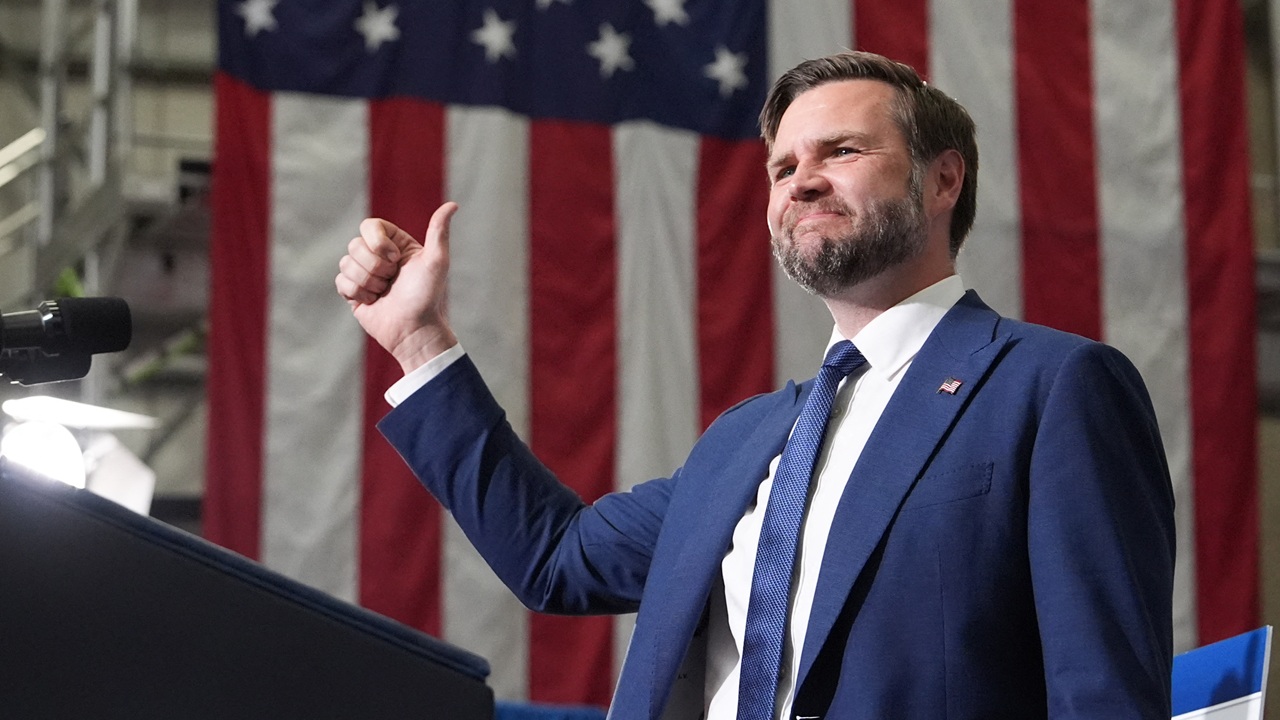
This month on The Joe Rogan Experience, Vice President JD Vance discussed Israel, Jeffrey Epstein, and aliens, topics that have lit up public conversation. Largely overlooked, however, were his thought-provoking remarks about America’s homelessness crisis, which highlight the harmful results of present policies in some of our largest cities and the need to enact new policies that prioritize restoring lives.
Vance recalled attending an office Christmas party near Skid Row, the notorious 50-block area in downtown Los Angeles overcome by homelessness, illicit drug use, and crime. He described armed security and “gigantic walls” protecting the party. He told Rogan that it reminded him of visiting the U.S. Embassy in Port-au-Prince, Haiti. “Crazy wealth and status and privilege on the inside and squalor and misery on the outside,” he explained.
“You drive through Skid Row,” he said, “and you’re like, how could any state or city let this happen?”
How, indeed. A few thousand homeless people live in Skid Row. Over 70% are unsheltered. Overdoses, violent crimes, infectious diseases, animal abuse, drug dealing, open fires, public sexual acts, and prostitution are commonplace.
Vance described it as “more like a third-world country than anything I thought we’d ever become.”
“Third world” is an apt description. Widespread poverty, violence, unsanitary conditions, infectious diseases, and chronic unemployment are all hallmarks of Skid Row. This level of neglect has also opened the door to election and financial fraud.
Independent journalists recently uncovered an apparent cash-for-ballots scheme in Skid Row, exploiting the homeless and stealing identities. One woman now faces federal charges for allegedly paying homeless individuals in Skid Row between $2 and $3 for their signatures.
And just last month, the Trump administration cut funding for the Los Angeles Homeless Services Authority (LAHSA) after discovering that the agency could not account for $37 million of the almost $51 million in federal taxpayer funds it had received.
But Skid Row, though unique in the severity of these problems, is not the only neighborhood in the U.S. suffering these conditions.
Take Seattle’s Chinatown-International District. Long celebrated for its rich Asian American heritage, family-owned businesses, and delicious cuisine, the neighborhood has become inundated with open-air drug use, theft, and the buying and selling of stolen goods on the streets. Parks once intended for neighborhood families and visitors have become centers of drug use and other criminal activity.
For the 2026 FIFA World Cup, the neighborhood became a dumping ground for homeless individuals who were swept out of downtown to make way for soccer fans.
Or take New York City, which made headlines last week after reports of a homeless encampment spanning 12 blocks through a major tourist district. Sidewalks have turned into makeshift living rooms. Trash heaps line the streets. Homeless individuals have been caught tapping into public utilities for electricity and even using a fire hydrant to wash their clothes.
How did these cities let this happen? Through the acceptance of two policies that have had devastating consequences. Housing First provides subsidized housing to people experiencing homelessness without requiring participation in addiction or mental health treatment or job training. Harm Reduction, meanwhile, distributes free drug paraphernalia, including clean needles, pipes, and foil, to drug addicts.
Both policies have been deeply damaging to much of the unsheltered homeless population, many of whom suffer from drug addiction, untreated mental illnesses, or both.
Housing First provides them with four walls and a roof. Harm Reduction provides clean supplies. But neither addresses the underlying causes of homelessness and drug addiction. Without treatment and support, people who benefit materially from these services continue to suffer behind closed doors.
What the homeless population needs is help recovering from addictions, mental illnesses, and trauma. These people need treatment that restores health, job training that prepares them for stable employment, and opportunities to experience the dignity and purpose that come with meaningful work and self-sufficiency. They also need help restoring relationships with family, friends, and community—relationships that provide companionship and love that can support them through good times and bad.
Thankfully, recent federal reforms are beginning to move us back in the right direction.
Our goal should be restoration, not merely housing. Public resources should be directed to nonprofits and other organizations that demonstrate meaningful success in helping people overcome addiction, treat mental illness, rebuild their lives, and achieve lasting independence.
The vice president asked a key question: How could we have let this happen? May we now have the courage to answer honestly, to admit our mistakes, and to embrace policies that restore lives rather than housing bodies.
We publish a variety of perspectives. Nothing written here is to be construed as representing the views of the Daily Signal.
Continue reading...
[ H/T The Daily Signal ]