

War inevitably commands international attention. Military escalation, civilian casualties, and the risk of a wider regional conflict are urgent concerns. But another crisis is unfolding inside Iran — one that must not be overshadowed by the headlines.
While governments focus on security and diplomacy, Iranian authorities continue to arrest, prosecute, and execute protesters and political prisoners. According to U.N. experts, the authorities have exploited the conflict to intensify domestic repression rather than halt it.
At the U.N. General Assembly’s Third Committee on Oct. 28, Mai Sato, the U.N. special rapporteur on human rights in Iran, warned that external hostilities and internal repression had compounded one another. She reported that at least 34 people had been executed in connection with the January protests. In one case, 34 defendants were tried in five days; 12 received death sentences, and seven had already been executed. Sato warned that such proceedings could not establish individual criminal responsibility, rendering the sentences arbitrary.
These findings expose the danger of allowing a military crisis to overshadow the Iranian government’s treatment of its own population.
The authorities have increasingly portrayed dissent as a national security threat, sometimes accusing protesters of acting on behalf of foreign powers. Combined with expedited trials, televised confessions, and restrictions on information, such accusations create conditions in which the death penalty becomes a tool of intimidation. Yet prisoners have continued to resist this climate of fear.
On Oct. 27, inmates in 66 Iranian prisons took part in the 144th consecutive week of the “No to Executions Tuesdays” campaign, staging hunger strikes against death sentences and executions. The campaign has continued for nearly three years despite threats and severe restrictions.
Among those facing execution are prisoners affiliated with the People’s Mojahedin Organization of Iran. Their situation highlights a broader question: what does it mean to defend the right of Iranians to determine their own future while some of those who openly oppose the current system face death sentences?
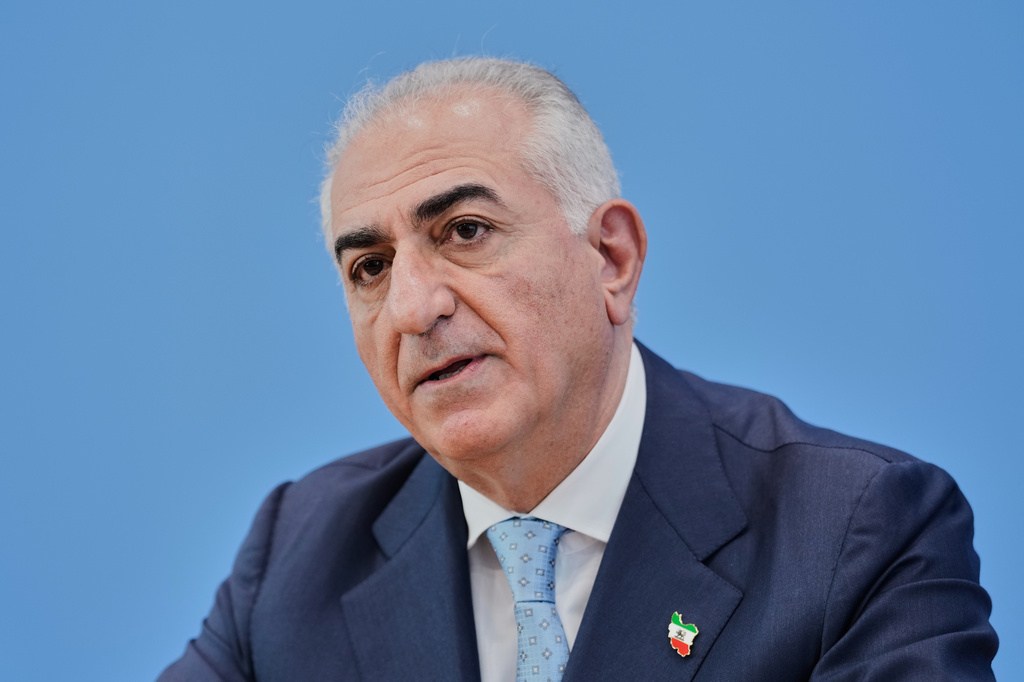
A statement reportedly signed by more than 140 political prisoners across Iran, including 11 on death row, brings this question into sharp focus. The signatories condemned a decision by the Friedrich Naumann Foundation for Freedom, a German political foundation closely affiliated with the country’s Free Democratic Party, regarding its 2026 Freedom Prize. The prize was dedicated to the Iranian people, with Crown Prince Reza Pahlavi designated to receive it in trust on their behalf.
The prisoners described the decision as an affront to political prisoners, torture survivors, and families of victims of the former Pahlavi monarchy. They called instead for a democratic republic based on the separation of religion and state, gender equality, and the rights of Iran’s national communities.
Their statement reflects a political reality that international debate sometimes overlooks: opposition to the Islamic Republic does not automatically translate into support for a restoration of the monarchy. Iranians hold diverse views about their country’s future, and no individual or political movement can claim to represent the entire population without a free and credible public choice.
This is not merely a dispute over a political prize. It raises a broader question about whether international institutions and political foundations should presume that a particular figure speaks for a population whose political freedoms remain severely restricted. The views of prisoners facing execution deserve to be heard alongside those of political figures abroad.
Western governments should call for an immediate moratorium on executions, demand fair trials and access to independent legal representation, and urgently raise the cases of prisoners at imminent risk of execution.
They should also support independent monitoring, preserve evidence of abuse, and pursue accountability through the United Nations and other international institutions. Human rights must not become a secondary consideration in negotiations over regional security.
None of this requires governments to disregard the suffering of Iranian civilians caused by military operations. Protecting civilians from unlawful attacks and protecting people from repression by their own government are complementary obligations. Nor does human rights pressure require support for military intervention. Diplomacy, independent investigation, and accountability remain essential tools.
The danger is not only that executions will continue, but that the world will grow accustomed to them. When international attention shifts, prisoners facing execution cannot simply wait for the crisis to pass.
OPINION: TRUMP’S BOMBS WEAKENED IRAN’S REGIME. ITS OWN PEOPLE CAN TAKE IT DOWN
The “No to Executions Tuesdays” campaign and the statement from political prisoners demonstrate that resistance to repression continues even behind prison walls. Their demands concern not only survival, but also freedom, political choice, and the right of Iranians to determine their own future.
Western governments cannot determine Iran’s future on behalf of its people. But they can refuse to let executions and political repression disappear behind the fog of war and insist that the voices of those risking their lives for political freedom remain part of the international debate.
Nasser Razii is an Iranian-born independent analyst and writer based in London. Over the years, he has worked extensively with British and European parliamentarians on issues relating to Iran, human rights, and democratic governance. He is also associated with the democratic Iranian opposition and has been actively engaged in advocating a democratic, secular, and non-nuclear future for Iran.
Continue reading...
[ H/T Washington Examiner ]