






The federal investigation surrounding Rep. Ilhan Omar appears to be growing wider, more serious and increasingly difficult for Washington’s political class to dismiss as background noise.
Federal authorities searched Omar’s Washington, D.C. residence on October 12 under a warrant authorized by a judge. The investigation reportedly concerns immigration records, but the affidavit laying out the government’s evidence remains sealed.
That means the public still does not know the government’s full theory of the case. Omar has not been charged with a crime, and a search warrant—no matter how consequential—does not establish guilt.
The known investigative steps are substantial.
According to CBS News, agents seized Omar’s cellphone while more than a dozen grand-jury subpoenas were issued, including subpoenas to members of her family. Investigators were reportedly seeking immigration-related records.
A phone can contain messages, contacts, photographs, documents and location information. Subpoenas to relatives can reach records and testimony outside the control of the main subject.
Neither step tells us what agents found, but together they show an investigation extending across several potential sources of evidence. CBS reported the investigative activity, while the results of the phone seizure and subpoenas remain still publicly unknown.
The family subpoenas placed relatives within the evidence-gathering process, and the request for immigration records defined the reported subject matter. The account established multiple evidence sources without establishing what any source produced.
Homeland Security Secretary Markwayne Mullin added another important detail: Authorities served multiple warrants, including the warrant executed at Omar’s home. He also said he expected the matter to be presented to a grand jury.
Mullin’s actual expectation of a grand-jury presentation should not be confused with a public finding that an indictment is certain. Grand juries evaluate evidence and determine whether probable cause exists to bring charges; they do not determine guilt.
Still, multiple warrants, a seized phone and a broad set of subpoenas do not resemble a casual request for information. They reflect a coordinated effort to collect evidence from more than one location and more than one person.
That is why the warrant itself matters. Searching the home of a sitting member of Congress is an extraordinary move carrying enormous legal and political consequences.
Investigators would have known that every part of the operation would face intense scrutiny.
Mike Howell, president of the Oversight Project, told Fox News Digital that authorities likely had to present convincing evidence to a judge before receiving permission to search Omar’s residence. He assessed that investigators “probably got the goods” and predicted that additional “shoes” could drop.
That is Howell’s interpretation—not a judicial ruling, a prosecutor’s charge or proof that Omar committed an offense. His point is nevertheless straightforward: Federal agents do not ordinarily arrive at a member of Congress’s home with a warrant unless investigators have already assembled enough evidence to establish probable cause for the specified search.
The probable-cause threshold is meaningful, but it is deliberately lower than the beyond-a-reasonable-doubt standard required for a criminal conviction. A judge’s approval means the government met the legal requirements for a search.
It does not tell the public what was found afterward or whether prosecutors can prove a criminal case.
Separate reporting from NewsNation suggests investigators may have pursued potential DNA evidence before the search. The outlet attributed its account to unnamed sources, so that claim should remain clearly identified as reporting rather than an established public finding.
If accurate, that reported effort would add another dimension to the evidence trail. It could indicate investigators were trying to compare biological material or establish a factual relationship relevant to their inquiry, although the sealed affidavit prevents the public from knowing the purpose.
It would not, by itself, establish wrongdoing.
Investigators gather evidence to test possibilities, corroborate records and eliminate uncertainty. The results can support an allegation, undermine it or point in an entirely different direction.
Omar has responded with an unequivocal denial. In an official statement, her office characterized the search as an abuse of power and political intimidation, while maintaining that she had done nothing wrong.
Her statement places both claims at the center of her response: a complete denial of wrongdoing and an accusation that federal power was used for political intimidation. The sealed affidavit prevents the public from comparing that response with the government’s underlying presentation to the judge.
Her attorneys subsequently demanded the return of seized property. That demand directly contests the government’s continued possession of property taken during the search.
Those are serious claims, and Omar is entitled to challenge the search through the courts. Her lawyers can dispute the warrant, question how it was executed and seek the suppression or return of property when they believe the law permits it.
The sealed affidavit leaves the government’s evidence outside public view while that challenge remains available to Omar. Her denial and abuse-of-power claim therefore stand as her stated position, rather than a resolution of the disputed facts.
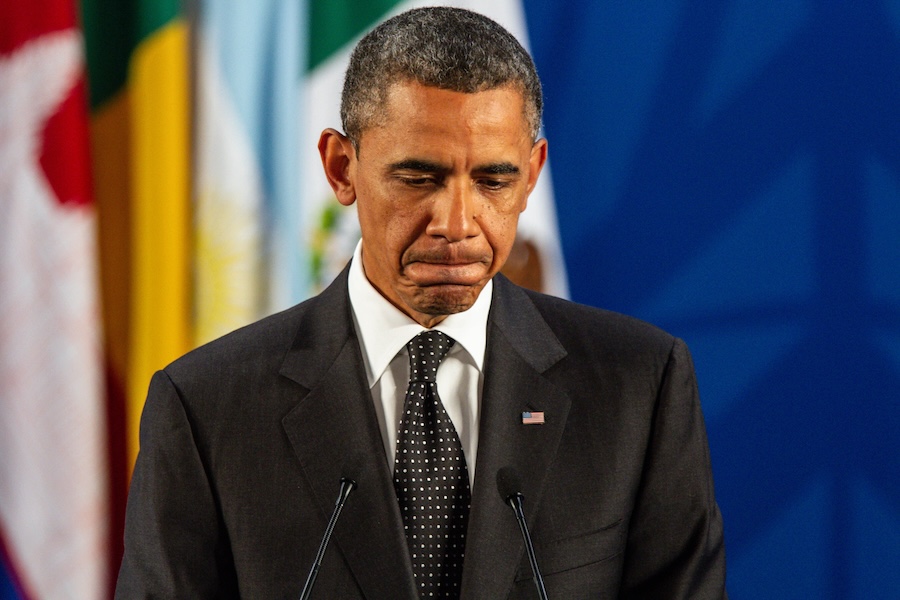
Former President Barack Obama went further, publicly accusing the Trump administration of targeting Omar because of her political beliefs.
Obama’s accusation raises a legitimate constitutional concern in the abstract: Government power must never be used to punish protected political speech. His post, however, did not provide evidence that the warrant affidavit was fabricated, that the judge abandoned the probable-cause requirement or that President Trump personally directed the search.
Political outrage cannot substitute for the sealed evidence any more than conservative suspicion can substitute for a conviction. If investigators abused their authority, the facts should expose it.
If the warrant was supported by legitimate evidence, Omar’s status and political allies should not insulate her from scrutiny.
The Oversight Project has also publicized its own position following the search. In its statement, the organization welcomed the investigation and presented its view of the allegations surrounding Omar.
The statement followed months of scrutiny by the group. Its president, Mike Howell, emphasized his view that investigators would have needed to give a judge sufficient grounds to authorize the warrant and argued that this made the search significant.
Howell summarized his assessment by saying investigators “probably got the goods.” That quotation expresses his conclusion about the warrant and the probable-cause showing behind it.
His reasoning starts with the requirement that investigators present grounds sufficient for a judge to authorize a search. He treats the warrant’s issuance as a sign that authorities developed meaningful evidence during the months in which the group had scrutinized the matter.
Howell’s reasoning reflects the probable-cause standard required for a warrant, but his conclusions remain advocacy. They are not a judicial finding, a prosecutor’s charge or an official determination that Omar committed an offense.
The group had also scrutinized a separate $1.031 million earmark backed by Omar for Generation Hope MN. In January, Senators Mike Lee and Joni Ernst asked the Justice Department to examine warning signs involving the nonprofit.
The senators’ request concerned the earmark and the warning signs they identified around Generation Hope MN. Their January request asked the Justice Department to examine that separate matter involving $1.031 million.
That earmark work is distinct from the immigration-record investigation surrounding the search. No public evidence establishes that the two matters are connected, and treating them as one case would go beyond the known facts.
The existence of the senators’ request does not supply a public link between the Generation Hope MN earmark and the immigration records reportedly sought by investigators. It establishes only that Lee and Ernst separately asked the Justice Department to review the warning signs they identified.
The distinction matters because the earmark inquiry and the immigration-record investigation concern separate publicly described issues. Without public evidence connecting them, the senators’ January request cannot establish the purpose, scope or evidence behind the search.
The strongest story here does not require exaggeration. Federal agents searched a congresswoman’s home under judicial authority.
They seized her phone. More than a dozen grand-jury subpoenas reportedly reached relatives.
Multiple warrants were served. The Homeland Security secretary expects a grand-jury presentation.
Those facts leave guilt unresolved. They show momentum, scope and investigative seriousness.
The trail is widening, and it now runs through devices, documents, family records and multiple searches.
Washington has spent years teaching Americans that powerful people deserve a different set of assumptions, a softer level of scrutiny and an army of political defenders ready to cry foul before the evidence can be examined. That cannot be the standard in a country governed by law.
Ilhan Omar deserves the same presumption of innocence as every other American—and the same honest investigation. Now the sealed evidence, the seized material and the grand-jury process must determine where this goes, no matter how loudly Washington’s protected class demands that the questions disappear.
This is a Guest Post from our friends over at 100 Percent Fed Up. View the original article here.
Continue reading...
[ H/T WLT Report ]


