




When a government raids LGBT organizations, arrests activists, silences advocates, and invokes religious doctrine to justify persecution, America’s LGBT movement should be among the loudest voices demanding accountability.
So, where is the outrage over Turkey?
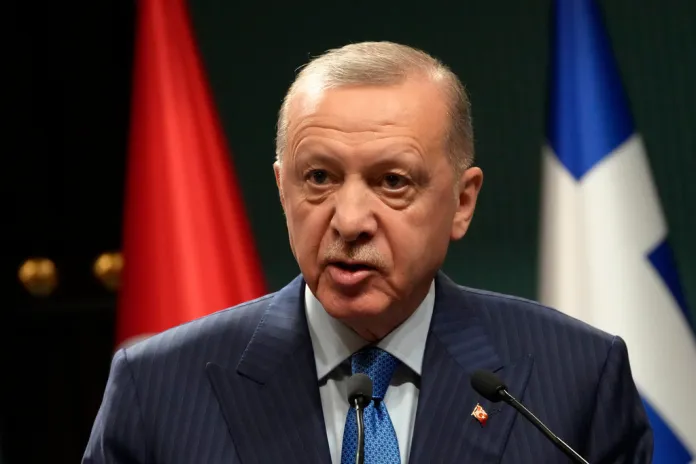
Turkish President Recep Tayyip Erdogan is no longer merely attacking LGBT rights rhetorically. His government is putting that ideology into action, while Erdogan takes the same message to the world stage.
Days after Turkish authorities launched a sweeping crackdown on LGBT organizations, activists, and support groups, Erdogan stood before the United Nations General Assembly and denounced what he called “global gender-neutralization policies,” portraying LGBT people and LGBT rights as threats to children and the family, the same justification his government has used to target them.
That combination of religious doctrine, political scapegoating, and state power should alarm anyone who claims to defend LGBT rights. It should also force an uncomfortable reckoning within the American LGBT movement: Why does persecution under Islamist and authoritarian governments so often generate less cultural outrage than causes that better align with progressive politics?
Between Sept. 12 and 14, Turkish police raided LGBT rights groups and support organizations, along with bars and nightclubs. Reports indicate that at least 116 people were arrested across 15 provinces, at least 83 were placed in pretrial detention, and more than 160 were subjected to criminal investigations. Hundreds of websites and social media accounts were blocked or restricted.
The government cloaked the human rights abuses and the operation in the language of family protection: “My Family Is Safe.”
Apparently, protecting families now requires police raids on people advocating for gay citizens.
Turkey still permits same-sex relations and remains constitutionally secular. That makes what is happening more instructive, not less. Governments do not have to outlaw homosexuality overnight to destroy the freedom of gay people. They can restrict organizations, silence advocates, investigate funding, block speech, arrest protesters, and portray a minority as a threat to children and society.
Turkey has been laying that ideological groundwork for years.
In 2020, Turkey’s state religious authority, the Diyanet, declared that Islam condemns homosexuality. When the Ankara Bar Association objected, prosecutors investigated the lawyers, while Erdogan defended the cleric. His government later withdrew Turkey from the Istanbul Convention on violence against women while accusing the agreement of being used to “normalize homosexuality.”
There is an uncomfortable reality that Western LGBT institutions should be willing to confront directly: Governments continue to use interpretations of Sharia and Islamic doctrine to justify the criminalization and brutal persecution of gay people.
LGBT organizations and activists should have no difficulty condemning Sharia and Islamic law used by governments in Muslim and Muslim-majority countries to criminalize homosexuality and justify the persecution of LGBT people. Religious freedom protects the right to believe, but no religious doctrine is entitled to immunity from criticism when it is used to justify imprisonment, violence, or death for gay people.
Tolerance cannot require silence about intolerance.
The consequences are not theoretical. In several countries, consensual same-sex relations can carry the death penalty under laws rooted in official interpretations of Sharia. The death penalty for homosexuality is not a cultural difference. It is state persecution.
And that brings the issue back to America.
LGBT and human rights organizations have spoken out about Turkey, and those efforts deserve recognition. But the scale and intensity of the response raise an uncomfortable question about the priorities of the broader American LGBT movement.
American LGBT organizations, progressive activists, celebrities, and campus movements that routinely mobilize around international political causes should confront the persecution of gay people under Islamist and authoritarian governments with comparable urgency. Too often, they do not.
The contradiction becomes especially difficult to ignore when Israel enters the conversation.
Elements of the Western LGBT movement devote extraordinary energy to condemning Israel, where LGBT people live openly, organize politically, celebrate Pride, serve in government, are active in religious and secular movements, and enjoy extensive legal protections. Yet many of the same activist spaces demonstrate far less urgency toward governments and ideological movements across the Middle East that criminalize homosexuality and persecute gay people.
The contrast is particularly striking in the Palestinian territories, where the Palestinian Authority and Hamas criminalize, persecute, torture, and kill LGBT Palestinians. Yet, Western activists who loudly invoke LGBT identity while championing anti-Israel movements rarely bring comparable attention to the treatment of gay Palestinians by Palestinian authorities and within Palestinian society.
Too many LGBT advocates in the West, including in the U.S., engage in mind-twisting performative activism when they criticize a democracy more intensely than governments that imprison or even execute gay people.
As an LGBT advocate who began in progressive Democratic politics and now works extensively in moderate-centrist and conservative spaces, my politics have evolved, yet my values have remained the same. The principle is simple: Gay rights do not become negotiable when the persecutor is politically inconvenient.
The identity of the persecutor cannot determine the value of the victim.
If gay people deserve freedom in Washington, they deserve it in Istanbul and Tehran. If LGBT organizations deserve freedom of association in New York, they deserve it in Ankara. And when religious doctrine is invoked to justify imprisoning, brutalizing, or executing gay people, human rights advocates should confront that doctrine directly.
Erdogan claims he is protecting families. Governments do not protect families by frightening gay sons and daughters into silence, arresting those who defend them, and dismantling organizations protecting their civil liberties.
Erdogan’s crackdown is therefore more than a Turkish human rights crisis. It is a test for the American LGBT movement.
No religion, ideology, government, or political movement deserves a human rights exemption.
KANSAS CITY KNEW ITS DEI PROGRAM WAS INDEFENSIBLE. IT RAN IT ANYWAY
Selective solidarity is not solidarity. It is politics wearing the language of human rights.
LGBT rights are either human rights everywhere, or they are not human rights at all.
Yuval David is an Emmy Award-winning journalist, news commentator, filmmaker, and strategic communications and political adviser whose work focuses on antisemitism, extremism, disinformation, democratic resilience, and the U.S.-Israel relationship. A fellow of the Middle East Forum, he advises international policy and advocacy organizations and appears regularly across American, Israeli, and international news networks.
Continue reading...
[ H/T Washington Examiner ]