



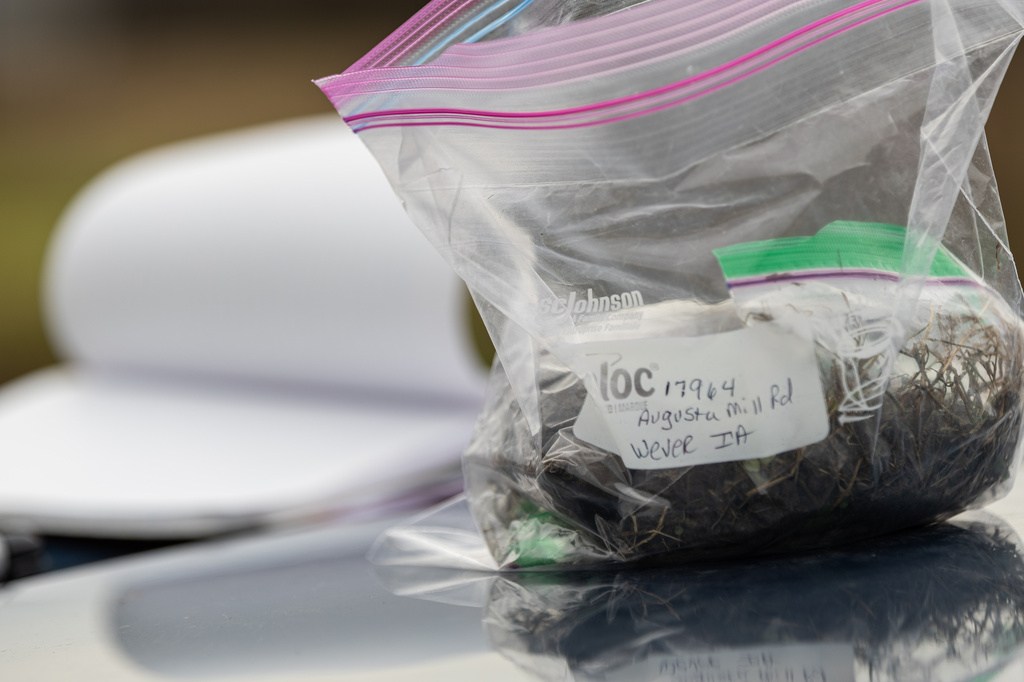
The Environmental Protection Agency has collected more than 1,000 environmental samples following Wednesday’s controlled detonation of five tons of destabilized lead azide in Middletown, Iowa, according to a public update from the agency.
The agency does not expect to start receiving lab results from post-detonation sampling until Friday. According to EPA Administrator Lee Zeldin, the laboratory where the samples are being processed has a 24- to 48-hour turnaround.
All soil, air, and water sample collection is expected to be completed by the end of Thursday, Zeldin said.
The Federal Emergency Management Agency issued an all-clear for the area surrounding the Iowa Army Ammunition Plant on Wednesday, and the Army claimed there was “zero” airborne lead detection on Wednesday evening.
The EPA is taking samples from several locations, including schools, homes, playgrounds, farms, drinking water systems, and water bodies, among other locations, according to Zeldin. On Thursday, “EPA personnel and contractors will be specifically sampling schools, playgrounds, daycares, churches, and more in the region,” per the agency’s press release.
The agency collected 1,591 samples before the detonation for comparison.
Over 60 barrels of destabilized lead azide were detonated by the Army on Wednesday at 10 a.m. EST. Maj. Gen. Eric Shirley, commanding general of the U.S. Army Sustainment Command, described the controlled detonation as “exceeding expectations” at a news briefing.
FEMA ISSUES ALL-CLEAR AS SIGNS INDICATE NO AIRBORNE LEAD AFTER IOWA BLAST
“I believe absolutely that we reduced as close to zero as is absolutely humanly possible the risk to the health and the safety of the people of Middletown and the extended communities throughout Iowa,” Shirley said.
The barrels of lead azide have been stockpiled at the ammunition plant since 2009, with the Army saying the explosive substance had degraded to a dangerous level and could no longer be moved and was at risk of exploding in low temperatures.
Continue reading...
[ H/T Washington Examiner ]