




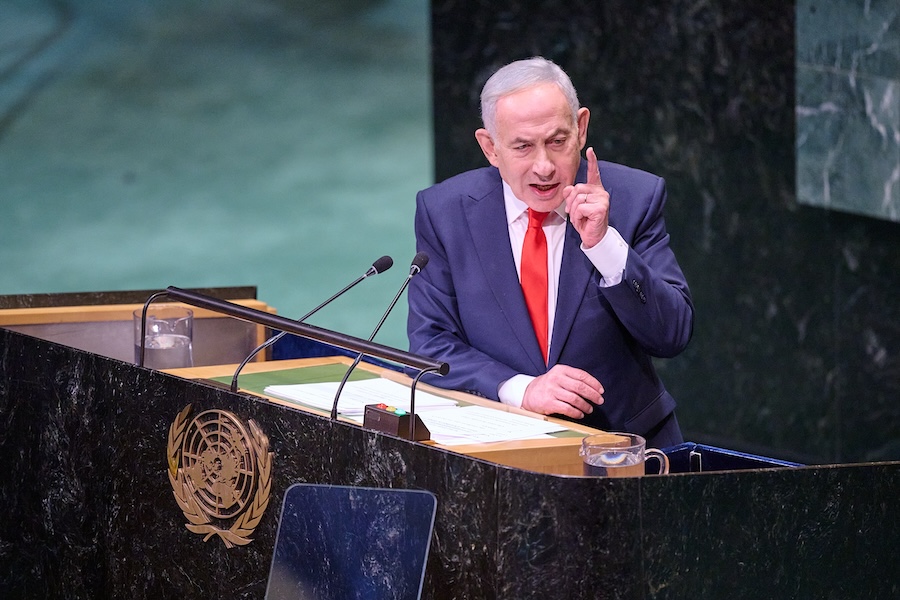


Relations between the United Kingdom and Israel are at their lowest point since the U.K. restricted arms supplies to the Jewish state during the 1973 Yom Kippur War. The current malaise flows from the U.K.’s recent ban on trade with Israeli settlements in the West Bank. Israel responded furiously to those sanctions, heavily restricting operations at the U.K. Consulate in East Jerusalem. The conservative Jerusalem Post even called for a reassessment of intelligence cooperation.
On paper, these frictions are growing.
The Telegraph reported on Saturday that Israeli Prime Minister Benjamin Netanyahu has endorsed Argentine calls for talks over the status of the U.K.’s Falkland Islands. Argentina claims the South Atlantic territory as its own, and the two countries fought a war over the islands in 1982.
Ironically, however, Israel’s action on the Falkland Islands may actually help to draw a line under the public controversy.
Netanyahu faces a very tough election battle on Tuesday. By needling the U.K. without going so far as to recognize Argentine claims to sovereignty outright, Netanyahu delivers a high-profile, similarly territorial riposte to U.K. action over the West Bank. And he does so in a manner that will appeal to conservative swing voters. Yet, whatever happens on Tuesday, any reduction in close U.K.-Israeli intelligence cooperation is likely to be reversed in short order.
The basic truth is that the U.K. and Israel only hurt themselves by restricting intelligence cooperation. Nor could either nation risk the scandal that would follow if they failed to share intelligence that could have prevented an attack.
From the U.K. perspective, Israel offers key intelligence value on Iran and the broader Middle East. Israel has also repeatedly assisted the U.K.’s MI5 domestic intelligence service in preventing terrorist attacks on U.K. soil. But the gain for the U.K. here isn’t just about protecting lives. Thanks to its extensive Middle Eastern intelligence footprint, Israel can trade sensitive information (a well-established Israeli strategy) on numerous additional matters of interest to London. These might include Saudi or Qatari deliberations in relation to a new U.K. trade deal, for example.
The global footprints of the U.K. Government Communications Headquarters’s signals and cyber intelligence service and its SIS/MI6 human intelligence service offer London similar trading opportunities in reverse.
While Israel’s intelligence apparatus is very heavily weighted toward Middle Eastern concerns, the U.K. can provide Israel with truly global intelligence reporting on economic, political, or military developments. Israel would greatly value U.K. intelligence insights into Chinese cyber activities, for example. SIS/MI6 also generates truly world-leading intelligence reporting on China. And, for various reasons, Russia has long been a priority intelligence interest for Israel. The U.K. has also provided high-value intelligence to Israel in relation to Iran.
That is not to say that this relationship offers a counterpoint of calm to the public turmoil.
TOM ROGAN: DISRESPECTED BY TRUMP, DENMARK KEEPS PROVING ITSELF A TOP ALLY
SIS/MI6 has long operated a “two-officer rule” for meetings with Israeli intelligence interlocutors. This is designed to manage aggressive Israeli efforts at recruitment or manipulation of British officers. And, in 2010, the U.K. notably expelled the Mossad station chief in London following that service’s use of forged British passports in an operation that assassinated a Hamas official in Dubai (current Foreign Secretary Ed Miliband’s brother, David, was the foreign secretary at the time). Still, these are exceptions to the rule of beneficial cooperation.
U.K.-Israeli political tensions will likely remain significant for the foreseeable future. But below the surface of this roiling relationship, expect intelligence cooperation to keep running smoothly.
Continue reading...
[ H/T Washington Examiner ]