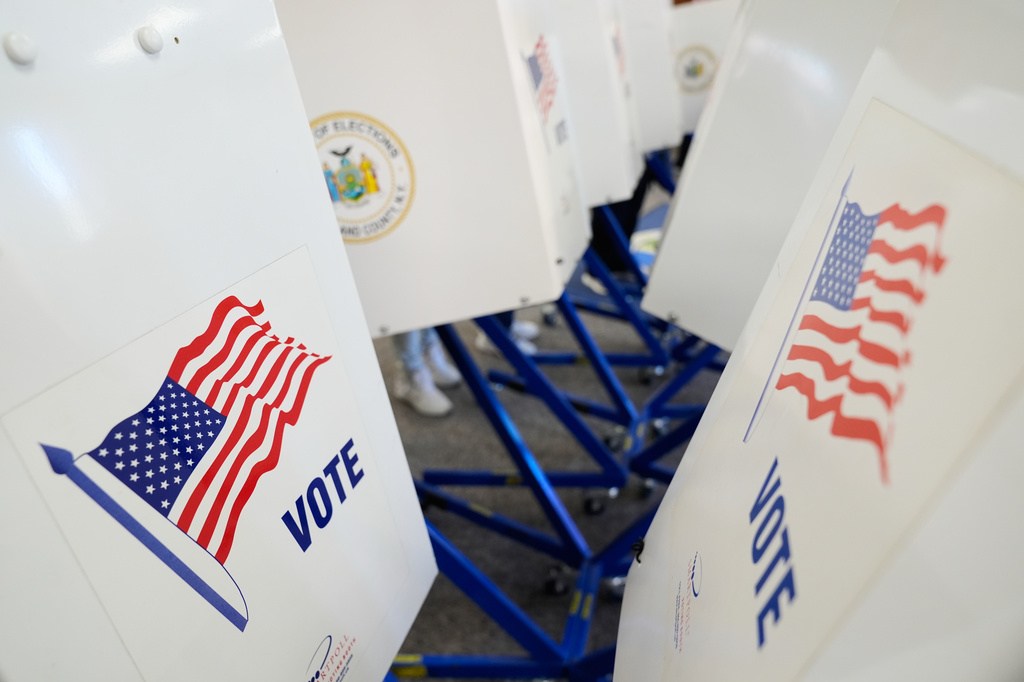



The House Freedom Caucus was founded in the hangover of the Tea Party movement, ostensibly to revolt against the fiscal moderation of then-House Speaker John Boehner, an Ohio Republican. So, I laughed out loud at the response a Freedom Caucus member gave me after asking him, eight days before the Nov. 3 midterm elections, what his plan for Social Security and its looming insolvency would be: “Ask me next Wednesday.”
The 2026 midterms obsessed over Gaza, Iran, gas prices, and groceries, but no single policy issue will occupy the center of the 2028 campaign more than the 91-year-old entitlement program. Social Security is already the single largest line item of the federal government. It consumed 30% of every dollar collected by the federal government this past fiscal year; Social Security’s insolvency is a ticking time bomb that goes off before voters head to the polls in 2032.
The electorate now enjoys presidential campaigns that kick off within minutes of the prior cycle’s midterms coming to a close. And now is the right time to lay out very, very clearly the costs and consequences of the question I asked Mr. GOP Congressman.
Social Security has a trust fund. But far from the oft-repeated lie that its funds were carefully collected, put in a lockbox, and delegated back out in shares reflecting how they were paid in, that trust fund is simply a collection of payroll taxes from the quarter-century period of 1984 through 2009. Back when the program generated a surplus.
During that surplus period, trust fund balances were invested in low-yield U.S. Treasury bonds that dramatically lagged stock market returns. Since 2010, Social Security has paid out more than it has collected. The point of the retirement program’s insolvency, estimated as mid-2032 by the nonpartisan Congressional Budget Office, is when that trust fund runs dry.
Federal law dictates that, absent congressional action, Social Security pays out less than its scheduled benefits. The CBO projects that the legally mandated benefit cut will be an average of 26%. If you’re Gen Z or a millennial, the overwhelming majority of whom already assume they won’t receive their scheduled benefits, insolvency is a non-issue. Social Security’s payable outlays would fall from 5.7% of our annual economic output to 4.5%, in line with the Obama-era average. For the average retiree, the cut in payable benefits would be progressive, with the average top-quintile earner seeing a larger percentage benefit cut than the lowest quintile of earners.
But Gen X and the boomers won’t be so sanguine.
Already, the Cato Institute found that nearly 9 in 10 seniors and 5 in 6 Americans aged 55 through 64 believe that scheduled benefits should be maintained by hiking taxes on younger Americans. To completely fulfill scheduled benefits, the payroll tax would have to be hiked from 12.4% to nearly 17%.
Alternatively, Congress could uncap the payroll tax, which only covers the first $184,500 of annual earnings, but this would cover just two-thirds of the shortfall and likely harm economic growth.
But beyond allowing benefits to be slashed (the default option) or explosive tax hikes, much of Congress prefers a secret third thing: simply adding tens of trillions of dollars to our existing $40 trillion national debt.
“All we have to do is take the money out of the general fund, which we always do,” said Sen. John Kennedy (R-LA), on “if” the trust fund runs dry. (Which it will.)
Kennedy, of course, was simply saying the quiet part out loud. When pressed on the looming issue of insolvency, most Republicans just deflect. Sen. Josh Hawley (R-MO) claimed that addressing the inevitable or trying to reform the program before 2032 is “usually code for ‘cut,'” which he is opposed to.
The cost of avoiding reform without any benefit cuts, Cato estimates, would total $46 trillion in new debt over the next 30 years, including $17 trillion in new debt servicing costs. This does not include the eventual cost to the American consumer in the form of skyrocketing credit card interest rates, auto loans, or home mortgages that are downstream of the U.S. Treasury, all of which would inform those debt-servicing costs.
SOCIAL SECURITY ADMINISTRATION UPDATES MILLIONS OF INCORRECT RECORDS
A serious politician would consider a patchwork of reforms such as raising the retirement age — which, since the program’s inception, has risen only two years versus the 17-year increase in American life expectancy — and dramatically means-testing benefits. Tax-the-rich socialists can keep their cake if they fess up to the fact that they’ll have to tax the rich, too.
But the most insidious politicians of all will be the ones who claim we don’t have to cut taxes or hike taxes. Understand that refusing to reform Social Security while promising no benefit cuts is a tacit admission that a politician would rather blow up the American economy than adopt the basic math of hard choices.
Tiana Lowe Doescher (@TianaTheFirst) is an economics columnist for the Washington Examiner.
Continue reading...
[ H/T Washington Examiner ]