




On Sept. 8th, American security agencies issued a joint advisory accusing six Chinese companies of extracting the capabilities of our nation’s most advanced AI models at an industrial scale. The agencies found this theft was used to form the core of the development strategy at these companies, likely with the awareness of the Chinese government.
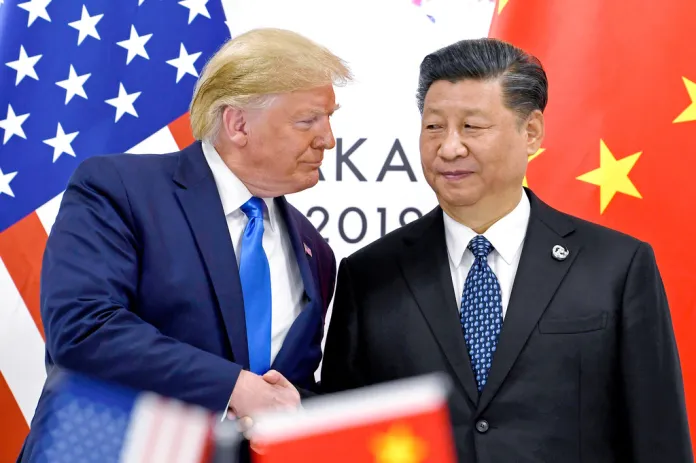
This will be the backdrop when Chinese President Xi Jinping arrives at the White House later this week to meet with President Donald Trump.
The Chinese Communist Party has run this play before: steal American technology, build knock-off versions, and flood the world with it to gain economic and political power. But artificial intelligence is poised to shape the future, and the stakes are too high to allow Beijing to replay its historical playbook in the AI race.
The future of global AI must be American models built on American values. This is critical for our economy, our families, and our national security. American companies build safeguards to keep their systems from being used for cyberattacks or weapons development. A Chinese lab that cuts corners on security puts American banks, hospitals, and power plants at risk, because they sit on the same internet.
So America has two critical missions at this moment: stay ahead in the AI race, and make China play by rules that protect our national security. There should be some optimism that both goals are achievable.
Treasury Secretary Scott Bessent has noted the administration is open to talks with China on avoiding shared risks. Despite China’s history on these issues and the events of Sept. 8th, he’s right to open that door.
The reason is Trump is the only world leader who could possibly get China to an agreement. Ronald Reagan called the Soviet Union an evil empire and then signed the treaty that eliminated an entire class of nuclear missiles, because he negotiated from strength, then verified.
Trump walks into this summit holding the cards. America controls the chip supply chain, the strongest frontier models, and the world’s smartest AI researchers.
If China is indeed willing to come to the table, the administration has the opportunity to demand four key pillars that would make for an historic agreement.
First, the most powerful models should be tested before release for the capabilities that matter to national security: major cyberattacks, weapons development, and operating beyond human oversight. That includes models still in development inside the labs. Every containment failure disclosed this year happened to models the public had never used.
Second, lock down the most dynamic models. The weights of the most capable models should be protected against insiders, foreign adversaries, cartels, and terrorists.
Third, humans must remain in control of AI. Autonomous agents must be monitored, audited, and able to be shut off. When something goes wrong with AI from either country, the other government hears about it immediately.
Finally, AI theft ends now. If it does not, the six companies named in the advisory should lose access to American cloud services, capital, and customers. And we don’t just take China’s word for it. Export controls on advanced chips remain where they are, and the U.S. verifies compliance.
America became the world’s leader in aviation, pharmaceuticals, and space by pairing relentless innovation with standards that earned public confidence, and the world adopted our standards because they were the best.
Trump understands that the same trust-building requirements will be true for AI, and his AI framework and executive orders reflect it. The frontier labs have had years to write their own rules and follow them. Washington should now treat this technology as powerful as the industry and investors say it is, without burdening little tech and without hindering innovation.
TRUMP SAVED ONE PASTOR FROM XI. NOW A DYING MAN NEEDS HIM TO DO IT AGAIN
At the Alliance for a Better Future, we start from optimism. The United States is winning this race. Americans want AI that creates good jobs, protects their children, and strengthens our national security. They hope it will provide prosperity; they rightly demand it be safe and trustworthy.
This week, Trump has an historic opportunity before him. He can stop the Chinese from stealing our AI tech, show that American AI will be trustworthy, make others follow the same safeguards we put in place here, and truly unleash a new Golden Age for all Americans.
Janet Kelly is CEO of Alliance for a Better Future.
Continue reading...
[ H/T Washington Examiner ]